They Call It Stupid Hot For a Reason


This item originally appeared in Knowable Magazine.
On a scorching day in South Africa, southern chatterboxes can’t think straight. These medium-sized black and white birds attempt to catch delicious mealworms behind a transparent barrier. On cooler days, the birds quickly realize that they just need to go around the small plastic wall. But when the mercury rises, the birds continue to stubbornly peck at the fence.
The experiment is part of a growing body of research showing that animals lose their minds during heat waves. When it’s hot outside, birds have difficulty learning, dogs bite more often, goat-like chamois fight. This is bad news, not just for those who annoy Fido. If animals can’t stay alert enough to find food or avoid predators, their chances of survival decrease, says Amanda Ridley, a behavioral ecologist at the University of Western Australia who co-authored the foot babbler study.
As climate change makes heatwaves more frequent, such cognitive deficiencies in the animal kingdom could ripple across entire ecosystems, putting already fragile species at risk. If pollinators forget which flowers to visit, crops and wild plants could fail. If birds cannot find food as easily, their young may not survive. And on a warming planet, a sharp mind is especially vital. “A changing climate means your ability to adapt behaviorally is even more important,” says Ridley.
Impetuous
There is ample evidence that animals are affected by heat. Birds, for example, spend less time foraging and feeding their young; they even sing less. Instead, they sit for hours with wings spread to dissipate heat and pant with beaks wide open. Some animals retreat to shelter or hide in cool burrows, again skipping meals. Bees, for their part, spray their faces with water droplets in mid-flight when the weather is hot. In this way, “they benefit from convective cooling for their brain,” explains Emily Baird, a neuroscientist at Stockholm University.
However, some of the first evidence that hot temperatures can disrupt the mind comes from studies in humans. In the 1800s, Belgian astronomer Adolphe Quetelet noticed that violent crime in France peaked in the summer. Subsequent studies have linked high temperatures to gun violence, mental health-related hospitalizations, suicide and gambling. When it’s hot, people have trouble making decisions and their memory suffers. For students in schools without air conditioning, a school year with just one degree Fahrenheit warmer reduces test scores by 1 percent, according to one study.
There is growing evidence that other species may also be more aggressive when mercury rises. A 2023 study that combed through nearly 70,000 reports of dogs biting people in eight U.S. cities, from Chicago to Baltimore, found that such incidents were more likely to occur on hot, sunny, smoggy days. The risk was 10 percent higher on a 90-degree day than on a 60-degree day — and not just because people are more likely to venture out for walks when the sun is shining (the researchers controlled for seasonal effects in their data).
Still, scientists haven’t been able to determine whether dogs become more aggressive the warmer it gets, or whether cranky humans provoke more attacks. “It is likely that both humans and dogs are stressed and angrier at higher temperatures,” said Clas Linnman, a neuroscientist at the University of Miami and co-author of the study.
And it’s not just dogs: A study in China in 2025 showed that many animals, including snakes and cats, are more likely to bite people when it’s hot.
The animals also seem to lose their temper with each other, especially if there is food involved. Scientists used binoculars and spotting scopes to spy on wild goat-like chamois feeding on protein-rich plants on the slopes of the Italian Apennines. More than 1,600 hours of observations over two summers revealed that when temperatures rose from 54 to 64 degrees Fahrenheit, vegetation thinned and chamois aggression increased in turn. The animals became territorial over the food plots, adopted threatening postures, chased each other – attacks that, at times, escalated. The study authors predict that chamois aggression will increase by 50% by 2080 due to climate change.
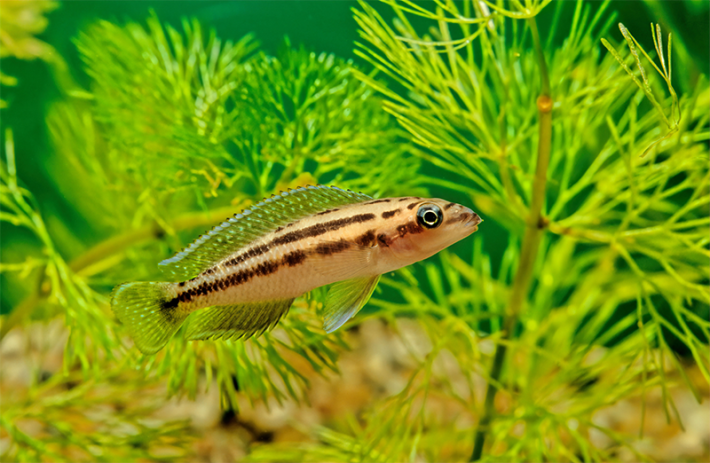
The small tropical fish called Golden Julie also becomes confrontational in the heat. Usually, when a golden julia is placed in front of a mirror, it sees its reflected image as that of a stranger and shows some hostility, for example by raising its fin. But if the normally 78 degree water is raised to 84 degrees, the fish is more likely to become aggressive and may bite and slap its tail against the mirror, as it attempts to scare or attack the reflected image.
Cognitive problems
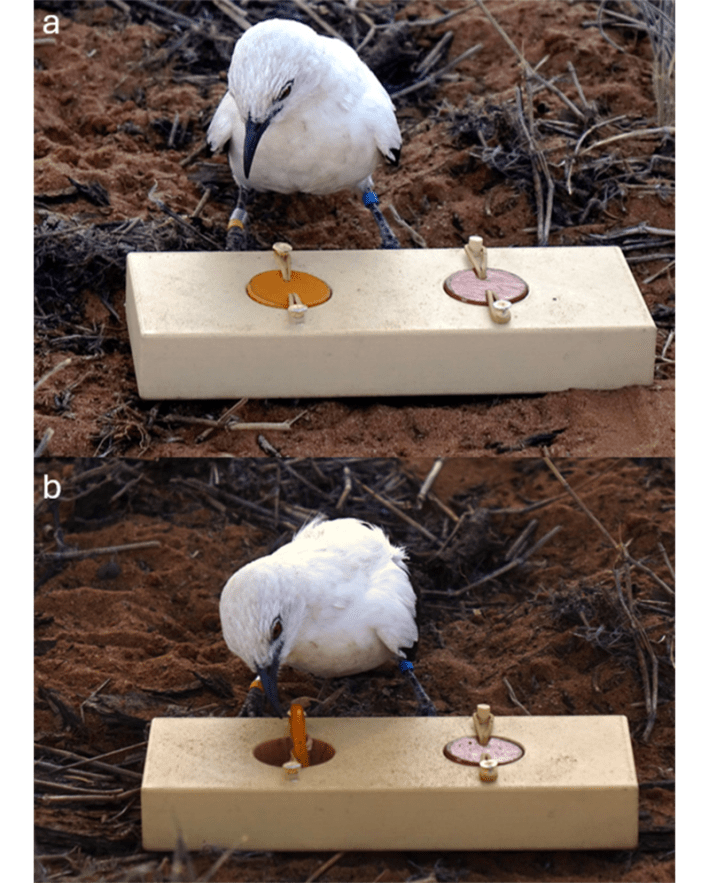
Heat waves can also hinder animals’ ability to learn, as Ridley and his colleagues observed with Southern Bulletins. In one of their experiments, the birds were given a simple block of wood with two holes in it, each covered with a lid. If the bird pecked at the lid, it would spin, revealing either an empty hole or a tasty mealworm (chatterers, says Ridley, “are very motivated by mealworms”). One eyelid was dark and the other was a lighter shade of the same color. During heatwaves, it took the birds twice as many tries to figure out that the mealworm was still hidden under the cover of the same shade.
Another group of scientists I tested zebra finches, pretty Australian songbirds, and found that if temperatures are high, they too have cognitive problems. When they were figuring out how to get a mealworm out of a clear tube with an opening at one end, they just kept pecking at the tube, says study co-author Elizabeth Derryberry, an evolutionary biologist at the University of Tennessee in Knoxville. It’s the birds’ equivalent of “banging their heads against a brick wall,” she says.
Additionally, researchers showed several years ago that when the heat is on, mice have difficulty orienting themselves in a maze and forget objects they saw the day before. More recently, researchers have found that male guppies, popular aquarium fish, also have difficulty navigating a maze after spending several days in 90-degree water, similar to a heat wave, even though the price for doing so is a virgin female, which they tend to find particularly attractive.
For animals like fish and insects that cannot control their body temperature, heat waves could be particularly detrimental. “Changes in air temperature will affect brain temperature,” says Baird. A hotter brain could hamper nerve function, which, she says, “could affect perception, memory and learning.”
When Baird and his colleagues tried to teach bumblebees to associate sweet sucrose with the color blue and bitter quinine with yellow, most of the bumblebees learned the trick at 77 degrees, but fewer than half managed to do it at 90 degrees. Such cognitive impairment could lead to problems in the field: If insects forget which flowers to pollinate (in the case of bumblebees, these include tomatoes and blueberries) or how to get home with nectar, not only pollinators but also human agriculture, Baird says.
The heat also seems to dangerously reduce the animals’ alertness. In Ridley’s recent experiments, once the mercury in the Kalahari Desert reached 96 degrees Fahrenheit, magpie babblers lost their ability to respond properly to predators. In their studies, the researchers lured the birds to a mysterious shape covered in a sand-colored blanket, using worms as bait. Once a chatterbox approached, the scientists would reveal what was hidden beneath: either a taxidermied, cat-like carnivore called a genet, or a wooden box of similar size and color. Birds were afraid of the genet in cooler weather: they screamed, scanned their surroundings, or simply ran away. But as soon as it was warm, they behaved the same way, whether facing the carnivore or the box. Ridley suggests this could translate into higher risks of deadly predator attacks as heat increases, which could harm populations of babblers and other prey species.
These studies are not just abstractions. In the Kalahari, where southern babblers use their intelligence to search for worms, temperatures are rising twice as fast as the global average. In tropical rivers, where male guppies seek mates, heat waves become longer and more intense. It’s the same story across much of the planet: temperatures are rising and animal thinking is becoming tense, potentially putting species at risk. The effects may be amplified in certain areas such as cities, which often experience even hotter temperatures than non-urban areas. On the contrary, says Ridley, “we are probably underestimating the impacts of increased heat on animal minds.” »
This item originally appeared in Knowable Magazinea non-profit publication dedicated to making scientific knowledge accessible to all. Register for Knowable Magazine’the newsletter.
Main image: Mathias and SN / Adobe Stock