Airplane-Sized Asteroid Will Fly Past Earth Next Week, Sparing Us From an Impact


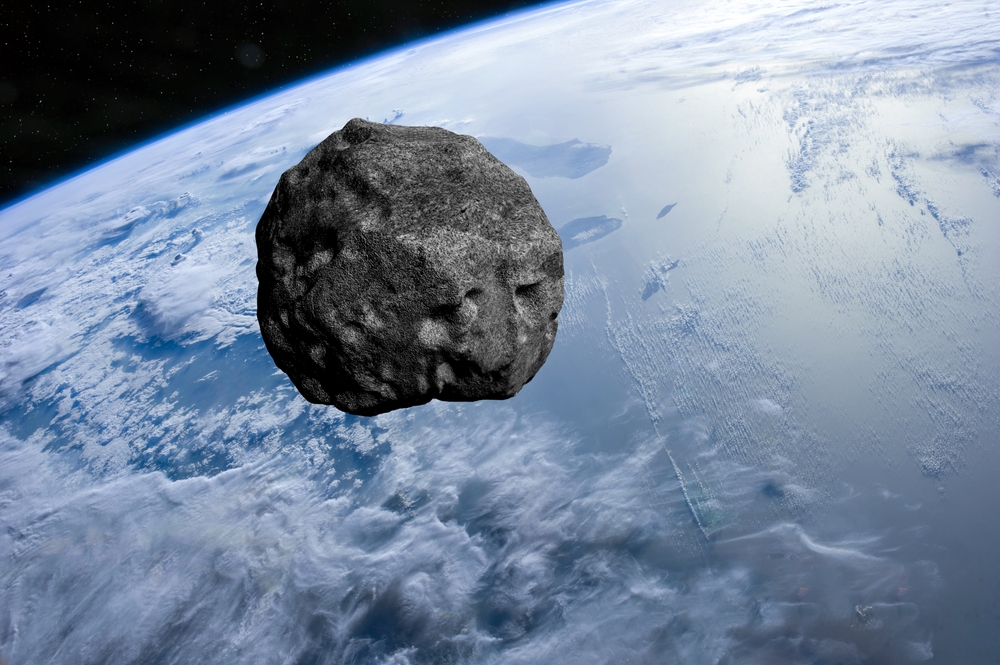
In a few days, an asteroid the size of an aircraft will pass to the ground, but it is not necessary to ring the alarms. Indeed, the asteroid, named 2025 OW, is sure to miss our planet because it makes its closest approach on Monday July 28, 2025.
Although some can burst in a cold sweat intended to speak of an asteroid passing, astronomers are almost never agitated by this type of event. With the help of data collected by observatories, they know that 2025 OW – and thousands of other asteroids flowing in space at the moment – are no threat to our planet. Even if 2025 OW will have no impact on the earth, the need to keep an attentive eye on similar asteroids remains a complete priority.
An asteroid approach forecasting
This should be comforting that asteroid approaches occur all the time without repercussions. Actually, Several asteroids approach next week. But with the exception of 2025 OW, they will all be more than a million kilometers from the earth. In addition, none of the asteroids is large enough to raise concerns.
Most close earth objects (neos) are not dangerous for the earth, but some privileged people require more attention. Astronomers report potentially dangerous asteroids, which have more than 460 feet and with orbits which bring them to less than 4.6 million miles from the earth’s orbit.
Measuring at around 220 feet and moving to 47,000 MPH, 2025 OW is not considered a potentially dangerous asteroid, although its upcoming approach is at 393,000 miles of the earth. It is not even the closest approach to last month – July 19, an asteroid by the name of 2025 bones increased to 2,534 miles of the earth. Fortunately, it was only between 8 and 19 feet in diameter.
Learn more:: 5 of the largest extraterrestrial impacts that moved the oceans and made moons
Monitoring of asteroids orbits
Astronomers often know how the orbit of an asteroid is shaped, which is why they can say with certainty that 2025 OW will miss the earth.
Hundreds of thousands of asteroids can be followed by projects which produce observations from telescopes on the ground around the world. Observatories data are sent to the Minor Planet Center, an international organization that collects information on asteroids and other small bodies in space.
The center for studies of objects close to NASA (CNEO) follows the orbits of all known neos and makes predictions on their nearby approaches with the earth. Astronomers currently recognize more than 30,000 neos on 1.1 million asteroids in our solar system.
How often does an asteroid hit the earth?
THE frequency The impacts of asteroids are correlated with the size of an asteroid. On the smallest scale, 100 tonnes of meteoric dust hit the earth every day, and small objects the size of sand grains and stones also enter our atmosphere. If a smaller asteroid occurs too close to the earth, it will generally burn in the atmosphere and will not have an impact on the surface.
The last major Impact of asteroids On Earth to inflict significant damage was in 2013, when an asteroid about 20 meters in diameter exploded above the Russian city of Chelyabinsk, releasing the same amount of energy as 500 kilotons of TNT. This type of event only occurs every 60 to 80 years on average.
An event like the impact of Tunguska – when an asteroid 160 to 200 feet wide exploded above the Taiga of Eastern Siberia in 1908 – only occurs every 200 to 300 years on average.
An asteroid even greater than that of the impact of Tunguska will approach the earth in the next decade; 99942 APOPHIS, about 1,500 feet wide and 550 feet high, will go to the ground in 2029. It was originally thought that the asteroid can have a little chance of impact on the earth in 2036 or 2068, but NASA has declared This, on the basis of the observations updated, we are safe from Apophis for at least 100 years.
Learn more:: The city killer asteroid will not harm the earth, but it can rather hit the moon
Article Sources
Our writers at Discovermagazine.com Use studies evaluated by high quality peers and sources for our articles, and our publishers examine scientific precision and editorial standards. Review the sources used below for this article:
Jack Knudson is a deputy editor -in -chief to discover with a strong interest in environmental sciences and history. Before joining Discover in 2023, he studied journalism at the Ohio University Scripps College of Communication and previously interned at Recycling TODAY magazine.