Scientists think this orange goo is 2,500-year-old honey


The buzz surrounding the contents of a bronze and copper jar, 2,500 years old, perplexed archaeologists for half a century. What was this residue with links with ancient Greece? Are these remains of fat or oils of a kind of meat, or perhaps the beeswax used for face creams, sealing boats and more?
A new reanalysis of this millennial residue has revealed that these are probably the remains of ancient honey. The results are detailed in a study published on July 30 Journal of the American Chemical Society.
In the ancient world, honey was an important substance. It was found in alcoholic drinks discovered in the tomb of royal midas and people of Mesopotamia and ancient Egypt used the sticky substance as a common medicinal ingredient. It was used to treat burns and fight infections. It was also used as a universal sweetener in food and drinks.
Honey has also played a role in the rituals of death. According to historical accounts, Alexandre Le Grand was kept in honey at his death. The substance was sometimes left in sanctuaries as offerings to the gods and buried alongside the dead – whether conquerors or commoners. In 1954, an underground Greek sanctuary dating from around 520 before our era was discovered in Paestum, Italy, about 90 minutes from Pompeii. Archaeologists at the time initially assumed that it was honey, but three different analyzes in the next 30 years did not confirm the presence of honey in the residue. Instead, it was considered an animal or vegetable fat that had been contaminated by parts of pollen and insects over time.
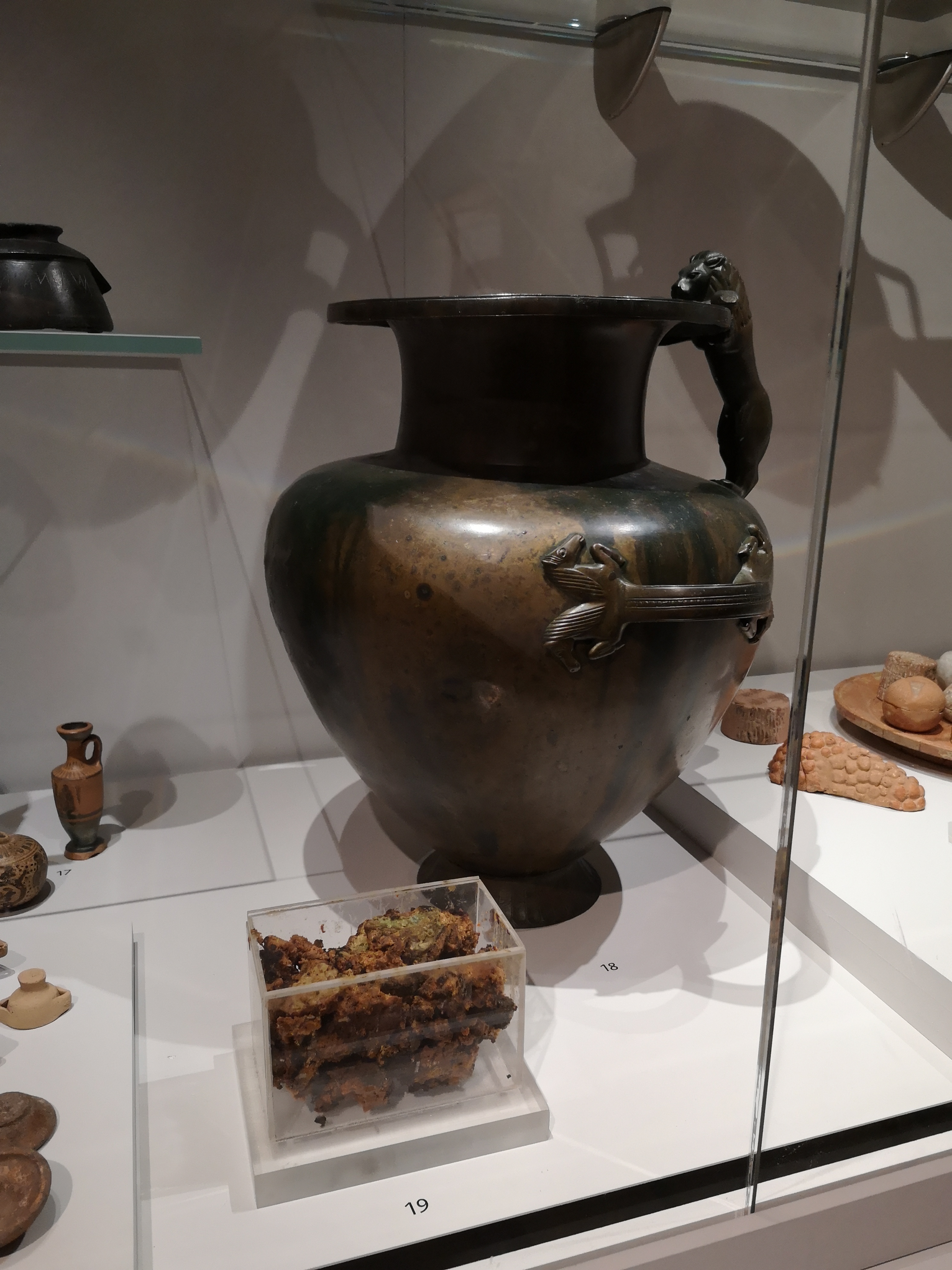
The copper pot finally went to the Ashmole museum of the University of Oxford for an exhibition, so a team had a chance to re -examine the mystery substance. The researchers led by the archaeologist of Oxford Luciana Da Costa Carvalho and the biological chemist James McCullagh, analyzed the residue samples to determine its molecular composition.
This gaze revealed that the residue has a chemical imprint almost identical to that of modern beeswax and honey. It has a higher acidity level in accordance with the changes that occur during long -term storage. It also has a more complex chemical composition than heat -degraded beeswax. This suggests that honey or another substance was once present in the ship.
[ Related: Ancient funerals may have included a ritual feast on a giant bird. ]
In addition, where the residue had touched the pot, the degraded sugar mixed with copper was not found. Instead, hexoses sugars – a common group of sugars in honey – has been detected at higher concentrations in ancient residue than modern bee wax. Royal jelly proteins which are known to be secreted by the Western bee, have also been found in the residue.
Together, the team says that these results suggest that the mystery substance is what remains of ancient honey. However, it is quite possible that other bee products such as Propolis can also be present in this sample.
“Ancient residues are not only traces of what people have eaten or offered to the gods – they are complex chemical ecosystems,” Da Costa Carvalho said in a statement. “Studying them reveals how these substances have changed over time, opening the door to future work on ancient microbial activity and its possible applications.”

More offers, reviews and purchasing guides


