How the Potato Got Its Start Nine Million Years Ago—Thanks to a Tomato


The mysterious genealogical tree of the potato has revealed – and it includes tomatoes
About nine million years ago, hybridization involving the line of another star in the farmers market gave birth to the modern cultivated potato
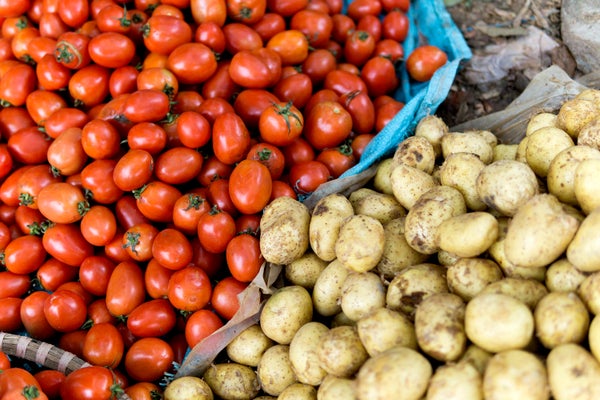
The new study reveals an interesting relationship between potatoes and tomatoes.
Nine million years ago, in the shadow of the Rising Andes mountains, a key ancestor of modern beloved potato was born. And now, new research shows this pivotal event – and puree, the bonus baked and fried that it delivers regularly today – occurred only with crucial help from another essential in the kitchen: tomato.
According to a study published Thursday in CellThe prehistoric precursor of potatoes was a hybrid of plants nearby in the lines of the tomato and the etuberosum,, A section of species of the genus Solanum. The latter visually resembles the modern cultivated potato plant, which is part of the line Solanum Petota section. But it does not have the capacity to produce the distinctive tubers which store all this useful nutrition in an underground whole practical the size of a fist,
On the support of scientific journalism
If you appreciate this article, plan to support our award -winning journalism by subscription. By buying a subscription, you help to ensure the future of striking stories about discoveries and ideas that shape our world today.
“We have always thought that these three lines were closely linked,” said the co-author of the study Sandra Knapp, a research botanist at the Natural History Museum in London. “But what were the relations between these three lines [was] not clear; Different genes told us different stories. Our group met to examine the why! »»
Potato is one of the most used basic crops in the world (with corn, wheat and rice). But so far, his genetic background has been elusive to scientists. Although potatoes resemble Etuberosum and were known to share certain genes with tomatoes, scientists had failed to pin the evolutionary history which in a way linked these plants.
Knapp and his international team of researchers began by analyzing more than 100 potatoes and modern tomatoes, as well as the largest collection of Etuberosum genomes ever analyzed. Scientists found that each potato genome wore a balanced mosaic of genes of tomato and study lines. The team members gathered all possible phylogenetic trees that could have binded the three lines – and they found solid evidence that the potato was probably not a sister of the tomato or the Etuberosum. The team could then conclude that the potato was the result of hybridization between the two.
But another mystery has remained: neither the tomato nor the etuberosum have tubers, thick parts of the stem that dig underground and store nutrients for plants such as potatoes, yams and Taros. So how did the tubers develop in potato plants?
The researchers found that each ancestral parent contained a key gene which, when it combined -, the elongated tubers to develop. Tomatoes contributed the SP6A Gene, who acts as a main switch to start the formation of tubers. And on the side of Etuberosum, another gene called It1 Control the growth of stems that become tubers.
“We are aware that hybridization generates new features and new species,” explains the principal researcher of the study, Sanwen Huang, farmer at the Chinese Academy of Agricultural Sciences. “However, this study is the first to show that hybridization has generated a new type of organ, the tuber, which has become later [a key part of] One of the basic foods of humanity. »»
Tomatoes and Etuberosum probably have hybridized during a quick uprising period in the Andes range. The resulting tubers have enabled the ancestors of the potato to reproduce asexually and thus survive in new higher elevation habitats. Today, tubers allow potatoes to develop in a resistant way in a range of environments and climates, supporting our assortment in constant growth of potatoes based on potatoes.
“Now we have a story to tell about the origins of the potato,” said Walter de Jong, a vegetable geneticist at Cornell University, who was not involved in the study, “another addition to our growing understanding of what makes the potato a potato”.


