Antidepressants in pregnancy: Doctors decry ‘misinformation’ after FDA panel meets : Shots


Doctors criticize a recent panel of experts organized by the US Food and Drug Administration which questioned the safety of taking antidepressants during pregnancy.
Mykola Sosiukin / Getty Images
hide
tilting legend
Mykola Sosiukin / Getty Images
Almost one in five pregnant women and new mothers in this country suffers from anxiety and depression. And 6 to 8% of pregnant women were prescribed a group of antidepressants called selective serotonin reuptake inhibitors (ISRS).
But a recent panel of experts organized by the US Food and Drug Administration has questioned the safety of ISRS – even if these drugs are largely considered as safe by health care providers.
These comments aroused a band of criticism from several eminent medical companies.
“Untreated or subcontracted depression during pregnancy has health risks, such as suicide, premature births, preeclampsia and low birth weight,” the Society for Materal-Fetal Medicine wrote in a statement at the end of last month. “Unfortunately, disinformation on depression and its treatment creates confusion and doubt in patients and the public leading to unnecessary obstacles to care.”

The opening of the Round Table on the FDA on July 21, the FDA commissioner, Marty Makary, said that ISRS were “involved” by studies to be involved in a range of healthy effects, including pulmonary hypertension and cardiac anomalies in babies. Then, a majority of panelists, including psychiatrists, psychologists and a social work teacher, have cited studies which, according to them, illustrate serious risks to health, such as miscarriage and autism.
Several groups of health care providers, including the American College of Obstetricians and Gynecologists (ACOG) and the National Program for Reproductive Psychiatry, have spoken against many affirmations made by the panel, claiming that it has distorted the evidence and spread a disinformation.

“As high-risk pregnancy experts, the Society for Materal-Fetal Medicine (SMFM) and its members are alarmed by unfounded and inaccurate affirmations made by FDA panelists concerning maternal depression and the use of SSRI antidepressants during pregnancy”, according to the SMFM press release.
“Robust evidence” illustrates the safety of using SSRI during pregnancy, according to ACOG’s statement, which added that most of these drugs “do not increase the risk of congenital malformations”.

Responding to this criticism, spokesperson for the Ministry of Health and Social Services, Andrew Nixon wrote this at NPR in an e-mail: “The assertion that the advisory process of experts from the FDA is unilateral or politically focused is insulting for scientists, clinicians and independent researchers.”
“Scientific apples and oranges”
Some of the studies cited by panelists as proof of prejudice did not even imply pregnant women and postpartum, explains Dr. Jennifer Payne, a reproductive psychiatrist at the University of Virginia and former president of the Marcé of North America, an organization working to prevent and treat mental health problems during and after pregnancy.
For example, the British psychiatrist, Dr. Joanna Moncrieff, referred to a study on young people connecting the SSRIs to increased suicidality in a “very small proportion of” those who take the drug, “she said.

Many studies referenced by certain panelists have been refuted, notes Payne, such as items connecting the ISRS to be used during pregnancy to cardiac malformations in infants. “It was demystified over and over again,” she said.
And several studies mentioned on the panel were “poorly controlled”, explains Payne.
“So, if you compare a pregnant patient who took an SSRI, the control group should be the pregnant patient of mental health anomalies that have not taken SSRI,” explains Dr. Christopher Zahn, head of clinical practice with the American college of obstetricians and gynecologists or acog, which was not part of the panel. “And part of the problem with a number of these studies [cited by panelists] Do they not use the right control group. These are really apples and oranges. “”

And studies that are well controlled – in other words, those that compare pregnant women on SSRIs with pregnant women with mental health problems do not take medication – do not find the risks highlighted by the FDA panel.
“The use of SSRIs during pregnancy is extremely well studied,” said Dr. Nancy Byatt, perinatal psychiatrist at Umass Chan School of Medicine. “We have data on hundreds and thousands of people exposed to SSRI during pregnancy.”
These data show that overall, the SSRIs are safe. “What global data shows is that antidepressants are not associated with major congenital malformations,” said Byatt. And they are also not associated with a significantly higher risk of miscarriage or postpartum hemorrhage, as suggested by certain panelists.
The impacts of untreated perinatal depression
According to Byatt and other experts on perinatal mental health, a single panelist, Dr. Kay Roussos-Ross, Obgyn and Perinatal Psychiatrist at the University of Florida, stated these impacts.
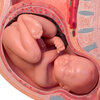
“When mental health problems are not treated, these women are less likely to attend their prenatal care appointments and they are more likely to use substances during their pregnancy,” said Roussos-Ross. “They are also more likely to deal with additional risks, such as pre-eclampsia and cesarean.” They are also more at risk of suicide, she said. Mental health remains the main cause of maternal death in the United States, including suicide deaths.
“And there is this enormous literature on the effects of postpartum depression, on Qi, language development, behavioral problems” in children, explains Payne. “It’s as clear as a bell that you want mom going well, during pregnancy and postpartum.”
However, SSRIs are not the only treatment option for pregnant women and postpartum, Payne and others say.
“We have a lot of tools in our toolbox,” explains Byatt.
For a slight depression or anxiety, the first line of treatment is psychotherapy or speech therapy, she says. “We have psychotherapies based on evidence that we can, should and use during pregnancy and postpartum.”
There are also psychosocial treatments, such as the support of peers, which can be very useful for improving the symptoms of pregnant women and new mothers.
Adding practices such as exercise, yoga and meditation to these treatments is also something byatt recommends to his patients.
“Often people cannot access therapy quickly due to the lack of insurance or even if people have insurance, it is extremely difficult for people to access quality therapy based on evidence,” notes Byatt.
Thus, for these women and those with moderate to severe symptoms, she says, the SSRIs are a useful option.


