What do TSA bag scanners actually see?


Despite the best intentions, travelers are not always in the clearest head space when they rush for the airport. Thus, although we theoretically know the rules, many passengers have a story of an officer of the Transport Security Administration (TSA) identifying something mortifying in their hand luggage. The SNAFUS varies from an embarrassing vibrator – a vibrator that looks like a threat of potential bomb – for stress – cannabis products bought legally, then accidentally transported in a state or country where they bear criminal charges.
Some of these prohibited articles seem quite obvious, but others raise the question, How did he devil know it was in there? If you’ve already seen the corrugated multicolored visual visual display on the X-ray scanner while you rush to the body scanner, you may have wondered exactly how much information that transport security officers (TSO) can tear it away.
Many, as it turns out. If you have a heap of money or a container of pills in there, they will know. Ditto all electronic or, more importantly, all hidden items slyly inside them.
This is a good thing, because TSA agents collect a lot of dangerous things, including knives, firearms and explosives. “The prohibited items brought to control points increase up to hundreds of pounds per year in small airports up to 2,000 pounds or one tonnes per month in the largest airports,” said a TSA spokesperson. According to the administration, last year, the government agency projected more than 2 billion hand luggage and 494 million checkered bags. Here’s how they did it.
Related aviation stories
How does it work
Since 2002, when the ASD has been raised after September 11, almost all agents have relied on Tomodensitometry (CT) systems. “CT is a proven and very effective screening technology that is widely used in the medical field,” said a TSA spokesperson.
Essentially, a X TSA CT rays scanner sends low doses of X -ray through your luggage, which cross the different materials at different rates. The scanner can therefore say if there are metals, liquids or even organic matter.
“CT technology applies sophisticated algorithms and creates three-dimensional images by bringing together hundreds of images with a X-ray camera around the elements,” said a TSA spokesperson. “The images can be shot 360 degrees on three axes, allowing a more detailed visual analysis by transport security officers and the detection of a larger range of threats without having to open the bag.”
Although the basic concept has remained the same, technology is much more sophisticated these days. This is a large part of the reason why this year the TSA finally decided to let the travelers keep their feet stinking, while going through security. In fact, the new models of CT scanners are so able to read your luggage that you can leave your laptops safely in your hand luggage. Some may even say if the liquids of your luggage contain explosives. Although these are not yet widely available, there is hope in the future that we could finally fly with a normal size shampoo.
What they find in there
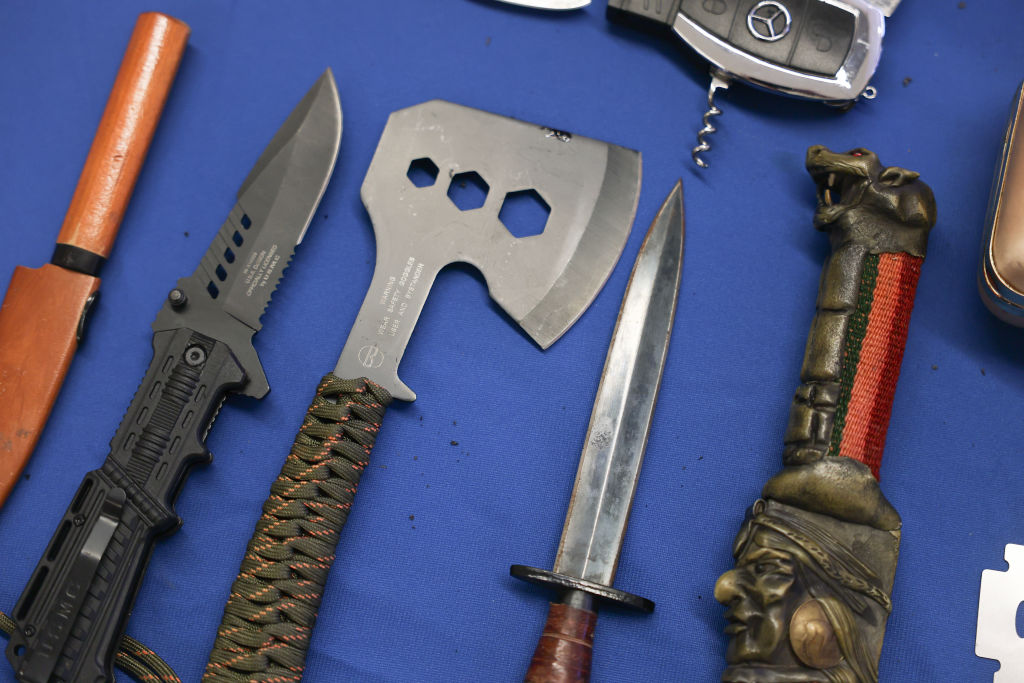
“The TSA officers meet everything, fireworks and replicas of grenades with snakes and literal cookbooks,” said a TSA spokesperson. “Knives, articles in martial arts and large tools are among the most common items.”
Some of the discoveries are so bizarre that the TSA has started to bring together an annual overview on its official Youtube channel. For example, last year, a passenger from Chicago Midway International Airport tried to hide a vape in a tube of toothpaste. In 2023, the passengers tried to pass a knife in a miche of bread and an explosive DIY in a box of soda. And in 2022, the drug mules became creative by putting narcotics in hair fogs and fentanyl in candies.
Although Ninja launches stars (yes, really) and pipe bombs, it’s always a good idea to check the guidelines of the TSA if you are not sure of a particular element.
Even if you spoil and throw your full -size skin care routine in your hand luggage, don’t stress too much. Agents do not really confiscate the most prohibited articles, so unless you channel Walter White or Tony Montana, you have a good chance of hanging on. You are generally authorized to give articles to a friend or a family member of the airport who does not set up boarding with you. Alternatively, you can usually return to the ticket office and ask you in your recorded luggage.
Oh, and it is an urban myth that the TSA officers drag the bottle of fantasy scotch that you bought during the trip for themselves. The majority of the articles given (or simply forgotten) to the safety of the airport in fact end in an auction sponsored by the State on Govdeals.com. Think about it this way: if you are still angry with losing your favorite shampoo, you can conclude great offers on everything, cookbooks with MacBooks. It is like the safety circle of the airport of life.

More offers, reviews and purchasing guides


