I buy my kids vapes to control their addiction


Health and well-being reporter, BBC News

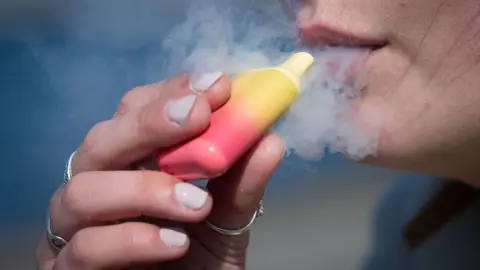 Getty images
Emma does something she swore would never do.
In an attempt to have a certain control over the vaping habits of her children, she used to buy the vapes herself.
It is not proud of that, but says it looks only like protecting your two teenagers and reducing the high nicotine levels they consumed.
“He went against each bone of my body to do it, but they are dependent,” explains Emma. “It is not a simple case to tell them to stop – it’s so much more difficult than that.”
Emma believes that her son, whom she asked the BBC not to name, started to vapor in primary school.
He managed to keep him from her for a while, but when he arrived in high school, his protests from “That Vape’s Not Mine” had started to wear thin.
As Emma’s son was 15, he became out of breath, contracted the tonsils and, at one point, suffered so much, Emma called an ambulance.
“Paramedical paramedics said incessant vaping could cause this,” she said. “They told him to try to stop, or at the very least to reduce.”
It was then Emma decided that something should change – she was going to take control and buy the vapes – trying to reduce their nicotine contribution from 20 mg to 10 mg.
“I warned them – if I see them with a device that has more nicotine – then I will stop buying them, a complete stop.”
Emma says she thought she could then be convinced that the vapes come from a renowned supplier, they would not be illegal and contain other harmful products, and she could control the level of nicotine.
Not only is it illegal to sell vapes to anyone under the age of 18, but it is also illegal to buy them for any minor. Emma knows what she is doing is not legal, but believes that it was her only choice.
She thinks that she managed to reduce the nicotine contribution of her son, in part by buying the vapes, but also by having such an open conversation with him.
But Emma says that the disposable vaping ban, which entered into force on June 1, had little impact on the consumption of nicotine of her children.
It was introduced due to environmental concerns and to reduce the increase in the number of children and young people vaping.
Although vapes provide a much healthier alternative to cigarettes, it is feared that vaping provides a bridge in nicotine dependence – with disposable vapes seductive children and young people with their fruity flavors and cheap prices.
Health experts agree that anyone who does not smoke should not start vaping, as this can cause long -term damage to the lungs, the heart and the brain.
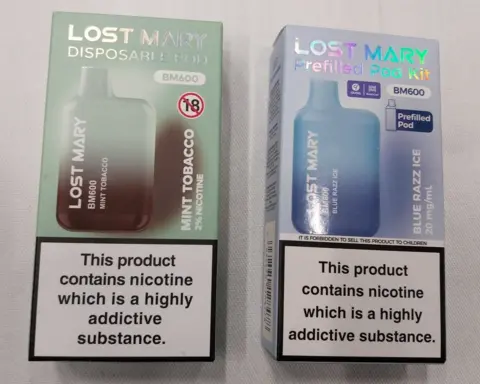
But weeks after the entry into force of the ban, Kate Pike of the Chartered Trading Standards Institute, says that it fears that it will make no difference – and it says that rechargeable vapes, which are always legal to buy, are marketed directly in children.
“We find compliant products – rechargeable and rechargeable vapes – with sticker packages,” she said. “What adult will want to decorate their vape with stickers?”
She also says that it is very difficult to differentiate between the now illegal disposables and the legal rechargeable vapes. And due to some equipped with pre-filled pods, they are always used “like disposable and thrown vapes”.
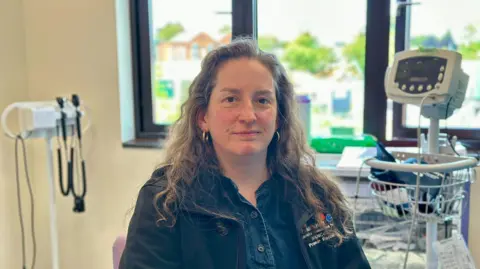
At the Alder Hey Children’s Hospital in Liverpool, which houses the first NHS vaping clinic in the United Kingdom, Professor Rachel Isba says that parents should not be hard with themselves-they are fighting against the power of a huge vaping industry.
“The important thing is not to judge your child; the world in which our young people live is a difficult place to grow,” she says. “There are so many competing pressure.”
His clinic supports children aged 11 to 15 who have been referred by other NHS professionals. It has been open since January and already has a six -week waiting list.
“Children who come to see me must want to see me and understand why they are here,” said Professor Isba. “They may notice a change with their body – they have trouble playing sports without being short of breath for example, or they spit blood, or they simply know that they are dependent and they want to stop or cut.”
She says that some young people sleep with vapes under their pillows so that they can get a stroke of nicotine in the middle of the night, and their dependence can be so strong that they experience “micro-retirements” at school.
“They so often consume nicotine that they start to feel anxious if they do not have it – even for the duration of a double lesson in mathematics, for example.”
They then think that they need vape to reduce anxiety, she explains, but it is the withdrawal of nicotine that causes these feelings in the first place.
Prof Isba offers nicotine replacement therapy – such as gums and patches – and tells them about how vaping affects their lives.
“We could discuss the ways they could reduce, which triggers them to vapor and even how much money they could save simply by not vaping.”
She says that the tobacco bill and government vapes are a good step forward but would like to see more pediatric dependence services across the NHS.
The problem is “much larger” than her clinic, she says, and she fears that vaping will become a gateway medication in smoking and other dependencies.
Dan de Twickenham, father of three boys, agrees. He says that the conversation on the vaping of young people is redundant because, he says, that “the horse has bolted”.
Her 17 -year -old was expelled from the school in February because he was taken with cannabis in his vape, and his 14 -year -old child was about to lose his school place recently due to a similar problem.
“Vaping is a bridge medication,” says Dan. “They become addicted to nicotine and more difficult things follow.
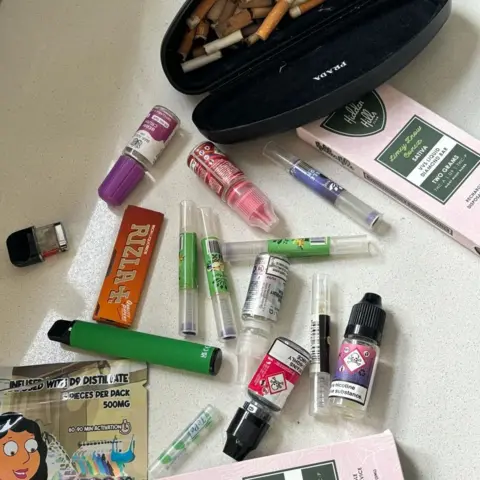
“They have definitely smoked [cigarettes] And now my elder is addicted to nicotine sachets. It never ends. “”
A government spokesperson told the BBC that he took “difficult measures” to combat the vaping of young people – including the norms of negotiation of the power to issue £ 200 on site to anyone who found the sale of tobacco or vapors for minor.
They also added that single -use vapes were a “burn in our streets” and that the government had made compulsory for all vape retailers to provide recycling bins.


:max_bytes(150000):strip_icc()/Health-GettyImages-2246731267-59fdd86d80b44c95994571d4edcb3b6a.jpg?w=390&resize=390,220&ssl=1 "Eat Dates Before a Workout, Choose Sweet Potatoes for Better Blood Sugar—and 3 More Health Hacks to Try This Week")
