Researchers have developed a really clunky version of Rosey from ‘The Jetsons’


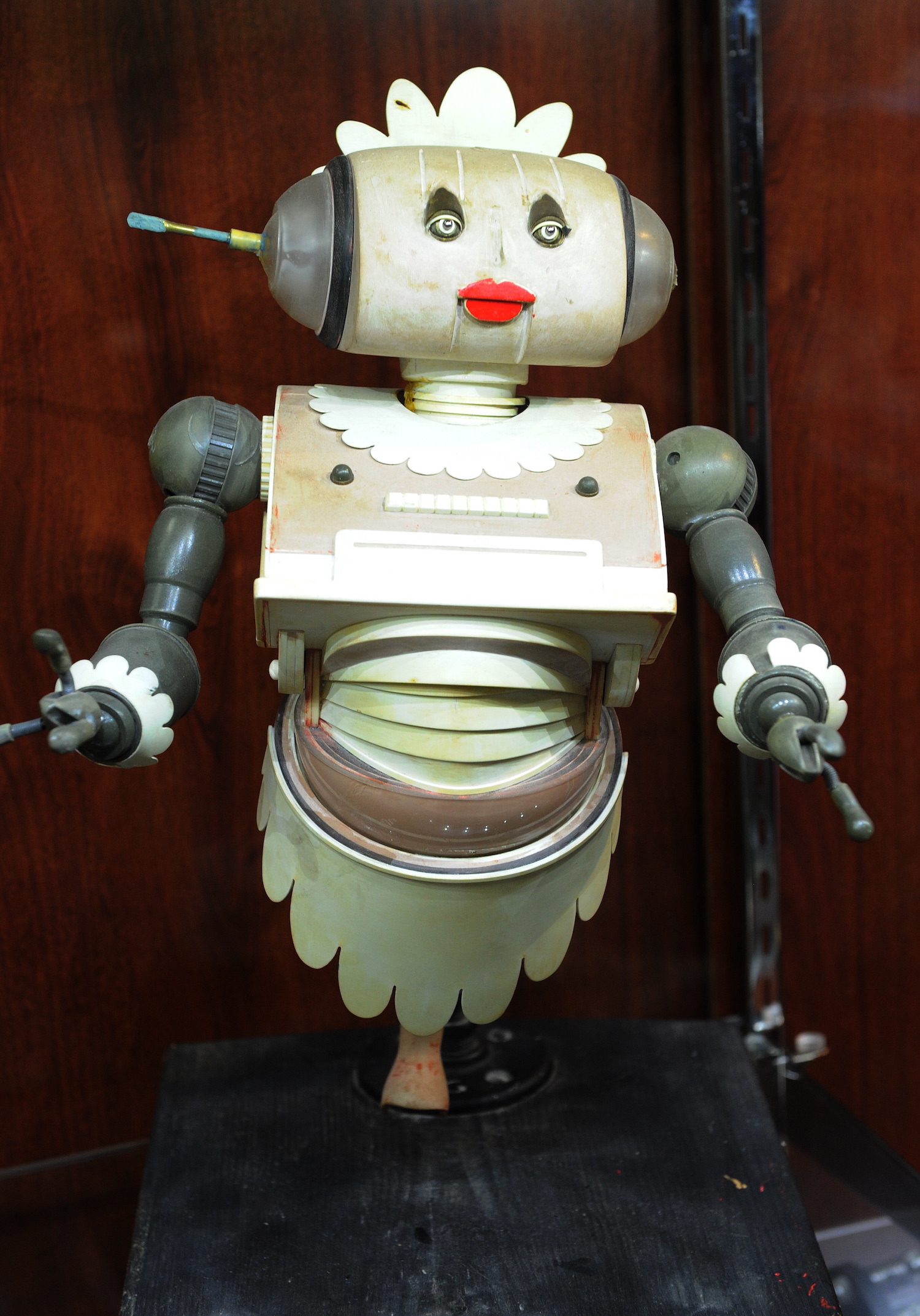
Futurists, rejoice! A Jets– The Domestic Assistant Robot in Pink Style can finally be a reality – but it probably does not seem to be quite what you expect. In fact, the machine in question is more closely like the mop and the bucket of a goalkeeper.
Although it is not really a spectator, researchers from the Professional Technology Institute of Suzhou Industrial and the University of Jiaotong-Liverpool in China say that their design of robots can avoid independently from most furniture and children. It can even pick up loose toys and sort through smelly socks – at least time.
Researchers behind the oversized Romberba call it a “game change”.
“This robot is designed to be a full family assistant, capable of performing tasks that make daily life more practical and more pleasant,” said researcher Bingjie Xu in a press release. “To collect toys to get items, it can manage a wide range of objects with precision and care.”
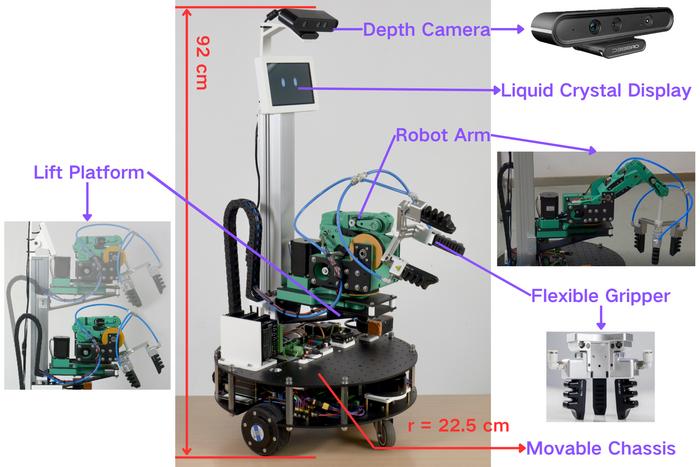
The researchers detailed their results this week in the journal Robot learning. In their opinion, large assistance robots are generally divided into two categories: service and cleaning. Service is a wide term that encompasses a wide range of robots already used in manufacturing and logistics. Household robots, on the other hand, are still at their beginnings. Although there are some examples, especially in the form of autonomous vacuum cleaners, today’s domestic robots are generally specialized in performing one or two tasks. With this project, the researchers say they decided to build “an intelligent cleaning robot designed to serve as a family assistant”.
To do this, they finally designed a machine made up of six parts: a depth camera, a mobile chassis, robotic arms, flexible pliers, a lifting platform and a digital display screen. The robot moves using a three -wheeled system. Two of the wheels – each controlled independently – the management of the hand, while the third provides the balance. The robot “eyes” are in the form of a depth perception camera associated with a YOLOV11 object recognition system. A LIDAR 2D sensor helps the robot to create a digital card of its environment. This cartography requirement allows it to avoid obstacles, but this also means that the robot can only operate effectively in environments that have already been mapped. Grocery races, in other words, are out of the question.
The researchers chose to print the robot arms in 3D, in part to reduce the amount of metal used. This led to a lighter overall design. For the pliers, they used flexible and flexible materials that could manage objects with a more delicate touch. Each pinch hand has extendable human -shaped fingers that can adapt to grasp the elements of different sizes. During their tests, the researchers say that the robot has successfully identified and picked up a variety of household items, including a bowl, a handbag, a book and a plush teddy bear. Above all, he was able to manage objects with “precision and care”. After all, there is really no use to have a robot that can only grasp things to crush your dear possessions in the dust.
Home users can interact with the robot via its digital screen, located near the “head” area, more organically, via voice commands. The researchers say they have equipped the machine with a voice recognition algorithm capable of understanding and responding to the basic instructions like “turn left” or “follow”. During the tests, they created a simulated daily domestic environment which reproduced the sounds of the kitchen and other general audio noise to assess its performance. We still do not know how sophisticated the voice recognition system is to what extent people can communicate with the robot beyond simple dam controls.
Are robots ready for home use?
Many for-profit technological companies, China and the United States have been busy building media threshing in recent years with affirmations that fully functional robot assistants are approaching. Earlier this year, the California 1X robotics company published a sumptuous press video showing its humanoid robots standing, aspiring the vacuum cleaner at the house of a person and carrying the laundry. Other companies have published similar equipment in the past, but often manage to provide many details on how these devices are really controlled – or any verifiable information on their reliability.
Academic research published on home assistance robots, on the other hand, tends to be more conservative about the capacities that these machines can provide. Although the household robot presented in this article is probably still far from the science fiction assistants that many people imagine, it is almost certainly a more precise reflection of the place where technology is currently, in particular in relation to the waves promises made by companies like Tesla and Uniree.

More offers, reviews and purchasing guides


