A Sturgeon Full Moon Rises and Planets Will Cluster in the Sky This Early August 2025


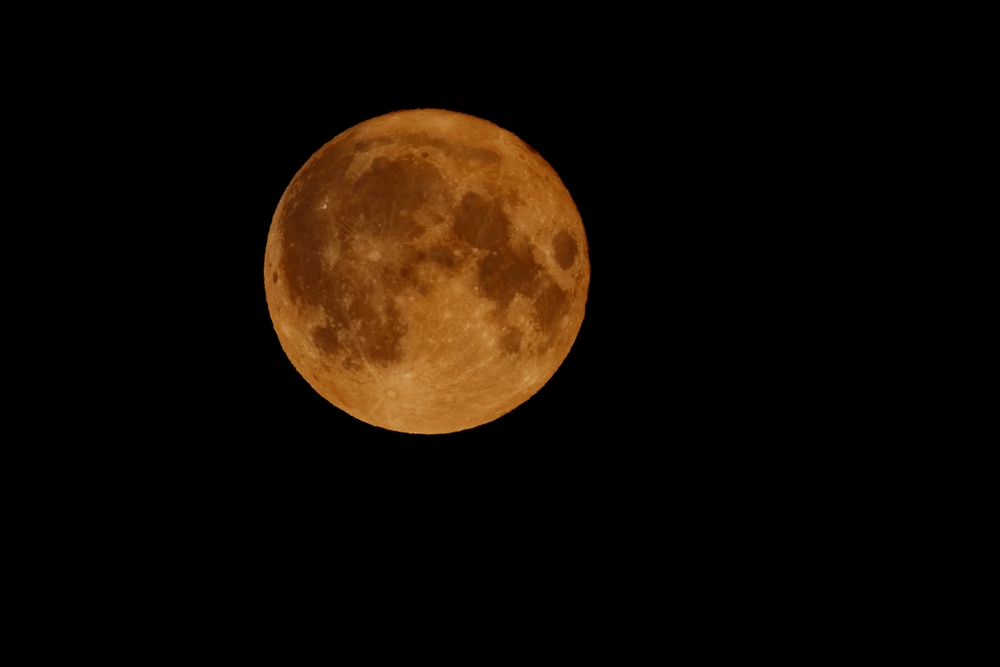
This August 2025 will be full of celestial events. First of all, in early August, the full moon of sturgeons will light up at night, then the moon will spend near Neptune and Saturn, and later a conjunction between Venus and Jupiter will occur.
Here is everything you need to know about some of the celestial events that occur during the first August half.
The full moon of sturgeons
The full moon of August will increase on August 9, 2025. Time will vary depending on your location. Here are a few times based on the different time zones:
-
Eastern time: 3:54 am
-
Central time: 2 h 54
-
Pacific time: 12:54 p.m.
As the sun sets, look at the east towards the rise of the moon. It is possible that as the moon rises, it will appear orange.
The best way to see the moon of the sturgeons is to find a place with a higher altitude, like a hill with a breathtaking view of the horizon. Make sure to bring a chair or cover for maximum comfort.
Find out more: Water hidden in lunar soil could make life on the moon possible for astronauts
Why is it called the sturgeon moon
(Image credit: Nadezhda Bolotina / Shutterstock)
THE Sturgeon moon Gets its name of the sturgeon – a large old fish that lives in the great lakes of North America. It was during this time of year that the Amerindian tribes had the best chance to catch these massive fish.
A typical sturgeon could reach six feet long and weigh almost 200 pounds, making it a vital resource for tribes.
In other cultures, it is also called the corn moon because it signals the start of the harvest season.
The moon will come closer to Saturn and Neptune
Only three days after the full moon (August 12, 2025), our satellite will share the same ascent with Saturn. What does that mean?
Well, for viewers of the night sky, it will mean that the moon, Neptune and Saturn will appear near each other and share a Right angle conjunction. They will appear grouped in the sky, and the best way to see them will probably be through a pair of binoculars.
Conjunction Venus and Jupiter
Conjunction of Jupiter and Venus on the river in 2016 (image credit: Viktar Malyshchyts / Shutterstock)
The moon, Saturn and Neptune are not the only celestial objects that form a conjunction in the night sky this month. Venus and Jupiter have derived themselves in the night sky, and around August 11, 2025 and 12, 2025, these two planets will form a conjunction and seem to be only about 1 degree of each other.
While we move later in August, however, the two planets will start moving away from each other and to be joined by the Moon, which will be a Ribbon of a crescent at that time.
Other celestial events such as Perseid meteor shower are fixed at the top on August 12, 2025. Stay attentive for what the rest of August has to offer lovers of night sky.
Learn more:: The Meteor Perseids Meteor 2025 shower could have 50 to 100 meteors per hour and fireballs
Article Sources
Our writers at Discovermagazine.com Use studies evaluated by high quality peers and sources for our articles, and our publishers examine scientific precision and editorial standards. Review the sources used below for this article:
A graduate of Uw-Whitewater, Monica Cull wrote for several organizations, including a focus on bees and the natural world, before coming to Discover Magazine. His current work also appears on his travel blog and his Common State magazine. His love of science came to watch PBS shows like a child with his mother and spend too much time at Binging Doctor who.


