Butterfly from Southern Europe spotted in UK for first time


Report by climate and science

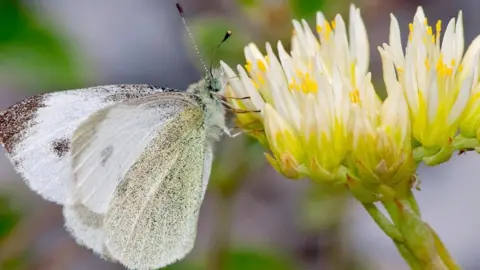 Adam Gor / Butterfly Conservation
A species of butterfly previously only found in southern Europe was observed in the United Kingdom for the first time, according to the conservation of charitable butterfly.
Experts have followed the rapid expansion of the small white butterfly from south to northern across Europe in recent decades.
The first observation in the United Kingdom was confirmed in Landguard Bird Observatory in Suffolk, after a volunteer managed to take a photo.
It is not yet clear which has led to the expansion of the species, although a warming climate is part of the answer.
Until recently, the Southern South White range was limited to southern Europe, in particular Southeast Europe.
The conservation of butterflies claims that the species was identified for the first time in the north of the Alps in France and Germany in 2008, and since then, it gradually extended its scope, reaching the Netherlands in 2015 and Calais in 2019.
The first British visitor was a female butterfly and was spotted in the Landguard nature reserve on August 2 by Will Brame, volunteer, according to Birdguides.
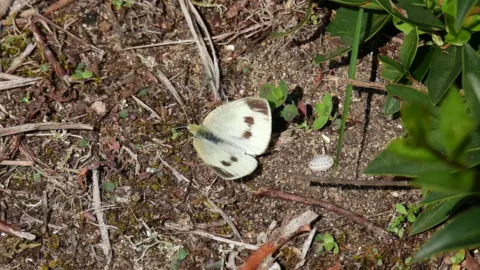 Will Brame
 Chris Van Sway / Butterfly Conservation
Dr. Dan Hoare, director of nature recovery at Butterfly Conservation, said the species had made an “ecological jump”.
“There are species that are rare in the United Kingdom and periodically over the years, they have appeared in one and two … But that does not really indicate a significant change in our fauna,” he said.
“The South South White is very different. It is essentially colonized in northern Europe of the Swiss Alps in the North Sea in the last decade, moving north at a rate of about 100 kilometers [62 miles] One year. “”
But if the species remains in the long term is not yet seen, he says, because its food source is a kind of garden called Candytuft which is not so largely planted here.
The species has never been a migrant in the United Kingdom and has not yet been recorded here, this is what a resident species would do.


