Massive comet trail may have transformed Earth’s climate more than 12,000 years ago, tiny particles suggest


Scientists have found new evidence that a massive comet trail may have caused climate upheavals on Earth over 12,000 years ago.
Tiny particles detected in ocean sediment nuclei suggest that the dust of a great disintegration comet has entered the earth’s atmosphere around the beginning of the youngest Dryas event, a sudden cooling period which made the temperatures drop to 18 degrees (10 degrees Celsius) in about a year. The researchers shared their results on August 6 in the journal Plos a.
“The quantity of comet in the atmosphere was sufficient to cause a short-term” winter of impact “, which led to a long cooling period, co-author of the study Vladimir TselmovichA scientist of the earth at the Borok geophysical observatory in Russia, said in a statement.
After 7,000 years of progressive warming, the land experienced a rapid cooling period about 12,900 years ago. Nicknamed the youngest Dryas, after the wild flowers of Dried Like prospered at colder temperatures, this colder era lasted around 1,200 years before warming resumed.
Competing hypotheses describe what has launched the youngest. Most scientists believe that cold freshwater lakes have poured into the oceans while the Earth’s glaciers were melting, and this weakens the large -scale ocean currents that brought lukewarm water to the north of the tropics. Others have proposed that impacts of a comet in disintegration have filled the atmosphere of dust and destabilized the glacial caps of the planet, triggering long -term cooling.
However, no one found evidence of an impact crater dated from the beginning of the youngest who could have triggered such an event. In addition, some scientists claim that some of the supposed evidence of the hypothesis – like “black carpet“Which contain metals common to asteroids at the beginning of the youngest Dryas – could rather be explained by more banal processes.
In relation: The Gulf Stream stopped pumping nutrients during the last glacial period – and the same goes
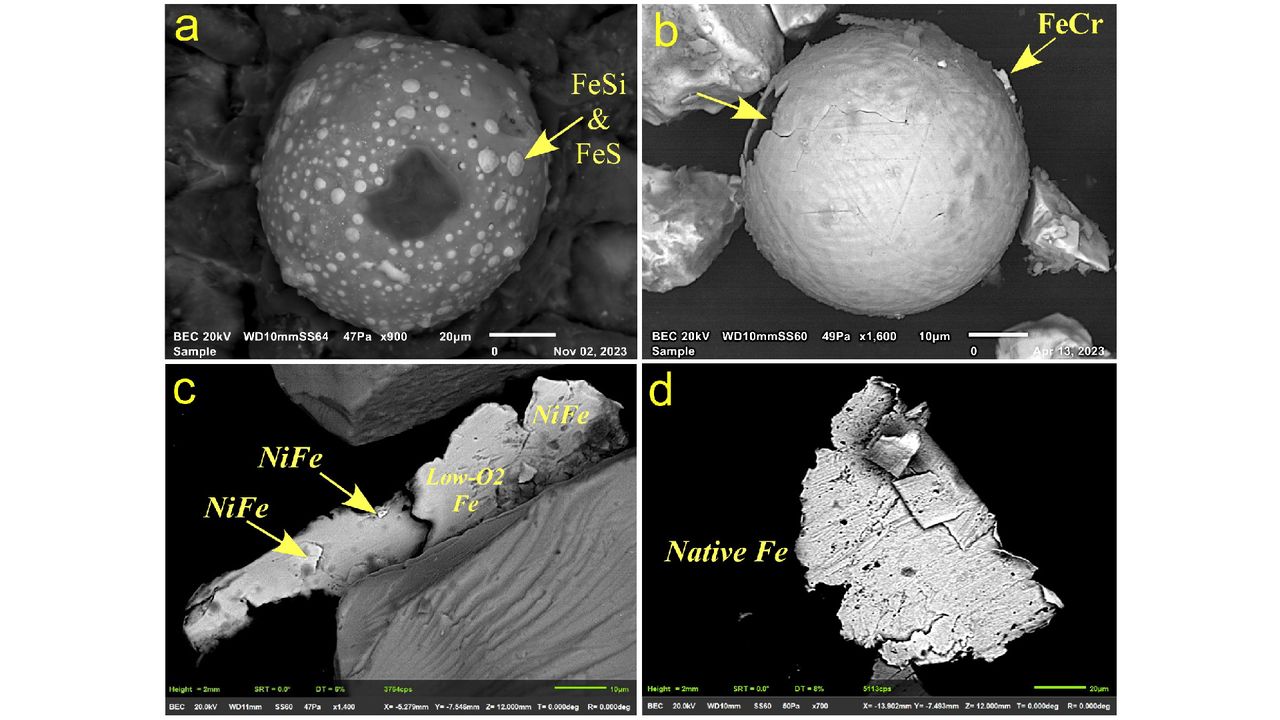
In the new study, the researchers studied the nuclei of ocean sediment of Baffin Bay, between Greenland and Canada, to seek evidence of a possible impact. The team found tiny metallic particles that could have come from comet dust, as well as even smaller particles with high levels of platinum and iridium, common elements in comets and meteorites.
They have also found microscopic spherical particles that have probably formed on earth but can contain small amounts of a comet or asteroid material. All of this appeared roughly when the youngest started.
The new study does not directly confirm the impact hypothesis. Instead, the particles act as indirect evidence of an impact or “abashprise”, which occurs when a meteor explodes inside the atmosphere of a planet before hitting the ground.
These impacts could come from a great comet in disintegration who then gave birth to the comet Encke and to the Taurid complex, the source of the annual shower of Taurid meteor, the researchers wrote in the study.
However, more research is necessary to confirm this proposal. The team plans to test other ocean nuclei for similar particles to confirm whether the youngest Dryas started shortly after these particles appear in the geological file.


