From waste to wonder: Revival of ancient Roman ‘golden fiber’ with pen shells


Golden silk, a luxury formerly reserved for Roman emperors, has been recreated by modern scientists.
In a study published in Advanced materialsA postch (Pohang University of Science and Technology) research team has successfully produced that it had successfully produced the 2,000 -year -old textiles known as Sea Silk. They accomplished this using wires from the common pen shell, cultivated along the Korean coast. The work of the team also explains the origin of the golden characteristic shade of the material and its famous resistance to discoloration during the millennia.
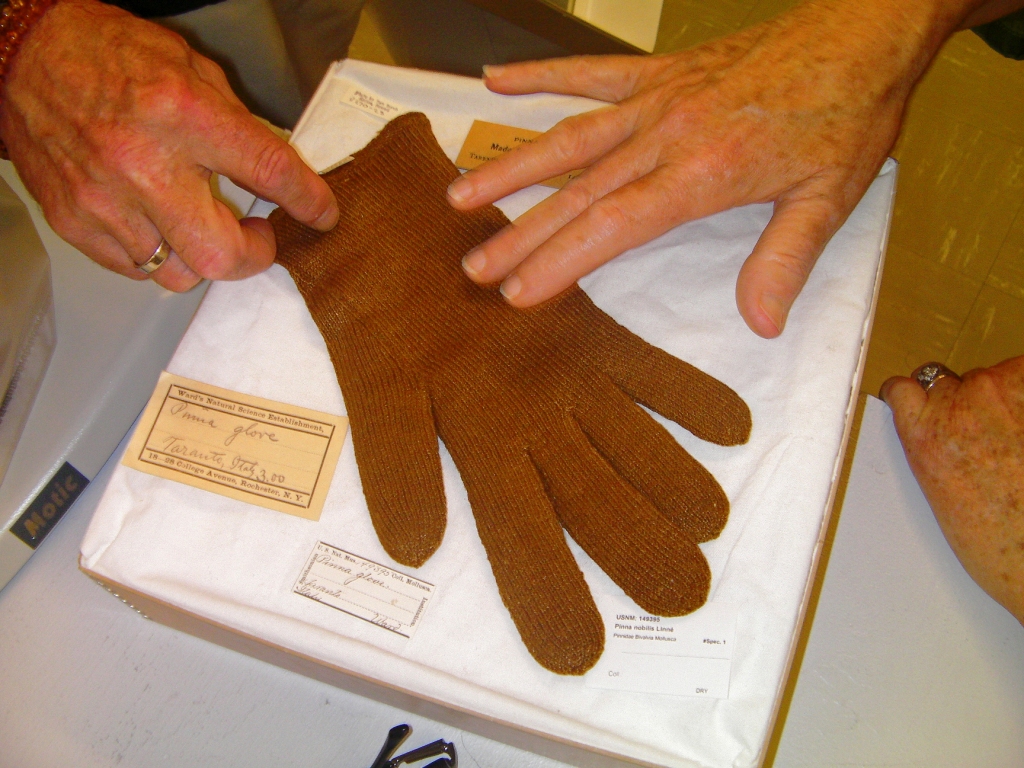
Sea Silk is a historic luxury textile of ancient Rome, formerly reserved for clothes worn by characters such as emperors and popes. Craft from the Byssal wires (silky filaments used for the anchoring) of the great Nobilis de Pinna de Mollusque Mediterranean, the textiles were precious to be both light and durable. Its most notable characteristic was an impregnated golden chandelier. Today, marine pollution and overfishing have pushed Pinna Nobilis on the verge of extinction, and his harvest is now prohibited.
“In all of Europe, only one craftsman is always authorized to harvest and treat Pinna Nobilis for sea silk,” said Professor Hwang Dong Soo, a chief of the research team. “By collaborating with this craftsman and the Max Planck Institute of Germany, we obtained a precious sample for our comparative research.”
To find a substitute for Pinna Nobilis disappearing, the Postch team studied the pen shell (Atrina Pectinata), which is generally cultivated on the Korean coast. Traditionally, the Byssal threads of these pen shells were thrown as a value of the food industry.
While their European grandparents produce long robust filaments, the Korean pen shells are smaller and their sons are shorter, a reason for which they were largely neglected by the researchers. However, the Postch team found that this by-product was an appropriate alternative. “We focused on their fundamental similarities,” said Professor Hwang. “The two molluscs belong to the same family, and their crystal structures and their X -ray protein sequences are almost identical.”
But the recovery path presented its own challenges. The most important obstacle was logistical: securing the raw material itself.
“We had to ask the fishermen to collect the Byssal threads separately, which they would throw normally,” recalls Professor Hwang. “It took a special request at the head of a fishing cooperative on a Shell farm just to collect the amount we needed for our research.”
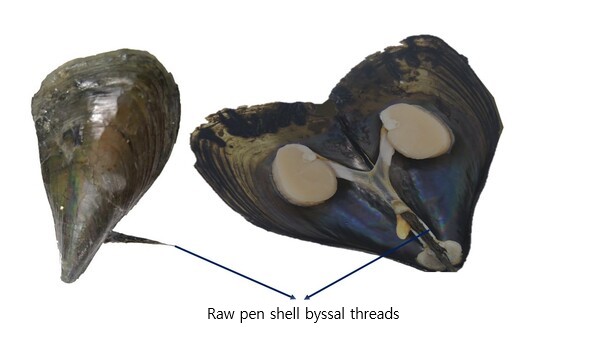
shells.
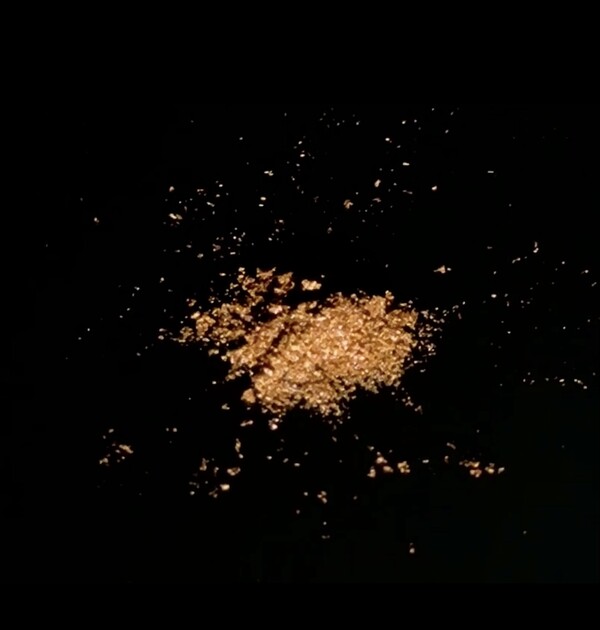
Downstairs: the sea silk produced from pen shells has been transformed into a thin powder.
Credit: Postch
The breakthrough came after years of dedication. The main author, Professor Choi Jimin, finally resolved a puzzle that had long intrigued Professor Hwang, providing an experimental explanation for the properties of silk. They discovered that its brilliant shade is not a coloring product but of “structural color”. A phenomenon where the microscopic structure of a material creates a color, similar to the iridescent miride of a butterfly wing
In marine silk, this microscopic architecture is made up of spherical proteins that the team called “Photonin”. These proteins form precise multilayer models, and the order of this alignment determines the liveliness of the golden shade: the brilliant the pattern, the more shiny the color. Because this color is an intrinsic part of the physical structure, the fiber is exceptionally light and has almost no discoloration over the centuries.
The meaning of the study consists in demonstrating how an industrial by-product rejected can be converted into a high-value material. In the first practical step, the research team is now collaborating with a department of clothing and textiles to weave silk in real fabric.
Professor Hwang suggested that potential applications could extend far beyond textiles, imagining uses in luxury clothes, cosmetics and even as high-end culinary ingredient.
“If you grind sea silk, it looks like gold powder,” he explained, “and as it is a protein, it’s edible.”
History was produced in partnership with our colleagues from Popular Science Korea.
More offers, reviews and purchasing guides