EFSA’s novel food review has the cell-cultured industry waiting in a ‘trough of disillusionment’


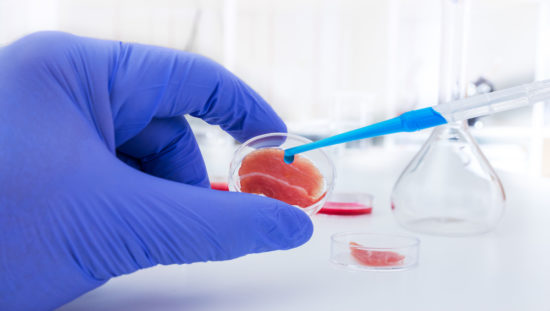
A year ago, the requests for a cultivated foie gras product were filed with the United States Food and Drug Administration, the Singapore Food Agency (SFA), the Food Standards Agency (FSA) in the United Kingdom, the Swiss Federal Safety and Veterinay Office (FSVO) and the European Food Safety (EFSA).
It was the latter who obtained the most notice because he marked the first time that the EFSA, the food security unit of the European Union, received a request for production and sale of cultivated meat in the EU. Until then, it seemed that the cultivated industry of emerging cells avoided EFSA and its rigorous review of food.
But EFSA’s Roman Food Review, which was to take at least 18 months, is now in progress for Gourmey, the Harvest Harvest Cell based in France, which hopes to revolutionize the duck liver market with a new global choice for foie gras lovers.
The cultivated cell, or as it is sometimes called, the Alt meat sector, remains mainly out of sight and mind because the products that have been approved remain mainly unavailable for consumers. In the United States, some specific products have been approved by the FDA and the USDA food security and inspection service, using an exam based on issues.
Five years after Singapore gave the green light for the first production and sale of cultivated meat products, the sector remains a game of venture capital with until now disappointing yields. The venture crowd has invested $ 3 billion in research and development cultivated by cells between 2013 and 2023.
Where things are currently found, with the expectation of the first food review of the EU novel for a product cultivated by cells and with a handful of approvals by other governments, but without real presence on the market, there is a scene that initiates call “the hollow of disillusionment”. The term refers to the period when technology does not meet expectations, and it is not certain that it will eventually keep its promises or fail.
The believing meats of Israeli startup, with an installation in North Carolina which, according to her, can produce 12,000 tonnes of chicken cultivated per year, is the first non -American company to receive the authorization of the FDA. Believing meats still need inspection of the USDA and the approval of the label before going to the market. The process is to work with fat cells that can be combined with vegetable proteins to make chicken products.
The first approval of the “without questions” letter from the FDA went to food up on November 16, 2022 for chicken cell equipment in culture. The following spring, the FDA approved Good Meat Inc. for the same product on March 20, 2023. Two years took place before the third approval of cultivated pork cells was disseminated at Mission Barns on March 7, 2025. Then, the FDA approved the material in salmon cell culture in WildType Inc. on May 29, 2025.
The official date of approval of believing meats is not known, but it is the third approval to occur this year and the fifth in the general classification. The company announced the news on July 24, calling it a “transformer moment” for believing meats and “the meat industry cultivated as a whole.“”
“We have received the FDA” without questions “letter, confirming the agency’s acceptance of our security conclusion,” said CEO Gustavo Burger.
A “letter without questions (NQL)” from the FDA means that the agency has examined the information submitted and found the product or the sure ingredient for human consumption. The USDA inspection of production facilities and the approval of the label are also necessary before a product cultivated by cells is on the market.
NQLs and scientific memoranda are published on the FDA website after approvals.
Cultivated meat prohibitions
Like the occasional approval of applications is news, the handful of states that have so far prohibited the production and sale of cultivated meat or the use of public funds within their limits. The prohibition of Florida on cell cultivated meat entered into force over a year ago on July 1, 2024.
It was the first in the country to ban “any meat or food product produced from cultivated animal cells”, violations being a second degree offense. Upsy Foods Inc. continued Florida’s state fairly quickly before the Federal Court for the North District of Florida.
Florida tried to reject the trial earlier this year, but the federal judge has chosen to hear the case. The company based in California was the first to have its chicken cultivated by cells approved by the FDA. He maintains that the prohibition is unconstitutional in that it protects Florida producers from those who have products from outside the state. He opposes the use of prison and fines for purposes unrelated to health or food security problems.
The prohibition of Alabama on cultivated cellular meat came into force on October 1, 2024. The second state prohibition to be adopted prohibits sale, offering a sale, exchange or distribution of all meat cultivated for the human consumer
Recent cultivated meat prohibitions (2025)
Mississippi – The legislature unanimously adopted the Bill of the Chamber 1006, becoming the third state, after Florida and Alabama, to prohibit, as of July 1, 2025, the manufacture, sale or distribution of food products cultivated derived from cultivated animal cells. The law defines them as any food produced from cultivated animal cells. Violations are crimes, punishable by fines up to 500 or three months in prison.
The Mississippi Ministry of Agriculture and Trade and the State Health Department are authorized to enforce the prohibition, with measures such as license suspensions for non -compliant retail food establishments. The law also prohibits labeling cultivated cellular products as well as meat to avoid the confusion of consumers.
Nebraska – LB 246 was introduced into the Nebraska Unicameral at the request of Governor Jim Pillen in January 2025 to prohibit production, import, distribution, promotion, display or sale of cultivated-protein food products. The bill would define them as foods imitating animal tissue, cultivated in vitro from stem cells initially isolated from agricultural animals, distinct from plant alternatives like the impossible hamburger.
Nebraska, the second largest state producing livestock after Texas, generates nearly $ 31.6 billion in its cattle and breeding industries, according to the Nebraska Department of Agriculture, highlighting the economic context of this legislation. The ban adopted the unicameral during a vote from 38 to 11.
South Dakota – Bill 1118, signed by Governor Larry Rhoden in February 2025, is not a retail ban, but rather prohibited for public funds from being used for research, production, promotion, sale or distribution of proteins cultivated by cells, defined as human foods made from cultures of animal cells or cultivated DNA outside a living animal. Exemptions apply to the Board of Regents, its institutions and state agencies fulfilling certain regulatory functions. The law reflects the accent put by southern Dakota on the support of its established meat industry by limiting financial support for cultivated meat.
(To register for a free subscription to Food Safety News, Click here.)


