U.S. and China extend tariff truce deadline for another 3 months : NPR


President Donald Trump speaks with journalists at the White House on August 11, 2025 in Washington.
Alex Brandon / AP
hide
tilting legend
Alex Brandon / AP
President Trump extended a truce between the United States and China on prices, a decision that could potentially prepare the ground for a summit with the Chinese leader Xi Jinping later this year.
With hours left on the stopwatch before the midnight deadline of Tuesday, Trump executive decree Recognized that China took “important measures” to respond to American concerns on “economic and national security issues”. Beijing announced the extension of the truce at the same time.
Allowing the truce to expire would have sent tariff rates for the two soaring countries, bearing a blow to exchange between the two largest economies in the world. The United States will keep its standard rate rate on Chinese products at 30%, and China will keep its own rate on American products at 10%.
The Extension Gives The Two Sides A Further 90 Days to Iron Out Their Differentés on Range of Issues As Trump Seeks to Reshape The Global Economy in Favor of Bringing Manufacturing Back to the Us it also arrives as the Us Announces Several Trade Agreements With Countries Including South Korea and Japan On The One hand, while it levies steep tariffs on several nations on the other – for example, Trump threatened To increase American prices to 50% on Indian exports to the United States later in August, due to continuous Russian oil purchases by this country.

“Today’s news stabilizes the situation, increases confidence for American consumers, for goods importers who sell these products in the United States and for manufacturers in China,” said David Meale, Chief of the Chinese Division of the Eurasia Group and former diplomat and deputy mission of the US Embassy of Beijing. “I think it is very likely that the United States and China will come to a kind of commercial arrangement, and the next steps will be motivated by the prospect of a meeting of leaders between President Trump and President XI later this fall.”
Meale says that he thinks that the next stages of the two parties will involve more meetings between sales officials and economic officials like those who were held in Stockholm last month, to lay the foundations for a possible face -to -face meeting and a more concrete trade agreement which could be signed before the expiration of the last break on November 10.
After his inauguration, Trump has relaunched a trade war that he began during his first mandate, announcing tariff hikes on China. Beijing responded with its own reciprocal prices and export controls on minerals of rare earths such as bismuth and tungsten, which are a crucial component of most electronics. A series of increases and rate responses continued in March and April, the American prices on Chinese imports finally reaching 145% and China prices for American exports climbing 125%.
During a meeting in Geneva in May, however, the tensions were cooled when both sides announced a 90 -day truceThe two countries reducing tariff rates and the softening of other commercial barriers, including deliveries of Chinese minerals in rare land. But both parties quickly accused the other of not having honored the terms of the agreement.
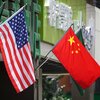
The two parties held two days of talks in Stockholm last month, but left without accepting an agreement. After the talks, the secretary in the United States of the Treasury, Scott Bessent, told CNBC that he believed that the United States and China had reached “the competitors of an agreement” and that there were still some technical details to develop on the Chinese side between us. I am convinced that it will be done, but it is not 100%. “Bessent added that the final decision concerning the approval of any agreement with President Trump.
Negotiations between the United States and China have been complex and Understood Several problems, ranging from American concerns about Chinese overproduction and Russian oil purchases to Chinese complaints concerning Washington’s decision to limit semiconductor exports that China needs to supply AI systems.
Meale says that the American priority for these negotiations will be to reduce its trade deficit with China, to secure and diversify its supply chains far from dependence on China and to ensure that the flow of minerals of rare land from China will be stable. There will be important rates on Chinese products entering the United States “when everything is,” predicts Meale.
China, says Meale, “searches for stability” in its relationship with the United States, because it faces a slower economy and is looking for a more foreseeable environment for its companies. Meale says that China will also try to maintain its access to American technologies such as semiconductors and jet engines.

Nicholas Lardy, a non-resident scholarship holder at the Peterson Institute for International Economics, also says that a latest American-China trade agreement may include the softening of technological restrictions, and a less likely possibility could be Chinese promises to invest in American manufacturing. Lardy adds that even if the two parties make progress and reach an agreement, in Trump’s vision, “bilateral trade would narrow considerably, beyond what we have already seen”.
Although the truce has relieved the worst trade tensions, trade between the United States and China obviously has fallen Since the start of this year. July export data in China has shown that its exports to the United States have dropped from one year to the other for the fourth consecutive month, and imports from China from the United States dropped from 10.3% of the period from January to July.


