Why Are Rabbits Sprouting Tentacles?


August 14, 2025
2 Min read
Here is why rabbits germinate tentacle horns
Rabbits identified with horn’s growth on their face in northern Colorado are better than they look like it
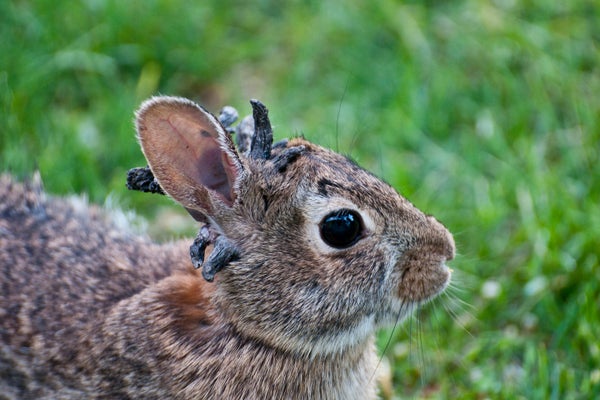
This oriental cottontail rabbit has growth that exceeds its head because it is infected with a papillom virus.
Education Images / Universal Image Group via Getty Images
The rabbits in northern Colorado were spotted with bizarre horns and somewhat macabre on their face. But fauna officials say that rabbits will finally happen.
They are not a danger for others either – at least, not for non -rabbits. The tentacle rabbits are infected with Shop Papillomavirus, a member of the same viral family who can cause warts in humans. Shop Papillomavirus is known to affect only rabbits and hares, not humans or other animals, explains Kara Van Hoose, spokesperson for Colorado Parks & Wildlife (CPW). For most rabbits, it is also a harmless infection.
Infected animals “are able to identify it from their system by themselves,” explains Van Hoose. Once the virus is disappeared, growth, which are made of the same keratin found in the hair and nails, end up falling. In a case minority, infection can induce epidermoid cancer. The infection can also cause problems if the associated growths appear near the eyes or mouth, where they can interfere with the search for food and eat, says Van Hoose.
On the support of scientific journalism
If you appreciate this article, plan to support our award -winning journalism by subscription. By buying a subscription, you help to ensure the future of striking stories about discoveries and ideas that shape our world today.
It is not clear if there are in fact more rabbits than usual infected by Shop Papillomavirus in northern Colorado this summer, says Van Hoose. The CPW had received no rabbit reports to the horned face before a new local published on August 8 drew attention to observations in Fort Collins, Colorado. Since then, several people have called the agency, says Van Hoose, but it is difficult to say how many infected rabbits there are really.
“It is also difficult to say, if we get 10 reports, if these are 10 different rabbits or if they are two rabbits, we may see five times different,” she said.
The growth themselves are not infectious. The virus spreads through the bites of mosquitoes, ticks and fleas, so it tends to peak in summer and to fade during the coldest months.
The discoverer and namesake of the virus, the virologist Richard Shope, first identified the pathogen in 1933 in the American Midwest. Shop was also the first to identify the influenza A virus and was among the first to identify this particular influenza pathogen as guilty of the fatal pandemic of 1918. His work on rabbit papillomavirus was the basis of understanding the strains of the human papillomavirus (HPV), some of which can cause cancer. This research line has finally led to the development of the HPV vaccine, which considerably reduces the risk of cervical cancers and others linked to HPV.
Although horns rabbits are not a danger to humans or pets, Van Hoose advises people to keep their distance from creatures, as they should with a wild animal, because rabbits can transmit other pathogens. “Once you realize [growths] It is probably not harmful to rabbits, you can somehow appreciate science at work, ”she says.


