Bald eagles stun scientists with bizarre migration pattern


How do researchers follow the movement of wild animals (especially birds) which can travel hundreds of kilometers a day? By gently equipping them with GPSS. A team in Arizona has equipped white pygaxals (Haliaeetus leucocephalus) with instructors to study their migration models. The results proved to be quite intriguing and were recently published in the Journal of Raptor Research.
Between 2017 and 2023, the researchers followed 24 recently fled white -headed pygargues and two unattained adults. While breeding of Arizona’s white pygargues tends to stay close to their nesting territories for most of the year, the movement of unclear eagles is more a mystery. The drafting of this scheme – as well as any difference in survival between non -tutors and breeders – is preparing for important implications to understand the state of the species.
“Emigration and immigration are difficult to observe, so seeing this eagle explore far beyond Arizona state lines was fascinating to see,” said Caroline Cappello, a quantitative wildlife ecologist at Cornell University and co-author of the new study, says Popular science.
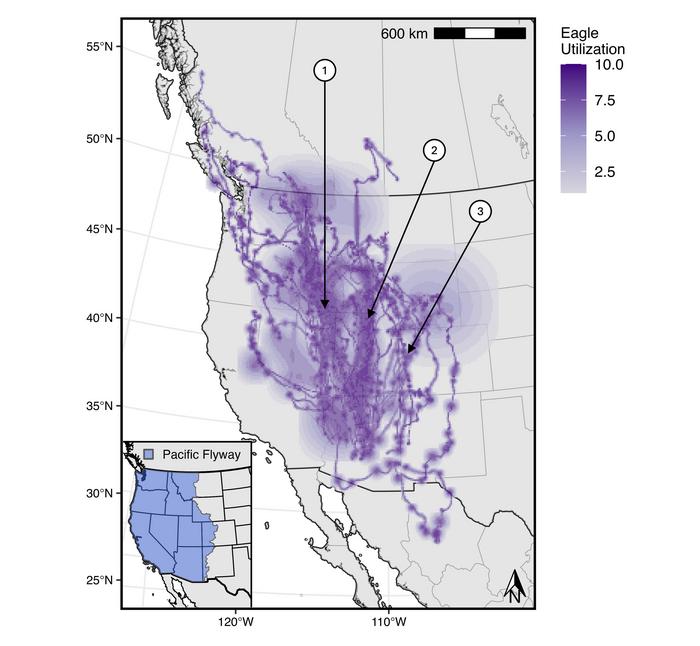
During the seven -year period, the researchers followed individual eagles as long as the devices lasted. While many North American migrant birds fly south during the non-connections season in winter and north again to nest during the hottest months, the Arizonian head pygargues followed a different model.
They started nesting in winter and “moved north of Arizona during the population reproduction period in spring and summer boreal, and returned to the south in the fall before the breeding season,” the researchers said in the study. They documented that eagles of all ages went to southern Canada and the northern United States, and their migrations have become more precise with age.
“There are very few cases where white -headed pygargues have rocked like Arizona chicks have been observed by reproducing outside the state,” explains Capello. “Most who are observed by reproduction in recent years return to Arizona. The female who varied in Northern California has shown signs of potential establishment of a reproduction territory there, which would have been notable given how rarely has been documented. “
Most of the Eagles in question followed the previously identified intermountain migration route, a migratory route which “goes from Alaska to Mexico east of Sierra Nevada and west of the Rocky Mountains and Western Sierra Madre”, they added. The Cappello survey and his colleagues also identified the same water bodies as migratory fosters for white -headed pygargues like those previously found by a study in the 1980s, indicating their multigenic importance.
An adventurous young eagle crossed 10 states and four Canadian provinces before settling in California, where researchers thought that it could choose a reproductive territory. Unfortunately, it was electrocuted, which is not uncommon for large raptors like the eagles. This premature spell was disappointed for the researchers, since the unusual movement of the bird could have rarely illuminated the prospects for dispersion of the white -headed pygargues in Arizona.
Nevertheless, the team always had a literal view of birds in the movements of dozens of white pygargues whose revelations will surely allow environmentalists to protect these majestic animals and their migration ways.

More offers, reviews and purchasing guides


