Ethiopian migrants face kidnappings and death, leaving behind heartbroken families

Addis -Ababa, Ethiopia (AP) – When Nigus Yosef, 19, told his parents that he was going to leave the house in the Tray region in Ethiopia and try to go to Saudi Arabia, they begged him not to go.
Two of their children had already crossed, via the Gulf of Aden then the Yemen torn by the war. Yosef’s brother is now in prison in Yemen for illegally entered this country. Her sister went to Saudi Arabia, also illegally, which means that it will be difficult for her to leave.
On August 3, 2025, Yosef and five friends from his city of Adi Qeyih rose aboard a boat for Yemen. That night, he capsized. Only 56 people from nearly 200 people on board survived. Yosef was not part of it.
“His parents are in depth of shock and sorrow,” said his uncle, Redae Barhe, in a telephone interview. “They can’t even express their sorrow.”
Nigus Yosef is one of the 132 missing from the boat that capsized this month; One of the countless people in African countries has disappeared in a journey in search of a new life.
Danger trips
The families they leave know that there is a good chance of unhappiness. Boats are often overcrowded, unable to withstand difficult seas. Once on dry land, there are other dangers. Migrants are vulnerable, with few resources or protection, making it easy prey to traffickers of human beings and kidnappers.
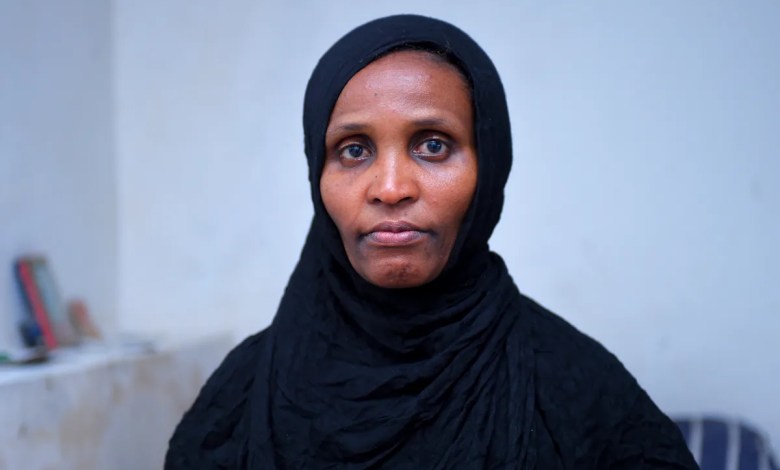
SENISE TADESSE says that her 27 -year -old daughter went to Yemen, to be selected in captivity by ravisseurs who communicated with Tadesse via Facebook, demanding a ransom of US $ 6,000 to release her only child.
Tadesse said in an interview with the Associated Press in the capital, Addis Ababa, that she had sold her car and all her jewelry to lift the money and drop the money on an Ethiopian bank account.
But the kidnappers demanded more. She sold all her property; They wanted even more. Not knowing what else to do, she went to the police, army of the local bank account number that the kidnappers had used.
Meanwhile, she was on Facebook, trying to get news from her daughter. Finally, a post of a survivor confirmed that the daughter of Tadesse had been killed. To date, no arrest has been made.
Despair
Although Ethiopia has been relatively stable since the war in the country of the country ended in 2022, unemployment of young people is high and there are still pockets of trouble.
“Many young people no longer see a future for themselves within a nation that does not favor their needs,” said Yared Hailemariam, a defender of Ethiopian human rights based in Addis Ababa. “The cause of this migration is the lack of economic opportunities and growing conflicts. Young people face a choice to take up arms to fight in endless conflicts or to provide for their family. ”
The war in Tray was the reason why Nigus Yosef never finished school. When the conflict started in 2020, he was in 7th year and abandoned to join the Tigray armed forces. When the ceasefire was signed in 2022, he returned home, but did not find a job. After three years, he was desperate.
Residents of the region say that traffickers grasp this despair and that their networks are even extending into remote areas and rural villages.
Eden Shumiye was only 13 years old when she left Adi Qeyih with Yosef and her friends. Her parents say that she was practiced by smugglers of people during the day of the public market in the city and that they convinced her to leave with the group. Her parents heard nothing from her until one of the other migrants calls them when they reach Wuha Limat, near the Ethiopia-Djibouti border. The news left them sick with concern.
After the boat capsized, a parent of one of the survivors managed to send them a vocal message from Saudi Arabia via the IMO messaging application, confirming that the Eden corpse had been recovered. Of the six young people who left Adi Qeyih, only two survived.
“His mother has a broken heart,” said Eden’s father, Shumiye Hadush, to the Associated Press. “The pain is really overwhelming.”
Ethiopia issues a warning
In response to the recent tragedy, the Ethiopian government has published a declaration warning citizens “not to take the illegal path” and “to avoid traffickers’ services”, while exhorting people to “pursue legal paths to obtain opportunities”.
But Girmachew Adugna, a migration scholar specializing in Ethiopia and the Horn of Africa, stresses that the legal migration channels are slow and long. “Passports are difficult to obtain due to the increase in costs,” he says. “Young people often have little or no access to the legal migration routes, which leads them to migrate by irregular means.”
More than 1.1 million Ethiopians were classified as migrants who left their country of origin and lived abroad in 2024, against around 200,000 recorded in 2010, according to United Nations.
Despite the Yemen civil war, the number of migrants who arrived there tripped from 27,000 in 2021 to 90,000 last year, the international organization of the United Nations said last month.
To reach Yemen, migrants are taken by smugglers on often dangerous and overcrowded boats across the Red Sea or the Gulf of Aden. The IOM said that at least 1,860 people died or disappeared along the route, including 480 who drowned.
“Our young people die because of this dangerous migration,” said Eden Shumiye’s father Hadush. “They are victims of the cruelty of traffickers. When will this tragedy end? ”
___
The writer Associated Press Khaled Kazziha in Nairobi, Kenya contributed to this report.
___
To find out more about Africa and development: https://apnews.com/hub/africa-pulse
The Associated Press receives financial support for global health and development in Africa from the Gates Foundation. The AP is solely responsible for all content. Find the AP standards to work with philanthropies, a list of supporters and coverage areas financed at AP.ORG.


