Contributors to Scientific American’s September 2025 Issue


August 19, 2025
4 Min read
Contributors to American scientistSeptember 2025
Writers, artists, photographers and researchers share the stories behind the stories
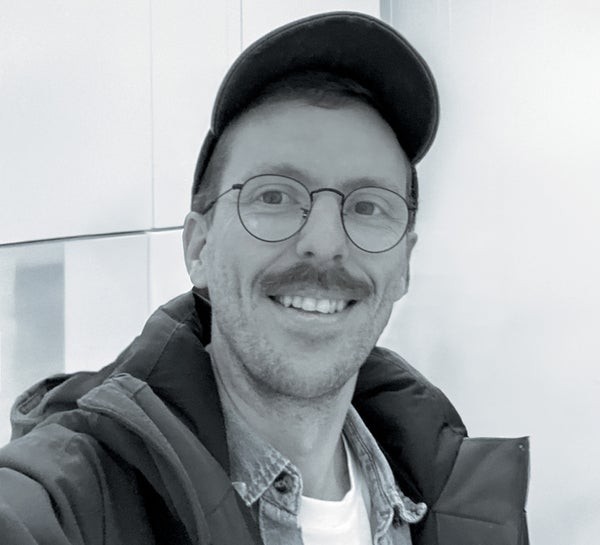
David Cheney
Brainwashing
David Cheney is not a simple artist – he is a certified medical illustrator for the board of directors. In the program of Johns Hopkins University where Cheney obtained his master’s degree, artists are studying right alongside medical students. So when American scientist Asked Cheney to make the cerebrospinal fluid incoming and out of the brain for a characteristic of journalist Lydia Denworth on how the organ cleanses waste during sleep, it already had a strong understanding of the anatomy.
Cheney filled stacks of sketch’s notebooks as a child, but he assumed that he would end up being presented to university. He experienced different paths (for a while, he was a major musical theater) until he discovered a career in medical illustration. It was an instant and durable adjustment. “The field could be a niche,” he says, “but it is so varied in terms of what you can do with the training.”
On the support of scientific journalism
If you appreciate this article, plan to support our award -winning journalism by subscription. By buying a subscription, you help to ensure the future of striking stories about discoveries and ideas that shape our world today.
He worked for medical clinics, university institutions and even a technological startup where he designs “an entire race of foreigners” for an cryptocurrency game. Cheney would like to do more sculptures, specifically reconstructing “a type of extinguished creature” for a museum of natural history. “I hope that more young artists who love science know this area where you can really use both sides of your brain.”
Dava Sobel
Meter
When the writer Dava Sobel learned that the first questions of American scientist Included from poetry, she wanted to bring this tradition back to the magazine. His argument was to publish existing poems on science; Instead, the publishers responsible for requesting an original work. Sobel first approached poets she knew – Diane Ackerman was the inaugural contributor to the counter column in January 2020 – then “the flood began,” she said. “The backwards of the submissions is now a long time.” Sobel does not write poetry herself, but her long career as a journalist and scientific author has often involved “people’s letters, showing scientists like the real people they are”. His first great success, she said, was her 1995 book Longitude“Which allowed me to write all the others.” One of the best fun facts about Sobel is that it has sat on the planet’s definition committee which redefined the term in 2006 – a company that ultimately led Pluto to lose its status as a planet. This movement “was not our recommendation!”
As editor -in -chief of the counter, Sobel is looking for poems that “provoke an emotional jump in me”. Other times, she will choose a poem because “he tries a huge challenge – and works”. The hopes of the counters take note: Sobel has a limit in Limericks but likes to publish at least one humorous poem each year. “I am the first to admit that it is totally subjective, and the contributors are totally at my mercy.”
Charles C. Mann
Research upside down
When we asked the author Charles C. Mann to write an essay on dramatic twists and turns in science, Mann, fortuitously, already reflected the subject. “I write to try to understand what I think,” he says. He teased real 180s – “when the hypotheses made a discipline in a discipline that did not reveal himself after someone gave them a hard eye” – of a difficult type of pivoting, “when the normal back and forth of science is pinned by people who make final proclamations on the basis of exaggerated evidence.”
For someone who wrote a book (entitled 1491) which rethinks the environmental history of an entire continent, Mann is not sure that it is better to face the uncertainty than the rest of us. “But I would say that I am comfortable admitting that luck plays a huge role in what happens to me.” Sometimes, while working on a project, he is “distracted by worrying if I really know what I’m talking about”. The research discursions that follow often lead to satisfactory revelations. “It is good to be aware of your own fallibility,” he says.
Mann apparently lost track of the number of books he has written (“I don’t know, new?”), But his neighbor, on the western North American, will be published in 2026.
Andrew B. Myers
Proof of peanuts
Photographer Andrew B. Myers (above), which turned the history of this month’s coverage on the peanut allergies of the writer Maryn McKenna, likes the constraint of creating large worlds on a small scale. What has Myers looked in the ideal peanut model? “You are looking for the very basic quality of an peanut, this form eight with a hourglass curve,” he says. “But the curve cannot be so basic that it looks false. You want a 90% perfect peanut and 10% oddity. Just like human attractiveness.” By giving it a light from Halolike, Myers sought to make a singular little peanut “feeling ridiculously heroic”. The manipulation of peanut butter for filming was less satisfactory. “It is a kind of coarse substance and difficult to work.”
Myers adopts a layer and “wacky” approach to make images of dead life and describes himself as a sculptor and a designer than a photographer. “I care very much about the construction of the frame and the mixture processes,” he says. “I do things in a calm and calm setting with a camera on a tripod. I don’t remember the last time I kept a camera in my hands. ”
Myers, who worked for a range of editorial and commercial customers, has an affinity to draw scientific concepts in a smart and unexpected way. He is inspired by the imagery that leaves the laboratory of his spouse, which is a computer neuroscientist. “I like when scientists and artists come together,” he says. “Scientists are much more humble than your average artist, but both look outside and have a curiosity rock.”


