How Plastics Went from a Sustainability Solution to an Environmental Crisis


August 19, 2025
4 Min read
Plastics have started as a sustainability solution. What’s wrong?
Synthetic polymers were supposed to free us from the limits of our natural resources. Instead, they led to an environmental crisis
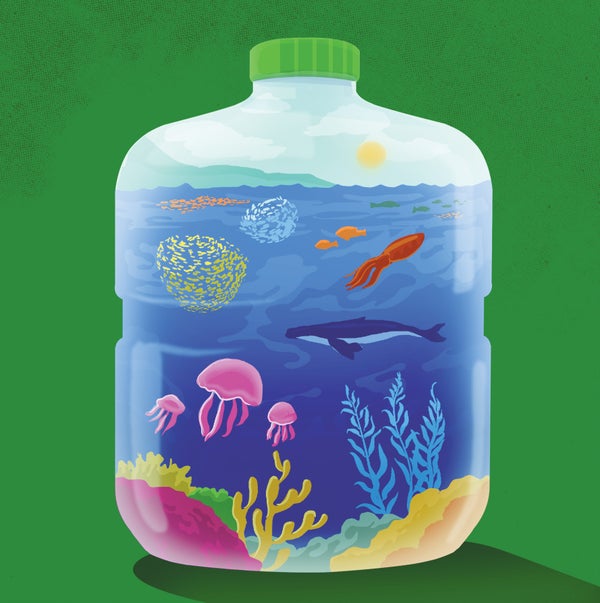
In 1864 American scientist has published a competition launched by a billiard-table manufacturing company: “Ten thousand dollars with an ivory substitute”. The owners of Phelan & Collender were happy to see it; They wrote to the magazine to explain what they were looking for in an “ivory alternative” which could be used to make billiard bullets and hoped that “would have the effect of stimulating the genius of some of your many readers”. The real things of the defenses of elephants had become rare, but its elasticity, its hardness and its density were difficult to find in another material.
An Albany, NY printer, named John Wesley Hyatt, proposed a response in celluloid, a material composed of the cellulose nitrate, a polymer that maintained the ball together; Camphor, an organic compound that provided flexibility and sustainability; And the bone of the blurred cow, to give the ball the good game mechanisms. Rather than accepting the reward of $ 10,000 and to report the rights of its invention, Hyatt patented its object in 1869 and launched its own business, selling the Billiards Celluloid that the scientist of the Conservation Arturn, writing in 2023, called “the founding object of the plastic industry”.
The creation of the “first plastic” was essentially a response to a durability problem. There were only so many elephants, turtles and silkworms to do, and their defenses, shells and fibers were increasingly requested. Articles and advertisements at the start of the plastic industry represent materials such as relief of natural resources pressure. In an article in 2023 in PNA Link, Neves and his colleagues called the Celluloid billiards of Hyatt one of the “first successful efforts to replace materials to help survival of endangered animals”.
On the support of scientific journalism
If you appreciate this article, plan to support our award -winning journalism by subscription. By buying a subscription, you help to ensure the future of striking stories about discoveries and ideas that shape our world today.
The billiard ball and other reinforced polymer composites were predecessors of commercial plastics. But the term “plastic” was nebulous, more marketing language than the scientific category. Philip H. Smith, writing American scientist In 1935, defined it as “the name given to a group of more or less arbitrarily chosen substances which, when it is correctly composed and treated, became plastic and can be molded or sunk to shape.”
In American plastic: a cultural historyPublished in 1995, Jeffrey L. Meikle writes that the fear of an ivory shortage which stimulated the development of plastics moved in the 20th century to the idea of democratizing luxury articles. Mass production of plastics for a wide range of uses began in the 1940s when production in the United States almost tripled in the war years. This expansion coincided with the replacement of bio-blocked materials (such as cotton, soybeans and sugar) in polymer bases by fossil fuels, which have been favored as an abundant resource. To give specific properties to products, additives such as dyes, plasticizers (such as phthalates and bisphenol a) and flame delayers were included in polymers during manufacturing.
You know where this story is going. In the 1970s, Meikle wrote in his book “The capacity of the plastic to transcend nature no longer seemed no longer utopian but rather disastrous.” The plastics had inaugurated an era of excessive things that were cheap to do. Originally celebrated materials for their sustainability and longevity have become popular in single -use articles. Ninety percent plastics are not technically recyclable anyway, and some now support that recycling campaigns have only encouraged people to feel better at the idea of buying more plastic things. Because plastic is not biodegradable, it simply accumulates, fragmented into ever smaller pieces on hundreds or thousands of years. In 2009, the first complete review of the impact of plastics on the environment and human health was published – a collection of consequences and warnings which have not become more disastrous.
Now, researchers are studying the great presence and effects of microplastics – spots that lighten toxic chemicals in the environment. Single -use articles such as water bottles are an obvious part of the problem, but there are many other culprits. Until the mid -1990s, natural fibers dominated the fashion industry; In 2023, synthetic polymers represented 67% of world fiber production, the polyester alone representing 57% of all new clothes, textiles of the house and shoes. These products lose microplastic fibers at each washing, contributing to pollution in groundwater. These contaminants, which are fundamentally impossible to clean, are not only present in the soil and water: a new study has revealed that the sheets of the plants absorb air microplastics. All the animals studied, including us, do not only eat plastic in our food and drink it in our water; We now have plastic in our organs.
The solution to a problem of environmental sustainability has become one of the largest and most insoluble environmental crises of our time. As Rebecca Altman wrote in an article in 2021 in ScienceCelluloid “allegedly spared the elephant, in particular the billiard industry. [But] Market data show that celluloid has not reduced ivory demand, which has increased in the years that followed the introduction of Celluloid. The celluloid, she adds, has also accelerated the demand for camphor, a product distilled from a persistent leaf tree prevails in Taiwan.
What started as a competition to invent an alternative to ivory has turned into competitions to invent methods to clean the large plot of the Pacific trash and other tentacular plastic icebergs in the oceans all over the world. In 1942, Williams Haynes, historian and promoter of the chemical industry, said that synthetic materials would have “more effect on the life of our great grandchildren than Hitler or Mussolini”. He could not have imagined that the greatest impact on future generations could be nanoplastic fragments in their brain.