An Important Gene Inherited From Denisovans Helped Modern Humans Survive and Spread


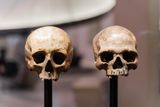
When modern humans have traveled from Asia to the Americas, crossing the Bering Strait for the first time, they were well prepared. It is because these travelers brought an adaptive variant in their genes – a genetic advantage that they have acquired through two distinct populations of ancient humans.
Recently published in ScienceA new study suggests that Denisovans have transmitted this variant to the Neanderthals, while the Neanderthals have transmitted it to modern humans, where it is seen in the genomes of past and current people with native American descent.
Tracking the origins of this genetic heritage, the study supports theory that the unusual between ancient humans may have helped our species to survive and spread.
“From an evolutionary point of view, this observation shows how the connection can have effects that we still see today,” said Emilia Huerta-Sánchez, study author and population geneticist at Brown University, according to a press release. “From a biological point of view, we identify a gene that seems adaptive.”
Learn more: Who were Denisovans?
Fossils with Denisovan’s DNA
Denisovans wandered throughout Asia between 300,000 years and 30,000 years, although their traces are remarkably rare. Indeed, very few fossils of this population were found, including a few fingers and fragments, some bones of the jaw and a recently reassessed skull.
However, DNA within these fossils has enabled scientists to seek genetic similarities between Denisovans, Neanderthals and modern humans, revealing the history of burial between these three groups.
Denisovan gene variant
To understand this story a little better, the authors of the study compared Denisovan’s DNA to modern human DNA collected from former Aboriginal Americans and contemporary Latin American Americans with Aboriginal American descent.
While ancient American DNA came from a handful of archaeological sites in the North and South American, contemporary American DNA came from the 1000 Genomes project, a collection of modern human genomes compiled in the 2000s and 2010s.
By turning specifically to MUC19 – a gene which is supposed to have an impact on the mucous barriers of the respiratory and digestive systems of the body – the team found that a specific variant was present in Denisovans and Aboriginal Americans, both ancient and contemporary, suggesting that it was transmitted from the first to the last, for which it served a kind of adaptation.
In fact, the prevalence of this specific version of MUC19 in Aboriginal American populations shows that the variant has provided a certain advantage to the people who crossed the Bering Strait, whether for survival or reproduction. The specific advantages he offered are not completely clear, although it is possible that the variant has protected modern humans from pathogens they have encountered in their new environments.
Learn more: Who were the Neanderthals?
Heritage from man to man
So how, exactly, have modern humans acquire this genetic variation? Looking at the location of the muc19 gene in the modern human genome, the team found that the variant was stuck between two Neanderthal DNA segments. According to the researchers, this suggests that Denisovan has been transmitted to Neanderthal to modern human thanks to burial.
The results consolidate the idea that the mixture of ancient human populations played an important role in the introduction of precious genetic variants. “As a rule, genetic novelty is generated by a very slow process,” said Huerta-Sánchez in the press release. “But these mechanism events were a sudden means of introducing many new variations.”
Additional research could clarify the specific advantages of this MUC19 variant in North and South America, where modern humans have entered environments that they had never encountered before. Although genetic variation may have helped them repel diseases, it is impossible to confirm this theory without further study.
“What the Aboriginal American populations have done was really incredible,” said Fernando Villanea, another study author and anthropologist at the University of Colorado Boulder, according to another press release. “They went from a common ancestor living around the Bering Strait to adapt biologically and culturally to this new continent which has each type of bioma in the world.”
Learn more: Did the first humans believe? These scientists have made a card to prove it
Article Sources
Our Discovermagazine.com writers use studies evaluated by high -quality peers and sources for our articles, and our publishers examine scientific precision and editorial standards. Review the sources used below for this article:


