The ‘Mozart of Math’ rarely speaks on politics. The wide-ranging cuts to science funding made him change that.


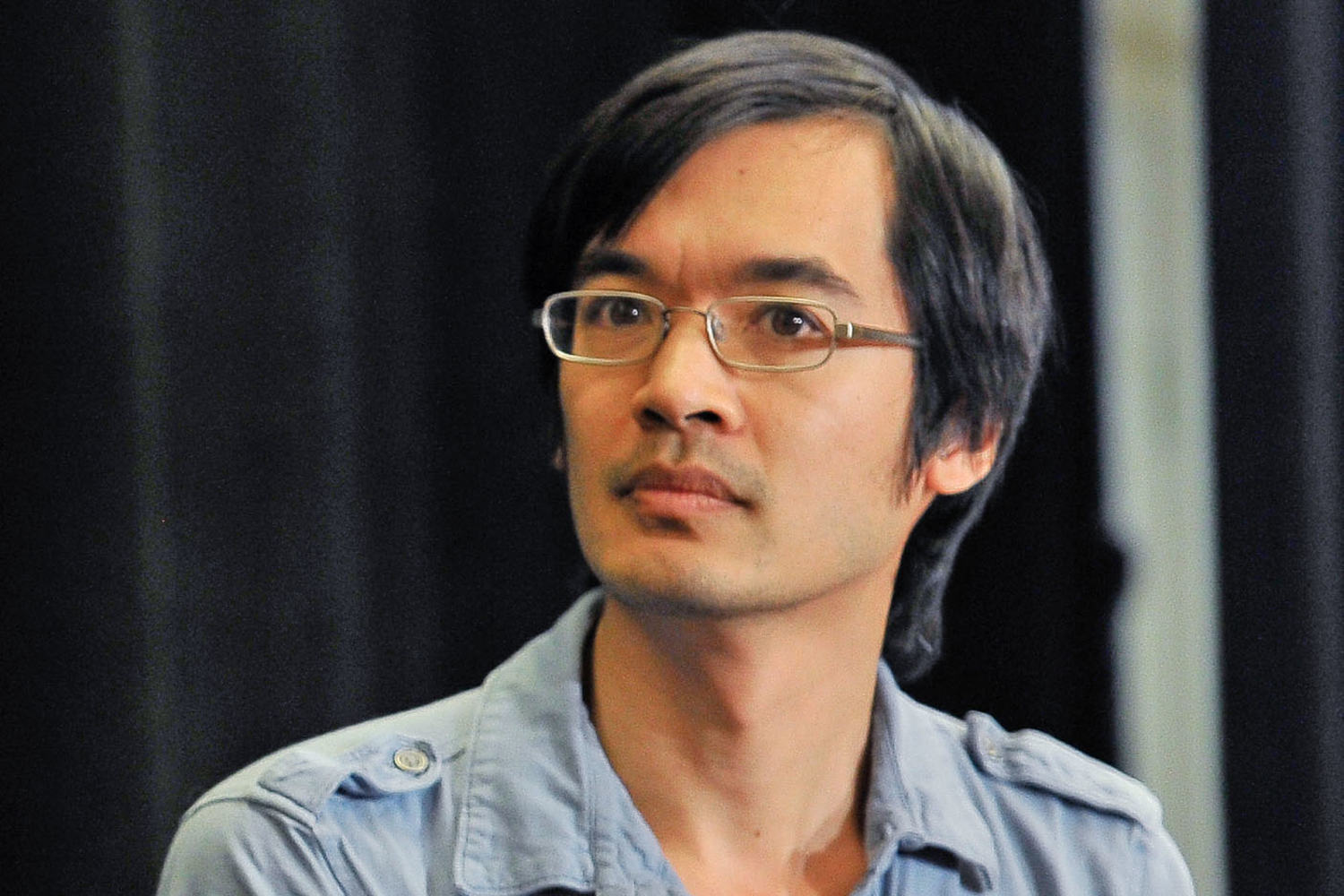
Terence Tao, one of the main mathematicians in the world, which is often called the “Mozart of mathematics”, prefer not to speak of politics.
“I do scientific research,” said Tao. “I vote, I sign a petition, but I don’t consider myself an activist.”
But after the July suspension of $ 584 million in federal subsidies at the UCLA, which he joined as a member of the faculty at the age of 20, Tao said that he felt forced to denounce what he considers “blind” cuts to science that could remove scientists from the United States, including itself, if the trends are continuing.
“I find that this particular administration was extremely radical with the way it changes the scientific ecosystem in a way that even the first Trump administration was not,” said Tao. “It’s not normal, and I think many people do not see the damage that is caused.”
Tao is one of the most eminent mathematicians and academics to publicly oppose the actions of the administration, calling them an “existential threat” in its field and its academic sciences, more broadly. He said public advocacy is a priority about his research for the moment.
“The United States is the largest fundaler in scientific research in the world, and the administration remains determined to cement the innovative domination of America. Federal research funding, however, is not a constitutional right,” said the White House spokesman Kush Desai. “The administration is responsible for ensuring that the research funded by taxpayers aligns with the priorities of the American people.”
The Trump administration has targeted the UCLA for the suspended reform of federal subsidies across university, alleging racial discrimination and “not promoting a research environment without anti -Semitism and biases”.
About three decades ago, Tao immigrated to the United States at the age of 16 – already a prodigy of mathematics. The American Australian researcher built a career at the UCLA and received the 2016 field medal, the equivalent of a Nobel Prize in mathematics. Tao also won a MacArthur scholarship and a revolutionary prize, among other prices.
The National Science Foundation, within the framework of a broader federal action intended for the UCLA, suspended two of the TAO subsidies, one which directly supported Tao’s work at the UCLA and another for the University Institute for Pure and Applied Mathematics (IPAM), where Tao supervises Special projects.
On August 12, the American district judge Rita F. Lin ordered that the university’s NSF subsidies be restored, applying an earlier preliminary injunction in an ongoing legal battle. The decision only applies to NSF subsidies to the UCLA, including that of Tao. The federal subsidies of other agencies, such as the National Institutes of Health and the Department of Energy, remain suspended.
“The US National Science Foundation has restored the prices suspended at the University of California – Los Angeles,” said NSF spokesperson in a statement, refusing new comments on Tao’s remarks.
In the long term, the financing of the IPAM – which was founded in 2000 and built to promote collaborations between mathematicians, industry and engineers – remains uncertain. The grant expires next year and awaits a renewal. The Institute is almost entirely funded by the NSF, and the Trump administration proposed a budget of 57% to the NSF, according to its request for the year 2026.
The research funded by TAO is centered on a technical branch of mathematics which focuses on determination if and when the models occur in long sequences of numbers. This is fundamental research without a direct application to the mind, but Tao has declared that its results could have implications for cryptographic protocols for security.
Research on IPAM, however, has more obvious public advantages. Two decades ago, Tao collaborated with scientists focused on signal processing problems in medical imaging.
“One of the algorithms that we have developed at IPAM is used regularly in modern MRI machines to speed up MRI scans of a factor of 10 in some cases,” said Tao.
The Trump administration has used discounts or suspensions to grant funding as a leverage because it seeks reform on university campuses. His approach was several aspects: the administration first attempted to reduce the financing of science by reducing federal reimbursements for indirect costs such as equipment, maintenance and office staff.
Then, he targeted specific types of subsidies, such as those involving diversity, equity and inclusion or gender identity, among other subjects.
It has also targeted specific institutions, such as the Harvard University, Columbia University and more recently the UCLA, on allegations of racism and anti -Semitism.
The proceedings have followed many of these funding actions, and the legal battles of later back and forth have left vacant subsidies between cancelled and restored.
Tao said that the recent disruption of financing his project forced him to postpone part of his own salary to continue paying his graduate students. He has spent the past few weeks not working in mathematics, but during emergency meetings with university administrators, fundraising meetings with donors and opinion articles to oppose the cuts.
“It’s time that I would normally have my own research, but it has priority,” said Tao.
He is increasingly concerned about the situation as a whole: he thinks that the actions of the administration are growing more and more young scientists to leave the United States, and if the trends are continuing, Tao said that he could not exclude departure too.
From his perch to the UCLA, Tao said he had noticed that graduate students and postdoctoral students were choosing more and more to seek opportunities outside the United States as the uncertainty about funding is developing.
“There have been past periods of history when other countries with a great scientific tradition have experienced great troubles or a war and many of them fled in the United States as a refuge,” said Tao. “It is a bit ironic that there is now a reverse process where other countries can start to collect talents that are currently in the United States”
A year ago, Tao said that he would never have planned to leave the UCLA or the United States, but he received a handful of recruitment requests and he is no longer confident that he will remain in the United States, if the trends are continuing.
“I have roots here. I raised my family here, so it would take a lot to uproot me, but these days, it’s really difficult to make predictions now,” said Tao. “I didn’t think about moving at all. It was not even on the radar, and now, for the better or for the worst, each possibility must be considered. ”