As Ebola outbreak kills 16 people in Congo, WHO official says Trump’s aid cuts “will definitely have an impact”


Johannesburg – The Minister of Health of the Democratic Republic of Congo, Samuel Roger Kamba, confirmed last week an epidemic of the very infectious zaire of the disease of the Ebola virus in the province of central Kasai in the country. He said 16 deaths and 28 suspicious cases had been confirmed, including four infections suspected among health workers.
The regional director of the World Organization for Africa Mohamed Janabi said that the first case, known as the index case, was a “34 -year -old pregnant woman who was admitted on August 20 and died on August 25 with characteristics typical for hemorrhagic fever; bloody diarrhea, bleeding from the nose, vomiting and bleeding of the rectum.”
The Ebola virus is transmitted to humans by close contact with infected fauna, often bats, then can spread through body fluids by close human contact to humans. The WHO said that on September 4, the mortality rate of cases in the Congo epidemic was 57%, with 80% of cases among people aged 15 or over.
This is the sixth epidemic of Ebola in seven years in Congo, making it the highest concentration of epidemics since the discovery of the virus in 1976.
A team of first stakeholders arrived in the Bulape health zone on Sunday, where the epidemic struck, with medical supplies.
Baz Ratner / Reuters 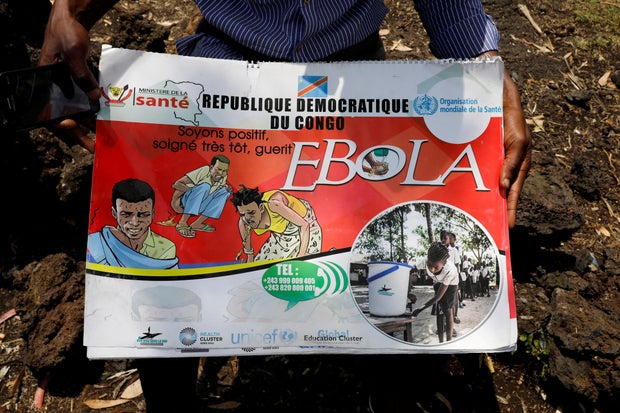
In the country’s capital, Kinshasa, health workers and the first stakeholders from the Ministry of Health, WHO and Centers for the control and prevention of WHO and Africa diseases received vaccinations before deployments in the affected region.
The Congo currently has a stock of 2,000 doses of vaccine and has ordered more to arrive in the coming days, according to WHO.
Patrick Otim, the OMS emergency interventions coordinator for the region, told journalists during a September 4 briefing that the United Nations agency was already trying to draw close contact with known cases, increase the laboratory test capacity on the ground and respond to the community response to ensure precocious reports.
He recognized that the DRC had asked for additional vaccines and stressed that “early support care is essential for rescue”, the one who worked to provide more medical supplies, including protective clothing and other items “necessary to manage the epidemic”.
The last two epidemics, in 2022, were contained rapidly, said OTIM, but it noted that they had been discussed before the Trump administration seriously reduces the financing of international health programs, including WHO.
Alain Uaykani / Xinhua / Getty 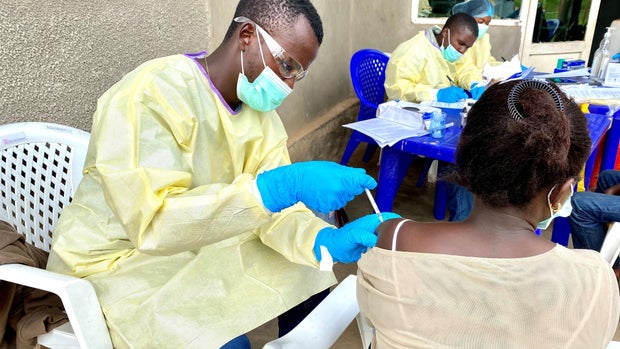
These cuts have concern fed in Africa and elsewhere On the capacity of individual nations and global agencies to respond and quickly contain disease epidemics, including Ebola – and to prevent these fatal viruses from reaching the American coast.
“The recent cuts will certainly have an impact,” Otim said during the briefing. “As a global community, we have to work together to stop this virus, because diseases do not respect borders.”
“What we know (past epidemics) is that you need to get supplies and resources as soon as possible to stop the transmission,” added OTIM.
President Trump announced in January That the United States-a long partial part and the largest donor of the agency-would withdraw from WHO, the White House citing “the mismanagement of the organization towards the health pandemic Covid-19 which was born from Wuhan, China and other global health crises, its inability to adopt an urgent political influence and its United States.
The Trump administration, at the time, also accused the WHO of asking for “unjustly expensive payments of the United States, very out of proportion to payments evaluated by other countries”.
WHO almost immediately warned that, given the uncertainty about the future funding of the United States, it reduced expenses In a way that could have an impact on its operations.
Congo’s health care system was already overloaded because it battles to contain an MPOX epidemicWith around 130,000 suspect cases since last year and around 2,000 deaths are now recorded, WHO said in the briefing last week.
Complete the answer is the fact that the medical isolation unit closest to the epidemic has only 15 beds and that road access from Kinshasa can take up to three days, still delaying the arrival of medical teams and supplies.
The WHO has already delivered approximately 13 tonnes of emergency medical supplies in the Congo to help contain and treat the epidemic.
Other African nations have placed entry to borders and healthy alert health establishments to detect all possible EBOLA cases.