Reproductive flexibility in sharks and rays complicates conservation predictions


Credit: Public domain CC0
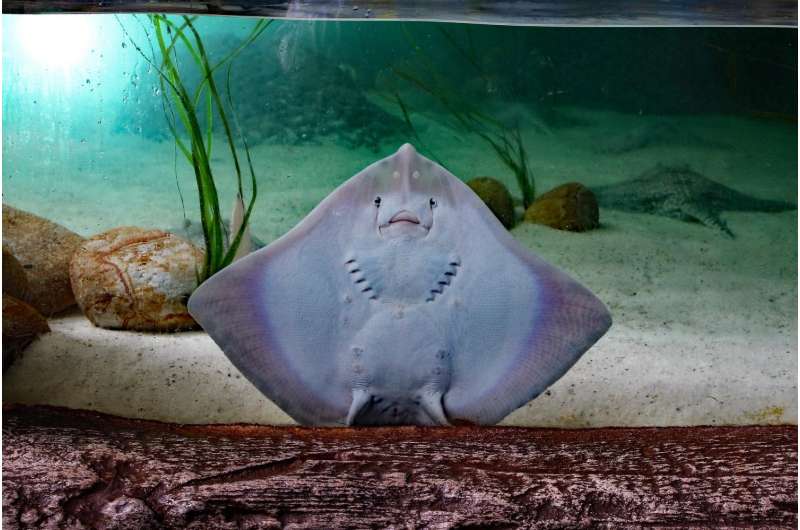
Sharks, skates and rays adapt their growth and reproduction to the evolution of food availability, reveals a new study.
Directed by the University of Newcastle, the study analyzed the number of young people and the speed with which a generation is replaced – known as the reproductive production and generation bearing in 151 species of sharks, skates and rays. The results reveal that the life strategies of these species are shaped not only by their evolutionary history, but also by the quantity of food they obtain.
Published in the journal Ecology lettersThe results show that when there is more food available and the power levels increase, species tend to produce more offspring.
Researchers have also found that widely used indicators, such as population growth rate, do not always offer a complete table of how these species will react to pressures such as climate change or fishing. In addition, the authors noted that the risk of conservation (as measured by the Red List of the IUCN) was not linked to the reproductive production of a species (how many young people they produce) or to the generation of rolling (at what speed newborns mature and produce the next generation of progeniture).
On the other hand, the approach to the integration of demographic data into the energy-budget theory, which has been used in the study, provides a new way of testing different fishing scenarios and better estimating fishing levels can be durable.
This method combines information on how sharks, skates and lines – known collectively under the name of Elasmobranchs – go from energy to growth, survival and reproduction, and use it to define a “living space” lit by energy and species’ food. The result is a quantitative and mechanistic base to predict how changes in food availability or fishing pressure could shape species’ life strategies.
Main author of the study, Sol Lucas, a doctorate. The researcher of the School of Natural and Environmental Sciences of Newcastle University said: “Our results show that sharks, skates and rays are flexible in their growth and their reproduction, adapting to food availability in their environment.
“These life history strategies shape the growth and recovery of the population, which makes them vital to understand how species react to population cuts. In the future, by linking energy budgets to life life strategies, we can gain a clearer image of species that are most at risk of pressures such as overfishing and environmental change.”
The main author of the study, Dr. Isabel Smallegange, lecturer in population biology at the School of Natural and Environmental Sciences of Newcastle University, added: “In marine ecology, understanding the way in which food dynamics influence life conservation strategies is crucial.
“To fill this gap, our study incorporates demographic data into energy-budget theory to analyze 151 Elasmobranch species, exposing how variable power levels shape development and reproduction strategies. By revealing plasticity previously not approved in life lifestyles, this research has made it possible to do a new idea of the way in which these species And offer a more informed base for effective conservation actions. “
The authors recommend additional research to explore if changes in the environment make different species more flexible in the way they develop and reproduce, and how this flexibility affects their survival and their ability to deal with change.
More information:
Sol Lucas et al, the evolution of food levels reveal plasticity in the life history strategies of Elasmobranch, Ecology letters (2025). DOI: 10.1111 / Ele.70201
Supplied by the University of Newcastle
Quote: The flexibility of reproduction in sharks and rays complicates predictions of conservation (2025, September 8) recovered on September 8, 2025 from https://phys.org/news/2025-09-reproductive-flexibility-sharks-lays-compete.html
This document is subject to copyright. In addition to any fair program for private or research purposes, no part can be reproduced without written authorization. The content is provided only for information purposes.


