A Chilling Massacre in Prehistoric Serbia Took the Lives of Women and Children


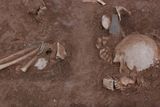
In a mass grave in Serbia, an assemblage of human remains sheds light on a merciless Iron Age massacre that spared absolutely no one. The most horrific aspect of this murder is that most of the victims were women and children, whose killings likely stemmed from a territorial dispute gone wrong.
A new study published in Human behavior revealed the gruesome details of this tragedy that occurred 2,800 years ago and resulted in the deaths of 77 people buried together in the Gomolava tomb in northern Serbia. There is, however, an unusual twist in this massacre: the victims were buried entirely with symbolic objects, a stark contrast to the merciless attack that resulted in their deaths.
“The brutal killings and the subsequent commemoration of the event can both be interpreted as a powerful attempt to balance power relations and assert dominance over land and resources,” Linda Fibiger, co-head of the School of History, Classics and Archeology at the University of Edinburgh, said in a press release.
A violent prehistoric massacre
Violence has been an integral part of the human experience since prehistoric times. Fossil evidence has hinted at cases of murder and scenes of war dating back thousands of years ago. Take for example the archaeological site of Nataruk in Kenya, where the remains of 27 people bear witness to a violent conflict that occurred around 10,000 years ago (although the nature of this incident is still debated to this day).
The act of violence discovered in Gomolava’s tomb now constitutes one of the largest prehistoric massacres ever seen in Europe. Victims were bludgeoned and stabbed to death, with women and children being the main targets.
According to a release from the new study, 40 of the victims were children aged one to twelve, 11 were adolescents and the remaining 24 were adults (87 percent of whom were women).
Oddly, the Gomolava victims were not families like archaeologists might have expected to see at such a burial site.
“Gomolava truly surprised us when our genetic analysis showed that the majority of people studied were not only unrelated, but even their great-great grandparents were not,” said co-lead author Barry Molloy, professor of archeology at University College Dublin. “It was very unusual for a prehistoric mass grave and not what we would have expected if they had all lived together in a village.”
Learn more: Iron Age DNA reveals herpesvirus that still infects humans today
Take control of the earth
Researchers involved in the new study carried out genetic testing on 25 individuals in Gomolava, showing that they were not closely related. They also collected isotopic data on bones and teeth to reveal the victims’ different diets, suggesting that the women and children came from different settlements.
The victims were likely killed to send a message to other residents in the area who were either trying to settle in developed territory or use the land for agricultural purposes. The massacre took place at a time when many groups were beginning to establish themselves at sites (such as mounds and mega-forts) that had been abandoned following the widespread socio-political collapse of the Bronze Age.
“Our team traced the Bronze Age Collapse and its aftermath in Europe. What we discovered at Gomolava tells us that as things recovered in this region and moved toward the Iron Age, the reassertion of control over landscapes could include widespread and extremely violent episodes between competing groups,” Molloy said.
Bury the dead with respect
Gomolava’s grave does not resemble a typical burial site, where the deceased are unceremoniously thrown into a pit. Instead, it shows a surprising dedication; the victims were not robbed of any items and they were even buried alongside valuable items like bronze jewelry and ceramic drinking vessels.
The tomb appears rich in symbolism related to food, as evidenced by a few other objects. A slaughtered calf, for example, was placed inside the grave, and broken grain-grinding stones and burnt seeds were scattered on top of the grave.
The burial could have some sort of ceremonial significance and could even be considered respectful. But researchers believe the massacres, at their core, may have been a coordinated effort to assert dominance over the local landscape, reflecting the way Iron Age communities used violence to influence their reputations.
Learn more: Ancient ship wreck sheds light on Iron Age trade and a lost Mediterranean port
Article sources
Our Discovermagazine.com editors use peer-reviewed research and high-quality sources for our articles, and our editors review the articles for scientific accuracy and editorial standards. See the sources used below for this article:


