A heart-shaped scallop turned up off the Massachusetts coast


During the intervention of icy waters of the North Atlantic, a team of NOAA scientists recently discovered a heart -shaped scallop. A small bump at the top makes that the marine creature resembles the symbol of love instead of the typical shape of the Fan of the Wella of the Sea. The mollusc was found in the northern edge of Georges Bank, a submarine plateau between CAPE COD, Massachusetts and Nova Scotia, Canada.
According to the NOAA, an object probably struck and held the scallop somewhere in the Georges bank. Scientists and fishing enthusiasts know the region well for its strong currents and a rocky seabed.
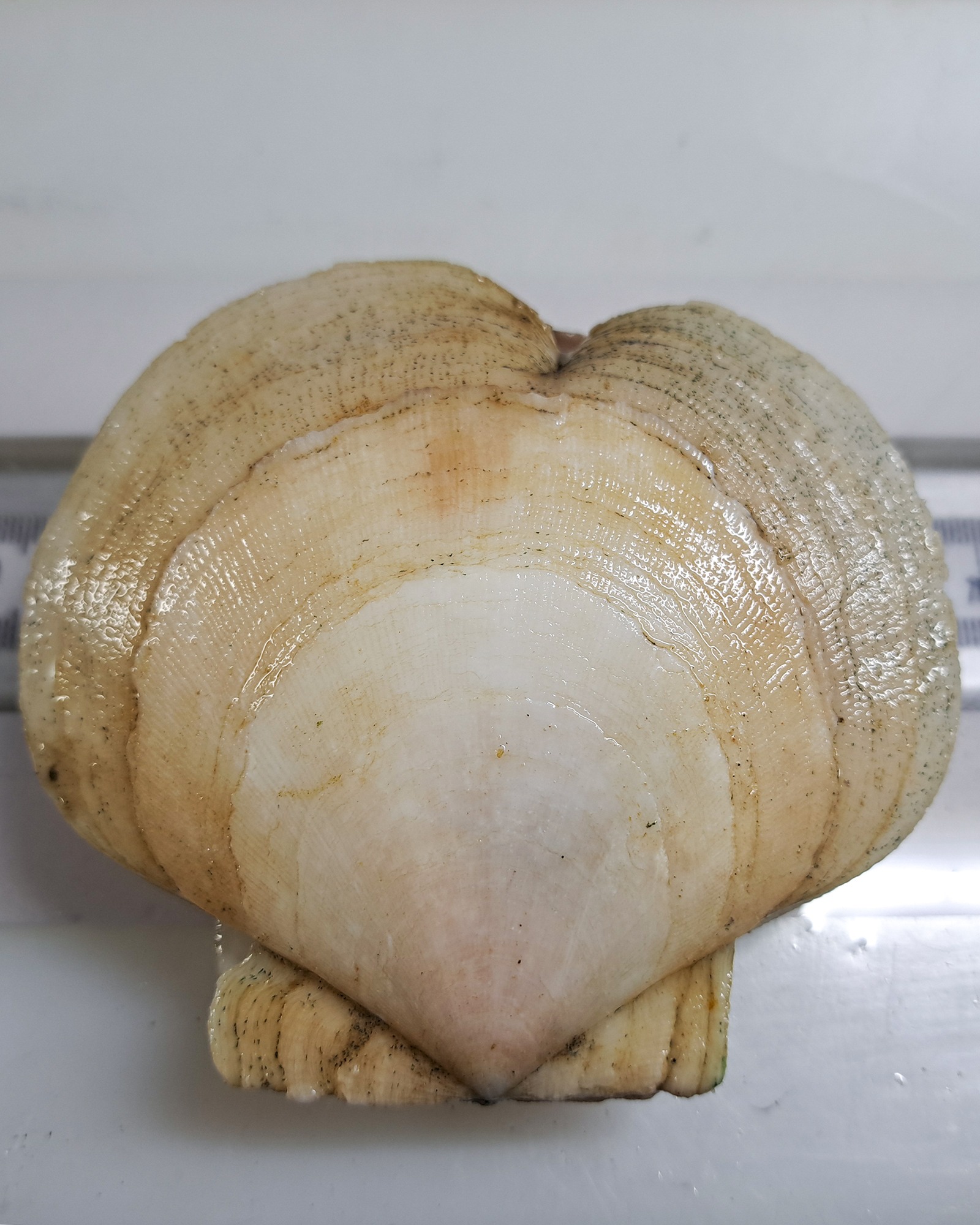
“Strong currents can throw scallops, making them hit rocks or other scallops,” wrote Noaa in an article on Facebook. “This can cause shell damage. While the injury heals, the scallop continues to grow and shell malformations like this begin to appear.”
Senebras of the Atlantic Sea (Magellanicus plasterboard) are from Middle Atlantic to the Canadian border. They eat by filtering phytoplankton or other small organisms out of the water column. As filter feeders, they can even improve water quality by eliminating suspended materials.
Like clams and oysters with which they are often served, scallops are bivalve with two shells. The pair of shells is maintained together by an adductor muscle, the part of the scallop that Americans generally eat. Their upper shell is generally a reddish or brown pink color, while the bottom is white or cream. According to the NOAA, around five to 10% are albinos, with all white shells. Sea scallops are also special among scallops for their lack of ribs. Other species such as bay scallops have a more joyful edge, while sea scallops are smooth. The smooth shell is potentially an adaptation to propel itself faster and further in water.
[ Related: Unsuspecting sea creature has Earth’s hardest teeth. ]
The crew of the Secallop fishing vessel based in New Bedford F/ V Selje withdrew the mollusk in the shape of a heart during their annual investigation into the dredge of scallops of the Atlantic Sea. Each year since 1979, NOAA scientists have collected data on abundance, spatial distribution and the history of the life of marine species, focusing on sea scratches. The data of these annual journals are used in the evaluations of the actions of scallops of the Atlantic Sea and help to shed light on the limits of capture of the fishery of scallops. Commercial fishing in New England has approximately $ 20 billion a year.
With so many scallops seated at the bottom of Georges Bank, there could be even more peat hearts waiting to be found.

More offers, reviews and purchasing guides


