A Medieval Preacher’s Meme Helps Solve a 130-Year-Old Literary Mystery


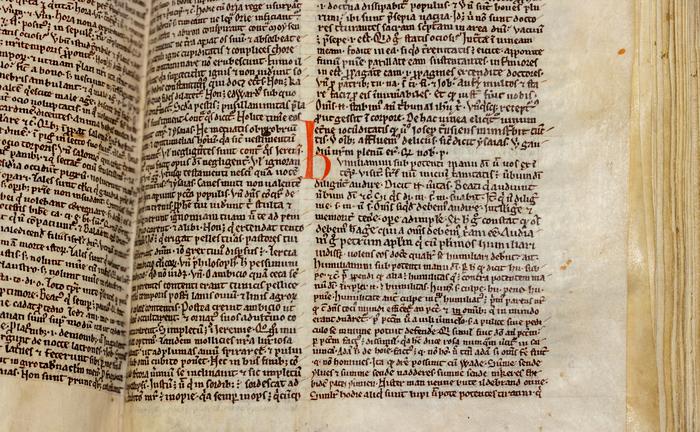
One of the most famous and elusive literary mysteries in English literature was finally resolved. THE Wade song – An incredibly popular poem of Medieval period – has always been considered a fantastic epic on monsters based on a reading of some of the only surviving lines of the poem. Found in the sermon of a preacher, the lines have always mystified the medieval scholars because the fantastic genre did not queue with the way in which the poem and its characters were referenced by famous English writers as Chaucer.
Now a study published in The review of English studies suggests that the lines have been misunderstood and that the poem is actually a chivalrous romance based on reality, not a fantasy filled with monsters. In addition, the sermon which quotes the poem would be one of the first examples of a preacher using pop culture references to call on a large audience.
“Here, we have a sermon from the end of the 12th century deploying a meme of the successful romantic history of the day. This is a very early proof of a preacher weaving pop culture in a sermon to keep his audience hanging,” said Seb Falk, member of the Girton College, in a press release.
Learn more:: More than 700 ancient Chinese poems describe the decline of the porpoises without yangtze fins
Resolve a 130 -year -old literary mystery
The medieval scientist Mr. James first discovered the fragments of the poem In 1896. Looking through the Latin sermons, James was shocked to find lines written in English. After examining the lines, he and another colleague said they belonged to a long Wade song poem. This original reading was important for the history of medieval literature from the original Wade song The whole poem has never been found.
Now, 130 years later, the sermon has been reassessed and a new understanding of the poem has appeared. The new study maintains that three keywords were poorly read by James and other researchers. This misunderstanding was due to a sloppy scribe including the “Y’s” and the “W” mixed. The words in question? Once read as including “elves” and “sprites”, the lines now refer to “wolves” and “sea snakes” respectively.
“Changing the Wolves Elves makes a massive difference,” Falk said in the press release. “This takes this legend from monsters and giants in the human battles of chivalrous rivals.”
A medieval meme
The sermon manuscript which contains the lines of the poem is 800 years old and was revealed, thanks to this new study, to write by Alexander Neckam, an eminent writer of the period of the end of the medieval.
A reference to a romantic poem is quite surprising to find in a sermon, because many church leaders were concerned about the subjects and antics included in the popular genre. The researchers suggest that the inclusion of the poem in the sermon was an attempt to use pop culture to call on its audience.
“The sermon itself is really interesting. It is a creative experience at a critical moment when preachers were trying to make their sermons accessible and captivating,” Falk said in the press release. “I went once to a wedding where the vicar, hoping to call on an audience he thought, was not often to go to the church, cited the song Black Eyed Peas where the love? In an obvious attempt to seem cool.
The subject of the sermon was humility, something that medieval theologians were very interested in exploring and which still feel as relevant now as eight centuries ago.
“This sermon still resonates today. He warns us that it is us, humans, who constitute the greatest threat, not monsters,” said James Wade, another Girton College scholarship holder, in the press release.
Learn more:: Was the most mysterious manuscript in the world of the Middle Ages a hoax?
Article Sources
Our writers at Discovermagazine.com Use studies evaluated by high quality peers and sources for our articles, and our publishers examine scientific precision and editorial standards. Review the sources used below for this article:
As a Marketing Coordinator of Discover magazine, Stephanie Edwards interacts with readers through the social networks of Discover and writes digital content. Offline, she is responsible for courses in English and cultural studies at Lakehead University, by teaching lessons on everything, from professional communication to Taylor Swift, and obtained her graduate diplomas in the same department of McMaster University. You can find more of its scientific writing in the laboratory and its short fiction in anthologies and the literary magazine through the kind of horror.