A New Report on Alexey Navalny’s Death


February 24, 2026
Boris Kagarlitsky and hundreds of unknown political prisoners are still held in Russian prisons.
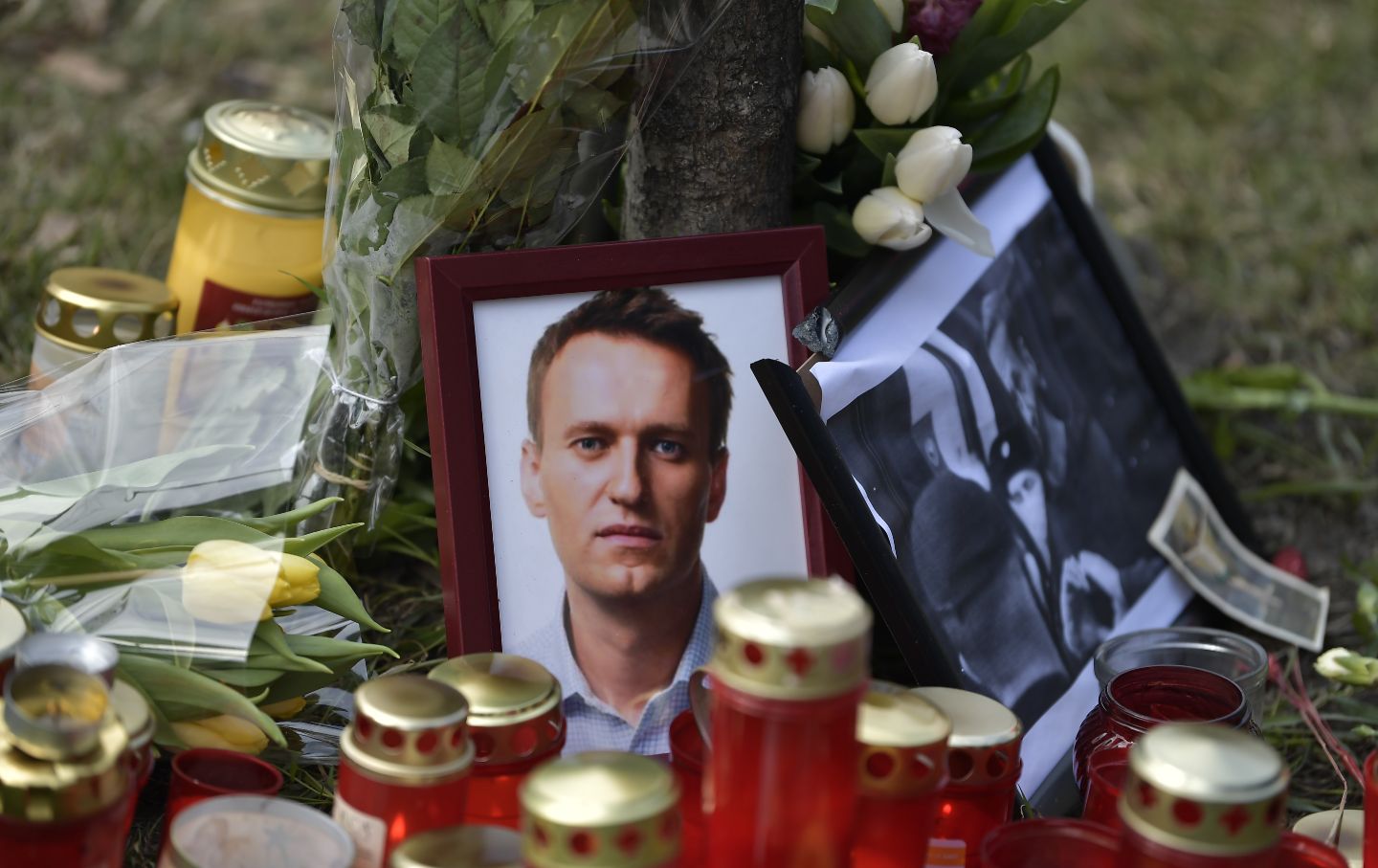
Alexei Navalny’s death in a Russian prison was caused by deadly poison. This news comes from a report by Britain, France, Germany, Sweden and the Netherlands. Analysis of samples taken from the human rights activist’s body “conclusively” revealed a toxin common in poison dart frogs in South America and not found naturally in Russia.
Navalny died in the “Polar Wolf” penal colony, north of the Arctic Circle, in February 2024. He was 47 years old.
As we approach the fourth anniversary of Russia’s invasion of Ukraine, the news of Navalny’s poisoning is a stark reminder of Russia’s human rights violations. These abuses have not stopped on the front lines in Ukraine, with Russia capturing political prisoners and detaining them in conditions that have raised concerns among human rights groups.
The day after Navalny’s death, the US State Department announced new sanctions against three Russians, including the director. A prison official, Valeriy Gennadevich Boyarinev, reportedly asked prison staff to treat Navalny more harshly while he was incarcerated. After Navalny’s death, the official received a promotion.
Russia has denied poisoning Navalny. “Naturally, we do not accept such accusations,” a Kremlin spokesperson said, according to Reuters. “We do not agree with them. We consider them biased and not based on anything. And we firmly reject them.”
Navalny is not the only political prisoner Russia has imprisoned in recent years. According to Memorial, a human rights group that tracks political prisoners in Russia, at least 4,877 people in Russia and the occupied Ukrainian territory have been politically persecuted and incarcerated. Memorial notes that the actual number of political prisoners could be double that.
Current number

Sergei Davidis, the director of Memorial, said The nation that there has recently been an increase in violence against defendants in political cases and in the use of treason and terrorism charges for repression. The severity of sentences handed down by Russian courts is also increasing. He also noted that Navalny’s execution by a toxin found in exotic frog venom is notable.
“Even without reference to specific international treaties, it can be argued that the extrajudicial execution of a citizen by the state clearly violates the norms of international law,” Davidis said. “This is all the more true when the person killed is deprived of liberty and under the full control of the authorities. In the case of Navalny, we are also talking about the assassination of a person deprived of liberty for political reasons, in violation of the right to a fair trial. The creation and use of chemical weapons, which is actually the poison used to kill Navalny, also violates international standards.”
Last month, at least ten criminal cases were brought before a Russian court against Ukrainians accused of “terrorism.” In two weeks, the court issued verdicts in 27 other cases involving Ukrainians, with maximum sentences ranging from seven to 20 years in prison. In another case, a 69-year-old woman from Zaporizhzhia was sentenced to 15 years in prison for allegedly giving money to the Ukrainian army.
In a statement last year on the anniversary of Navalny’s death, the United Nations special rapporteur on Russia said there were at least 2,000 political prisoners in Russia, often in life-threatening conditions. Eight political prisoners died in prison in 2024, including Pavel Kushnir, a pianist critical of the war in Ukraine. The report mentions 12 children incarcerated for “terrorism” and “extremism”. In a September 2025 report, the rapporteur said the human rights situation in Russia “continues to deteriorate.”
Navalny was a prominent activist and staunch critic of Putin, who consistently cracked down on his critics. Take for example Boris Kagarlitsky, a prominent intellectual who criticized Putin’s authoritarian regime, designated a “foreign agent” and “terrorist” by the Russian state. He remained an outspoken critic of the Russian invasion of Ukraine from prison, following his arrest in July 2023.
Kagariltsky, 66, has written extensively for The nation on Putin’s authoritarianism, the demonstrations and the Russian opposition, in great danger. By November, he had served a solitary confinement sentence and his health was deteriorating.
However, he said he did not want to leave Russia as part of an exchange deal. “I’ve said it many times and I’ll say it again,” Kagarlitsky said. The nation in November last year, “that I do not wish to participate in such exchanges… I see no interest or advantage in emigrating. If I had wanted to leave the country, I would have done it myself.”
Kagarlitsky represents the spirit of Russian opposition to Putin and the war in Ukraine. As peace negotiations continue to falter and the war drags on – resulting in massive losses for Russia (and Ukraine) – the potential for situational instability increases, leaving political prisoners in limbo.
“It is important not to forget to support Russian civil society, which opposes war and dictatorship, and, above all, Russian political prisoners, to achieve their release,” Davidis said. “It is not only a question of humanity, justice and law, but also of increasing the likelihood and proximity of change in Russia, a turn towards democracy and peaceful cooperation with its neighbors, which is important for Europe and the world. »
There is also American Stephen Hubbard, a retired teacher who was arrested during Russia’s occupation of the Ukrainian town of Izyum, where he was living at the time, in 2022. He is still detained in Russia in apparently poor conditions.
Popular
“Swipe left below to see more authors”Swipe →
Hubbard’s sister, Trisha Fox-Hubbard, said The nation she fears that her brother, aged 74, will die in a Russian prison. He was sentenced to seven and a half years in prison for allegedly working as a “mercenary.” In his Russian prison, he eats mainly cabbage and risks being beaten. “His mental health is dire,” Fox-Hubbard said. “Being isolated for over four years, he probably doesn’t know what year or month it is. The guards screamed at him to die.”
Davidis said the Trump administration’s recent involvement in the release of political prisoners in Venezuela and Belarus gives him hope that the United States may be able to establish a peace agreement between Ukraine and Russia that could facilitate the release of additional prisoners.
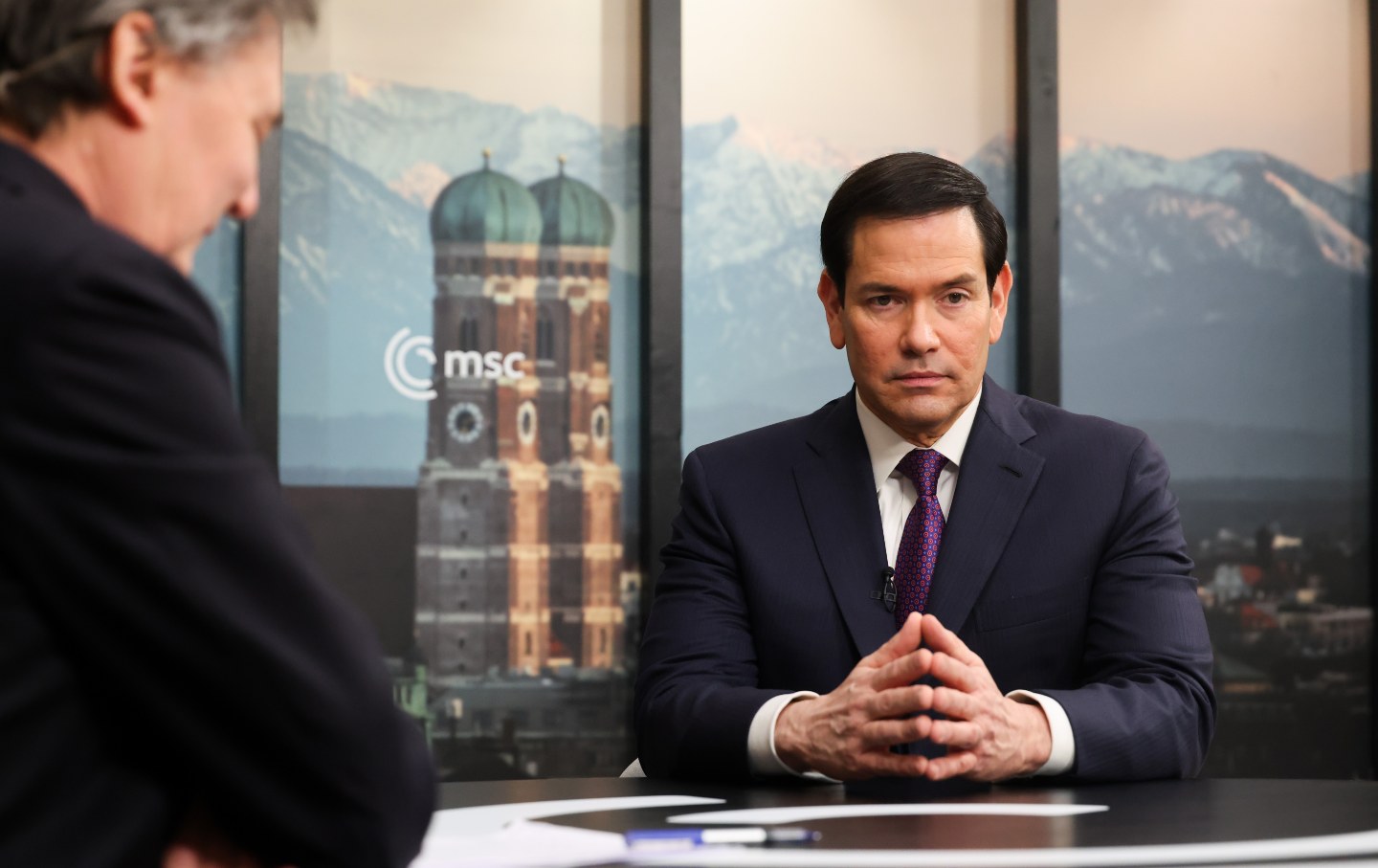
But the international community appears divided in its response to Russia’s human rights violations. Secretary of State Marco Rubio has faced criticism following his recent appearance at the Munich Security Conference, contrasting with growing alarm from his European counterparts. At a later press conference, Rubio told reporters that Navalny’s poisoning was “troubling.”
Rubio spoke just hours before a group of America’s allies released their report on Navalny’s death. The United States was notably absent from the report. During Rubio’s appearance in Munich, there were also no threats or warnings directed at Putin, amid the looming threat of an escalation of his war in Ukraine as peace negotiations continue to falter. As U.S. allies grow attached, the United States threatens its relationships with its key strategic partners.
The Trump administration’s relative non-reaction to news of Navalny’s poisoning could spell disaster for those imprisoned by this long war.
More than The nation
The secretary of state angered Britain’s first black lawmaker and once again focused attention on how the United States has historically treated people of its own heritage…
Steve Howell
Roadblocks imposed by workers on the ground send a warning to the Mexican president.
David Bacon
Using an old playbook and powerful new tools, we may be closer than ever to making a war between the United States and Iran a reality.
Jamal Abdi
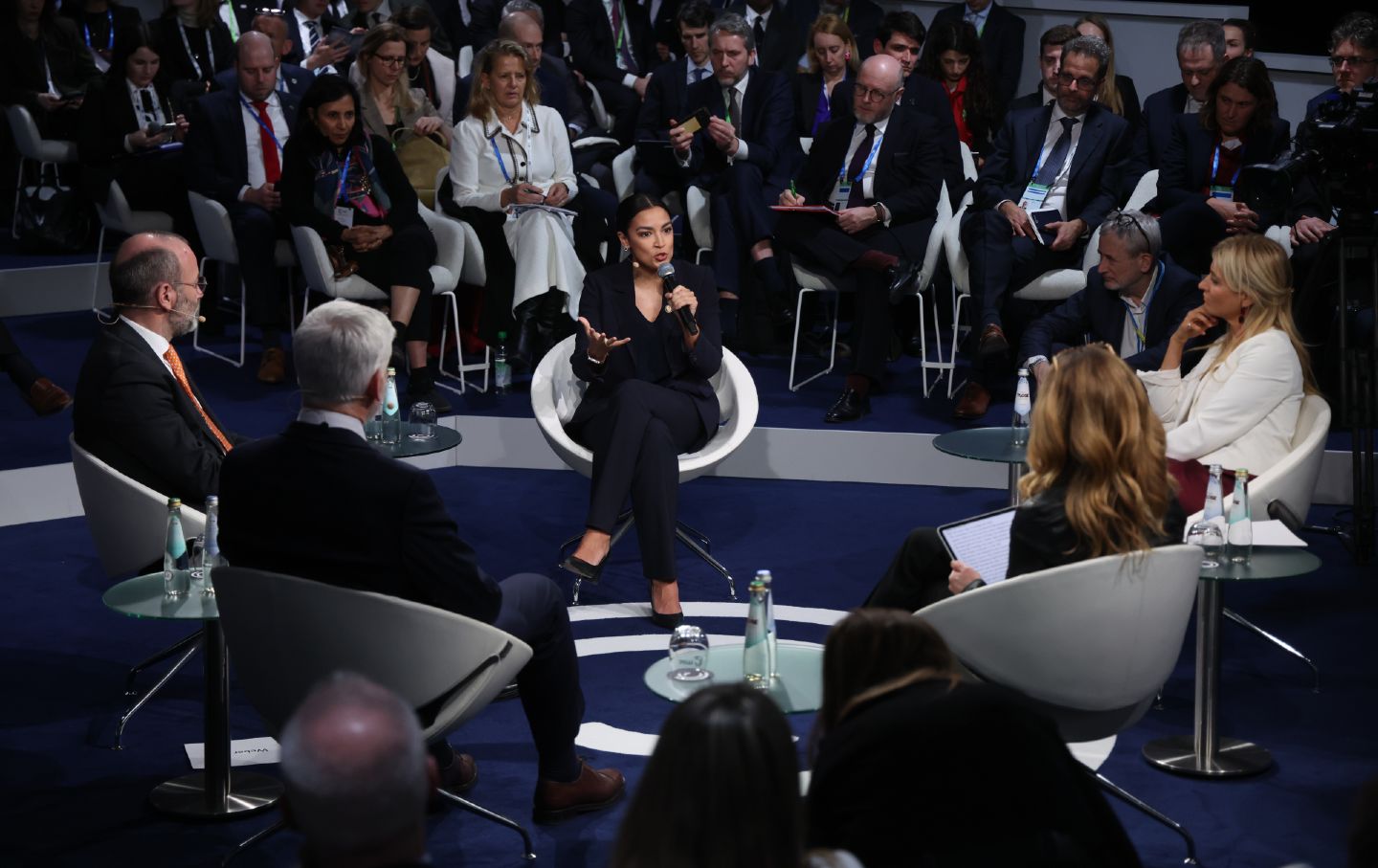
American politicians have invaded the summit, but Europe no longer considers the United States a reliable partner.
Carole Schaeffer


