A record supply load won’t reach the International Space Station as scheduled


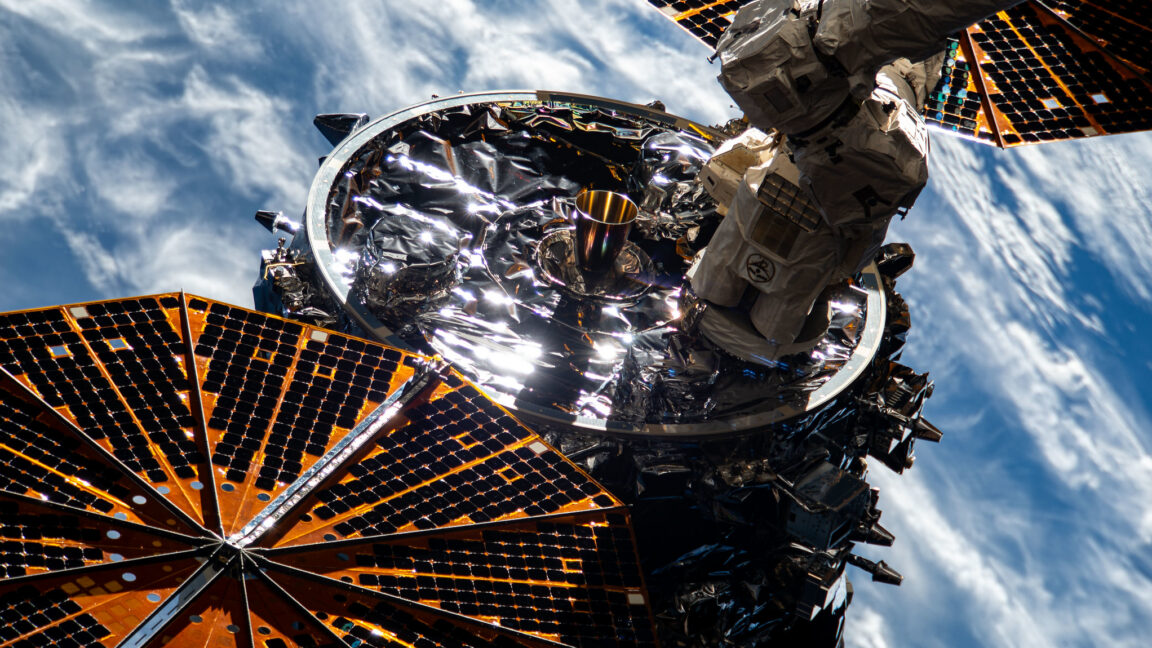
Damage occurred when shipping the pressure cargo module of the manufacturer’s spaceship in Italy. While Northrop Grumman hopes to repair the module and launch it on a future flight, those responsible have decided that it would be faster to move forward with the next online spaceship for the launch this month.
This is the first flight of a larger model of the cygnus spacecraft known as Cygnus XL, measuring 5.2 feet (1.6 meters) more, with the capacity to transport 33% more cargo than the previous design of the cygnus space vessels. With this upgrade, this mission carries the heaviest load of supplies ever delivered to the ISS by a commercial loading vehicle.
The main engine of the Cygnus spaceship burns a mixture of hydrazine and nitrogen tetroxide propeller. This mixture is hypergolic, which means that propellants sink into contact with each other, a design announced for its reliability. The spaceship has a set separate from less powerful reaction control propellants normally used for small maneuvers, and to point the ship in the right direction when it goes to the ISS.
If the main engine is declared unusable, an option possible to bypass the main engine problem could be to use these smaller propellers to adjust the orbit of the Cygnus spaceship to align the final approach with the ISS. However, it was not immediately clear if it was a viable option.
Unlike the SpaceX cargo cargo spacecraft, the cygnus is not designed to return to an intact earth. The astronauts fill it with waste before leaving the ISS, then the spacecraft heads towards a destructive return to the distant peaceful ocean. Therefore, a problem preventing the spacecraft from reaching the ISS would cause the loss of all cargoes on board.
The supplies on this mission, designated NG-23, include fresh food, equipment for many biological and technological demonstration experiences and spare parts for things like the urine processor and the toilets of the space station to reconstruct the declining stocks of the space station of these items.