Indigenous health can’t be separated from environmental health, leaders tell UN


This story is published by the Indigenous News Alliance.
On the second day of the United Nations Permanent Forum on Indigenous Issues, or UNPFII, experts drew attention to how indigenous health is deeply linked to nature and highlighted how health inequities are worsened by environmental degradation, extractive activities and climate change.
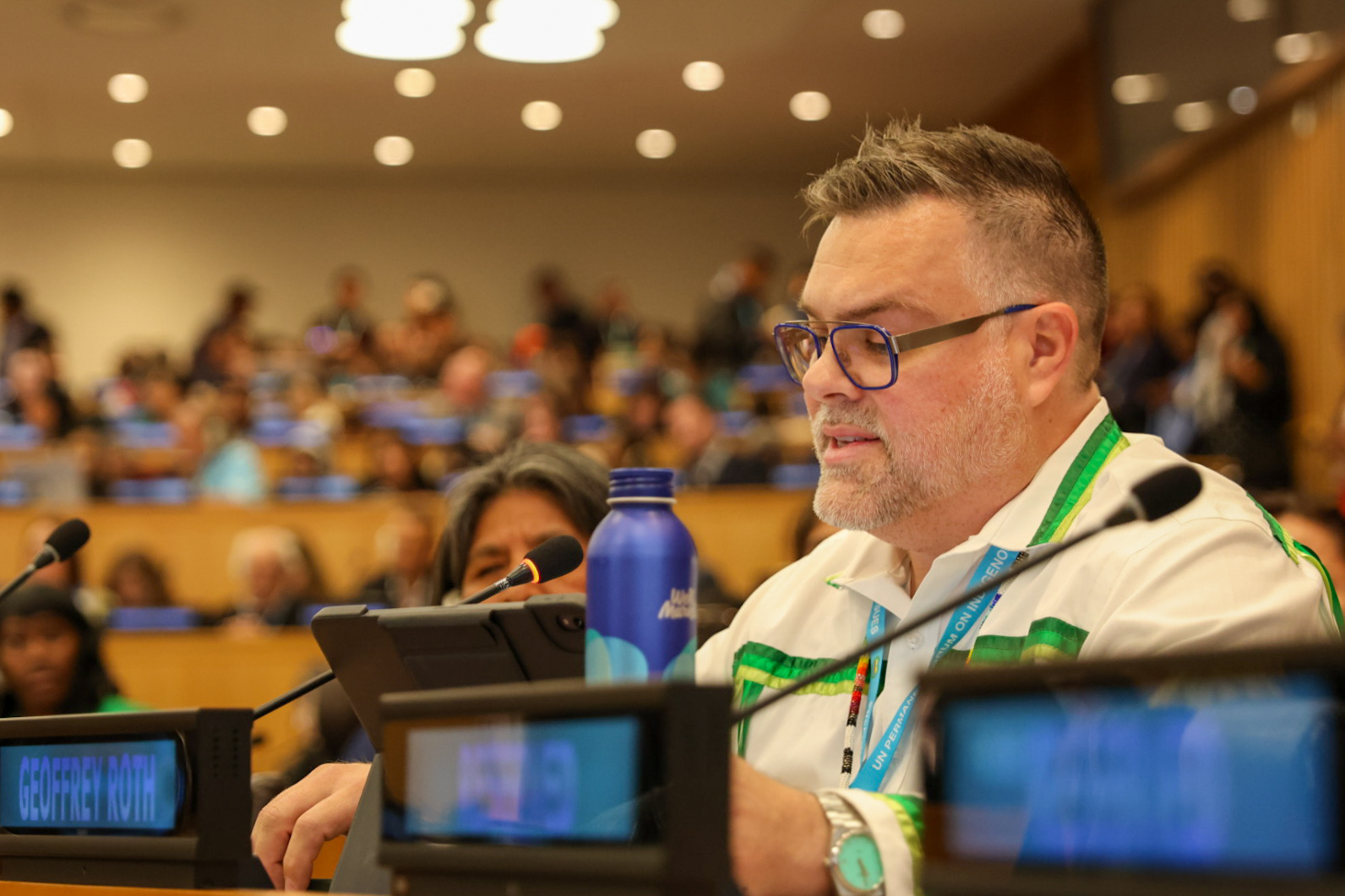
The forum’s focus on indigenous health follows a new study by Geoffrey Roth, a former permanent member of the forum and descendant of the Standing Rock Sioux, which says the fragmented approach of UN agencies – addressing health, environment and land rights through separate mandates – has “systematically failed indigenous peoples”. The study, presented at the opening of the forum’s 25th session, positions environmental degradation, climate change and biodiversity loss not as external pressures but as “direct manifestations of damage” to indigenous well-being.
“For Indigenous people, health is deeply connected to the health of the land,” Roth said. “It’s not just about access to clinics or medicine – it’s about clean water, healthy forests, traditional foods and the ability to maintain cultural practices. When the environment is damaged – whether from mining, deforestation, pollution or climate change – it directly affects people’s health.”
At the forum, many Indigenous leaders spoke about how growing environmental crises increase the urgency to address their impacts on Indigenous health. “Climate change also poses another threat to our health,” said Minnie Grey, former director general of the Nunavik Regional Health and Social Services Authority in northern Canada. “We are an Arctic people: we need ice, we need snow, and we need the wildlife that depends on it. Our hunters and our people depend on these animals that support our food systems and our nutrition.”
A second study, also presented at the forum by Hanieh Moghani, Hannah McGlade and Geoffrey Roth, former permanent members of the forum, examines how armed conflicts disproportionately affect indigenous peoples, as they are often driven by competition for natural resources. This results in the displacement of indigenous peoples from ancestral lands and territories, erosion of social and cultural cohesion, exploitation of resources and disruption of agricultural livelihoods, leading to intergenerational health crises.
“These impacts are on top of existing inequalities, which is why indigenous communities are often the hardest hit,” he explained. “In this sense, environmental damage is not distinct from health: it is a major factor. »
By focusing on indigenous health in isolation from territories, waters, food systems and culture, Roth said global health efforts have failed to address structural drivers of the health problems indigenous people face, such as land dispossession, environmental degradation, cultural disruption and the erosion of indigenous governance.
Carrie Johnson/Grist
The study highlights that climate change functions as a serious “risk multiplier” that intensifies pressures on biological, ecological and social systems, with disproportionate impacts on indigenous populations. Extreme weather events, such as droughts and floods, degrade water quality and availability, increasing the risk of water-borne diseases and compromising hygiene. Additionally, the climate crisis has serious consequences for the mental health of indigenous communities. Evidence links climate-related disasters and environmental loss to increased rates of depression, substance abuse, and emerging diagnoses such as “ecological grief” and “climate anxiety,” particularly among indigenous youth who are seeing their ancestral ecosystems change.
In Alaska, for example, severe storms like Typhoon Halong devastated coastal villages, leading to the forced relocation of thousands of Indigenous people due to climate reasons. These displacements, caused by coastal erosion and thawing permafrost, have cut communities off from their traditional systems of food harvesting and weather forecasting, worsening their health vulnerabilities.
Biodiversity degradation, for example, can impact food availability and therefore cause nutritional inequalities, chronic diseases and mental distress. In Brazil’s Munduruku Territory, which is one of the lands hardest hit by illegal mining in the country, the Munduruku indigenous people face many health problems, even after a government-led operation to end illegal mining in the territory.
Community members reported a wide range of illnesses linked to mercury pollution and ecological destruction caused by mining, including diarrhea, itching, flu, fever, childhood paralysis, and brain problems.
“The situation is even more serious for indigenous peoples in voluntary isolation and first contact,” said Ginny Alba Medina, indigenous leader and lawyer for OPIAC, the national organization of Amazonian peoples of Colombia. “For them, the right to health begins with absolute respect for the principle of non-contact. Any external intrusion can trigger deadly epidemics against which they have no immune defense. Authorizing extractive activities, armed presence or territorial pressure on their territories constitutes an immediate threat to their physical and cultural survival.”
“What’s missing is a more connected approach – one that includes land, culture and self-determination as central to health,” Roth said. “Going forward, UN agencies need to reduce fragmentation and work in a more coordinated way. You cannot improve Indigenous health in isolation. This requires aligning efforts across sectors and supporting Indigenous leadership within these systems.”
Just weeks before the forum kicked off at UN headquarters in New York, indigenous Batwa women and children in the Democratic Republic of Congo, or DRC, suffered renewed attacks from a group of armed men believed to belong to the Congo River Alliance and March 23 Movement rebel groups. These cases, which took place on March 5 in South Kivu province, are linked to a broader pattern of targeted violence against the Batwa people to gain control of their land and natural resources.
Conflict in indigenous territories is inherently an environmental and health crisis. While armed conflicts are often driven by competition for natural resources, indigenous lands become strategic battlefields.
Analysts have highlighted that the escalation of armed conflict in the DRC has had a significant and often overlooked impact on the environment. They highlight a sharp increase in deforestation since it erupted in late 2021, with an estimated loss of 3,019 acres of forest cover in 2023. Between 2019 and 2022, the average annual forest loss was 1,410 acres.
Defenders at the conference discussed how conflict can restrict indigenous peoples’ access to their lands, as they often must flee violence to protect themselves. But without access to their lands, like the degradation of biodiversity, which is sometimes also generated by conflict, indigenous communities can struggle to access nutritious food, leading to health impacts and a weakening of social and spiritual cohesion, as Roth’s study on indigenous health highlights.
“These conflicts have immediate and long-term health impacts,” Roth said. “Communities are displaced from their land, access to health care is disrupted, and people face lasting trauma and stress. At the same time, the environment is damaged or destroyed – polluted water, deforestation, loss of food systems – further harming health.”
This is the situation facing the Ngāti Tīpā people of the Waikato Tainui Tribal Confederation in Tauranganui Marae, New Zealand.
“My great-great-grandmother said all the waters surrounding our community were once clean,” said Em-Haley Kūkūtai Walker, who is Ngāti Tīpā and community artist. “We didn’t get a lot of flooding and our fisheries were healthy. Now, because of sea level rise in our river, which increases salinity levels, the fish are dying and moving elsewhere.”
Indigenous leaders at the forum, such as Wilton Littlechild, a Cree chief and treaty rights lawyer, argued that legal recognition of their territories is a fundamental prerequisite for protecting Indigenous biodiversity and health.
“Indigenous people have these treaties [and there is the United Nations Declaration on the Rights of Indigenous Peoples] which are tools to protect their health,” Littlechild said.
This call was echoed by the WHO in its draft Global Action Plan, or GPA, on indigenous peoples’ health, which called for supporting “indigenous-led ecosystem management and nature-based approaches that protect health.” On February 5, the WHO Executive Board decided to postpone consideration of the draft GPA until 2027 to allow more time for consultations.
According to advocates, indigenous health is completely inseparable from land tenure, biodiversity, food sovereignty and self-determination, and this must be recognized by bodies such as the UN and WHO.
Leaders warn that global climate and biodiversity goals cannot be achieved without indigenous peoples. In a session on the connection between national obligations under the United Nations Declaration on the Rights of Indigenous Peoples, or UNDRIP, and health, Ruth Dimanche, an elder and traditional healer in Yellowknife, Canada, said governments must start prioritizing indigenous health.
“Today we have had enough of water, of food, of air,” Wednesday said. “Whatever we put in our bodies. We now have to be aware of it when we didn’t have to before.”