A Slow-Moving Force Is Silently Sculpting Volcanoes Beneath the Ocean


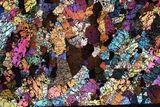
Christmas Island is around 350 kilometers from Indonesia, while mainland Australia is almost five times further away. But if you dig into the island’s rock base, you’ll find materials from large continents.
How these substances ended up in the middle of the ocean has perplexed geoscientists for decades. New research, led by a team from the University of Southampton and published in Natural geosciencescan now provide an answer.
The work suggests that seismic activity scrapes rock beneath large continents, like shallow reefs scraping paint off the underside of a boat. This rock then flows into the oceanic mantle, a layer of hot, semi-solid rock beneath the ocean floor. Subsequent volcanic activity over millions of years explains how this continental rock ends up in places like Christmas Island, which is the above-water summit of a large dormant underwater volcano, researchers say.
This proposed mechanism, the researchers say, could build on the long-standing enigma of how our Earth is shaped by volcanic activity.
Learn more: The global thaw 10,000 years ago could have fueled volcanoes and accelerated continental drift
How did continental rock end up in ocean volcanoes?
“We have known for decades that parts of the mantle beneath the oceans appear strangely contaminated, as if pieces of ancient continents are there,” said the study’s lead author, Thomas Gernon, an earth scientist at the University of Southampton, in a press release. “But we haven’t been able to adequately explain how all this continental material got there.”
In previous research, the team showed that the separation of continents released powerful ripples of energy at their bases. This “mantle wave” moves along the underside of the continents, down to about 200 kilometers below the surface, removing rock as it moves.
To understand the process in more detail, the team created computer simulations of the movement of continents and the mantle in response to changes in tectonic energies. Simulations showed that the stripped rock could travel more than about 1,000 kilometers into the oceanic mantle.
“We found that the mantle still feels the effects of continental fragmentation long after the continents themselves have separated,” said co-author Sascha Brune, a researcher at the GFZ Helmholtz Center for Geosciences, in a press release.
An ancient supercontinent gave birth to Christmas Island
The team also analyzed geochemical data from around the world, including Christmas Island, formed more than 100 million years ago after the breakup of the supercontinent Gondwana.
The combination of simulations and chemical data showed that after Gondwana broke up, magma enriched with continental elements bubbled to the surface.
These enriched deposits were previously thought to be remnants of rocks recycled after the continents plunged into the mantle or that they erupted from columns of hot rocks pulled from deep within the Earth called mantle plumes.
But there was little sign of mantle recycling or plumes in the Christmas Island formation, suggesting that the mantle “wave” phenomenon was instead responsible.
“We do not rule out the possibility of mantle plumes, but this discovery highlights a completely new mechanism that also shapes the composition of the Earth’s mantle,” Gernon said. “Mantle waves can carry particles of continental material far into the oceanic mantle, leaving behind a chemical signature that persists long after the continents break up.”
Learn more: A zombie volcano shows signs of activity: could it rise from its grave?
Article sources
Our Discovermagazine.com editors use peer-reviewed research and high-quality sources for our articles, and our editors review the articles for scientific accuracy and editorial standards. See the sources used below for this article:


