A gulf separating Africa and Asia is still pulling apart — 5 million years after scientists thought it had stopped


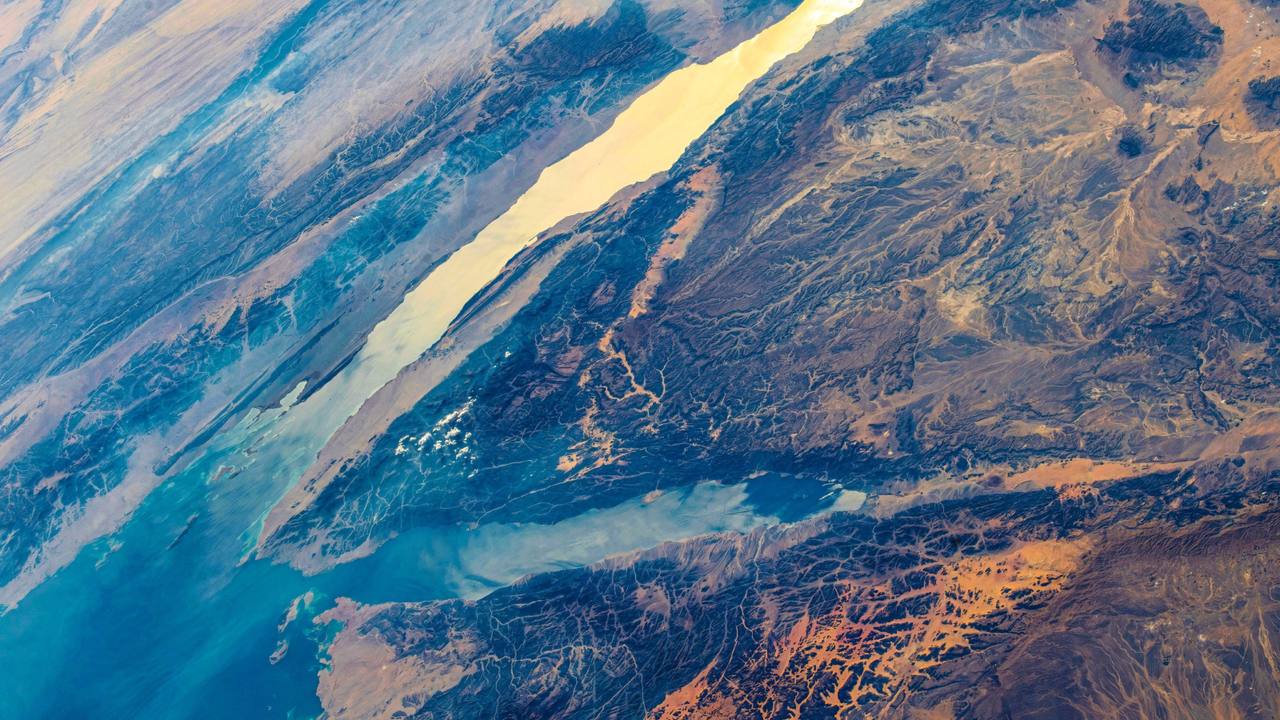
The Gulf of Suez, which partly divides Africa and Asia, could widen further, researchers have found.
About 28 million years ago, the Arabian tectonic plate moved away from the African plate, opening what is now the Gulf of Suez. This type of rifting is how new oceans are born – but about 5 million years ago the rifting stopped and Suez remained a gulf, not an ocean.
“We believe our work fundamentally changes the way we think about rift evolution,” lead author of the study David Fernández-Blancogeoscientist at the Institute of Deep Sea Science and Engineering of the Chinese Academy of Sciences, told Live Science in an email. “The current conceptual model is rather binary: faults either succeed (forming new ocean basins like the Red Sea) or fail (becoming completely inactive). We show that there is a middle path by which faults can decelerate without actually failing.”
The Gulf of Suez is generally considered the classic example of a failed rift, Fernández-Blanco said, but there have been scattered hints that the region may still be in the throes of a rift. In some places in the Gulf, ancient coral reefs have been raised above sea level; small earthquakes sometimes shake the region; and there are signs of faults lifting parts of the ground.
“What struck us was the discrepancy between the conventional narrative of complete tectonic quietude and the allusions to ongoing activity,” Fernández-Blanco said.
In the new study, the researchers surveyed the 300-kilometer stretch of the rift zone, examining the topography and the paths of rivers cutting through the rock, which can reveal unusual profiles that cannot be explained by erosion alone and must therefore come from tectonic movement. They also studied the elevations of coral reefs that formed around sea level during warm interglacial periods but now rise up to 60 feet (18.5 meters) above the gulf.
Together, the evidence points to continued rifting that slowed 5 million years ago, when plate motions changed and tectonic action shifted toward the Dead Sea, where a new boundary between the African and Arabian plates was forming.
The breakup didn’t stop, however. It continues to divide the Gulf of Suez at a rate similar to the current expansion of the western United States. This expansion into the western United States creates a series of mountains and valleys known as the Basin and Range province.
“Changing plate boundary conditions does not necessarily stop rifting,” Fernández-Blanco said. “The forces driving the rupture are more persistent and complex than simple plate movement suggests.”
These results could mean that regions like the Gulf of Suez are more prone to devastating earthquakes than previously thought, he added. It also suggests that other faults thought to have failed might merit a second look with modern tools to see if they really stopped splitting, he said.
“We could reveal that Earth’s tectonic systems are more dynamic and persistent than we previously thought,” he said.


