Viruses that evolved on the space station and were sent back to Earth were more effective at killing bacteria


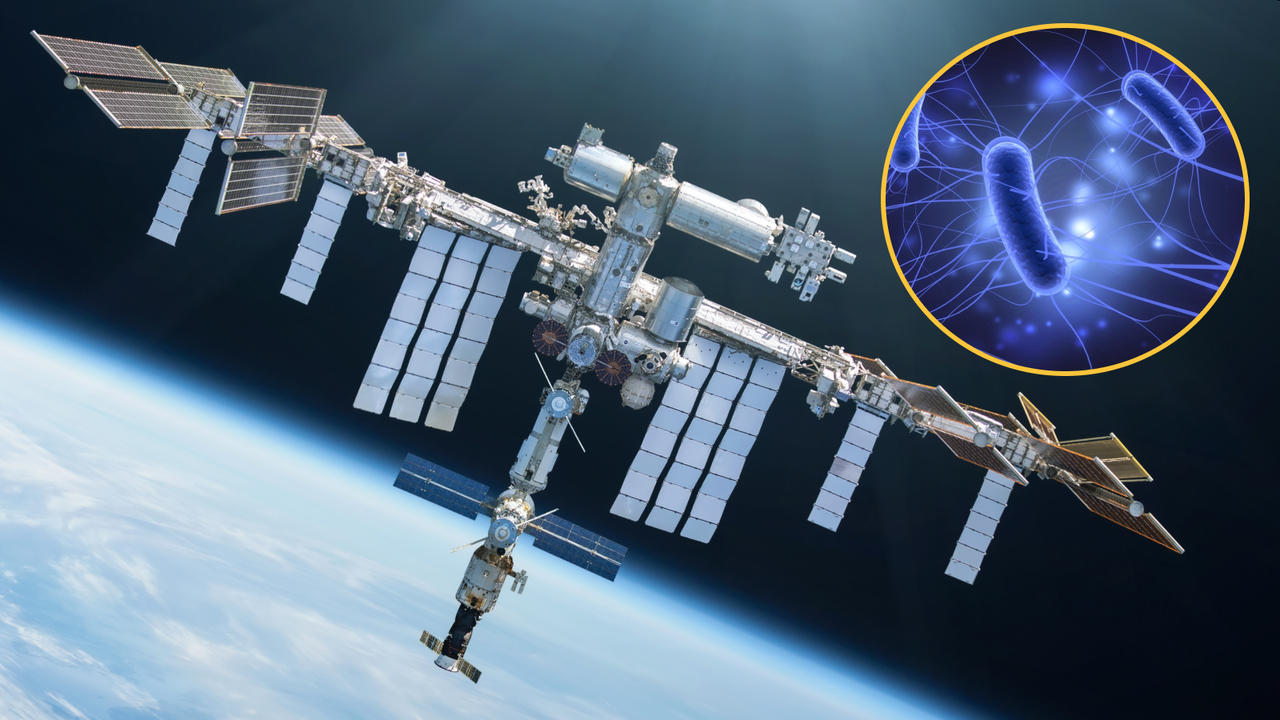
Bacteria and the viruses that infect them, called phages, are engaged in an evolutionary arms race. But this evolution follows a different trajectory when the battle takes place in microgravity, reveals a study carried out aboard the International Space Station (ISS).
As bacteria and phages compete, the bacteria develop better defenses to survive while the phages develop new ways to penetrate these defenses. The new study, published January 13 in the journal Biology PLOSdetails how this skirmish plays out in space and reveals insights that could help us design better drugs against antibiotic-resistant bacteria on Earth.
Analysis of the space station samples revealed that microgravity fundamentally changed the speed and nature of phage infection.
Although phages could still infect and kill bacteria in space, the process took longer than in terrestrial samples. In a previous studythe same researchers had hypothesized that infection cycles in microgravity would be slower because fluids do not mix as well in microgravity as in Earth’s gravity.
“This new study validates our hypothesis and our expectations,” said the study’s lead author. Srivatsan Ramanassociate professor in the Department of Biochemistry at the University of Wisconsin-Madison.
On Earth, the fluids in which bacteria and viruses reside are constantly agitated by gravity: hot water rises, cold water sinks, and heavier particles settle to the bottom. This allows everything to move and collide.
In space there is no movement; everything floats. So, because bacteria and phages didn’t collide as often, the phages had to adapt to a much slower pace of life and become more efficient at latching on to passing bacteria.
Experts believe that understanding this alternative form of phage evolution could help them develop new phage therapies. These emerging treatments against infections use phages to kill bacteria or make germs more vulnerable to traditional antibiotics.
“If we can determine what phages do at the genetic level in order to adapt to the microgravity environment, we can apply this knowledge to experiments with resistant bacteria,” Nicolas Caplina former European Space Agency astrobiologist who was not involved in the study, told Live Science in an email. “And this can be a positive step in the race to optimize antibiotics on Earth.”
Whole genome sequencing revealed that bacteria and phages on the ISS accumulated distinctive genetic mutations not observed in samples on Earth. Space viruses have accumulated specific mutations that have enhanced their ability to infect bacteria, as well as their ability to bind to bacterial receptors. Simultaneously, the E.coli developed mutations that protected against phage attacks – by modifying their receptors, for example – and improved their survival in microgravity.
Next, the researchers used a technique called deep mutational analysis to examine changes in the viruses’ receptor-binding proteins. They discovered that adaptations induced by the unique cosmic environment could have practical applications in our country.
When the phages were brought back to Earth and tested, space-adapted changes in their receptor-binding protein resulted in increased activity against E.coli strains that commonly cause urinary tract infections. These strains are generally resistant to T7 phages.
“It was a chance discovery,” Raman said. “We didn’t expect that [mutant] the phages we identified on the ISS would kill pathogens on Earth. »
“These results show how space can help us improve the activity of phage therapies,” said Charlie Moassistant professor in the department of bacteriology at the University of Wisconsin-Madison who was not involved in the study.
“However,” Mo added, “we need to take into account the cost of sending phages into space or simulating microgravity on Earth to achieve these results.”
In addition to helping fight infections in patients on Earth, the research could help produce more effective phage therapies for use in microgravity, Mo suggested. “This could be important for the health of astronauts on long-term space missions, for example missions to the Moon or Mars, or extended stays on the ISS.”