A Weak Hull May Have Sealed the Ship Endurance’s Tragic Fate Before It Even Reached Antarctica


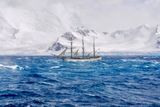
Formerly considered to be the last borders of the earth, the arctic and antarctic regions have tested human limits like no other. THE Endurance Expedition of 1915 remains one of the biggest survival stories in history, a lasting will with resilience and the desire to live against impossible dimensions.
Although celebrated for its strength, the ship was finally crushed by the antarctic pack ice. After the discovery of the wreck in 2022, the polar and scientific explorer Jukka Tuhkuri decided to study its structure, seeking to determine whether the construction defects had sealed its fate. His conclusions, published in Polar recordingsuggest Endurance Perhaps never adapted to such an ambitious trip, which its owner and expedition chief, Sir Ernest Shackleton, has already known.
Find out why the Endurance To flow
THE Endurance SUISE in January 1914 to reach the very first passage of the Antarctic continent. But during his trip, the ship became trapped in the package of package after losing his rudder, making him motionless before finally sinking into the Weddell Sea.
Due to sea ice all year round covering the site, the wreck has remained unknown for more than a century. When it was finally located in 2022, nearly 10,000 feet below the surface, it was found in a remarkably preserved state and is now a protected historic monument.
Seizing the opportunity, Tuhkuri, one of the main ice experts in the world and a solid mechanical teacher at Aalto University in Finland, compared the expeditional newspapers, Shackleton’s correspondence and a ship’s naval architectural analysis. His investigation revealed new perspectives on the fall of the ship.
Learn more: 4 famous wrecks that you can visit
Not built for rough polar conditions
After examining the historical files, Tuhkuri concluded in a press statement according to which “even a simple structural analysis shows that the ship was not designed for the compression package ice conditions which finally sank it”.
A member of the Endurance22 mission of 2022 who discovered the wreckage, he explained that comparisons with other polar ships of the time revealed “several structural gaps”.
“The beams and bridge frames were lower, the machine compartment was longer – leading to a serious weakening in a large part of the shell – the more there were no diagonal bundles to strengthen the shell,” Tuhkuri said in a press release. “Not only does this defy the romantic story that it was the strongest polar ship of its time, but it also denies the simplistic idea that the rudder was the Achilles heel of the ship.”
Initially, the final blow of the ship came from a damaged keel (the central beam flowing along the bottom of the shell), but the ultimate cause of its destruction resided up to its inability to resist the immense compressive forces of the Antarctic ice.
Shackleton knew the limits of the ship
“The danger of moving ice and compression charges – and how to design a ship for such conditions – was well understood before the ship sails south. So we really have to ask ourselves why Shackleton chose a ship that was not reinforced for compression ice,” Tuhkuri added in a press release.
According to Shackleton’s correspondence, he was aware of the ship’s faults. In a letter to his wife, he expressed his frustration at the limits of the ship and admitted that he preferred a ship of previous travel. He even “recommended diagonal beams for another polar ship when visiting a Norwegian shipyard. This same ship was stuck in compression ice for months and survived it, “Tuhkuri said in a press release.
Although it seems that Shackleton knew it better, his correspondence alone does not reveal if better decisions on his part could have prevented the fate of the ship.
“We can speculate on financial pressures or time constraints, but the truth is that we will never know why Shackleton has made the choices he has made. At least now we have more concrete discoveries to expand the stories,” concluded Tuhkuri in a press release.
THE Endurance Perhaps not survived with overwhelming antarctic ice, but under the remarkable leadership of Shackleton, his crew did it, leaving a heritage which continues as one of the determining moments of the heroic age of the exploration of the Antarctic.
Learn more: A cemetery hidden from 18th century ships made the Naulfing beach of Hawaii
Article Sources
Our Discovermagazine.com writers use studies evaluated by high -quality peers and sources for our articles, and our publishers examine scientific precision and editorial standards. Review the sources used below for this article:


