Experimental treatment for high cholesterol edits DNA in the body to reduce LDL


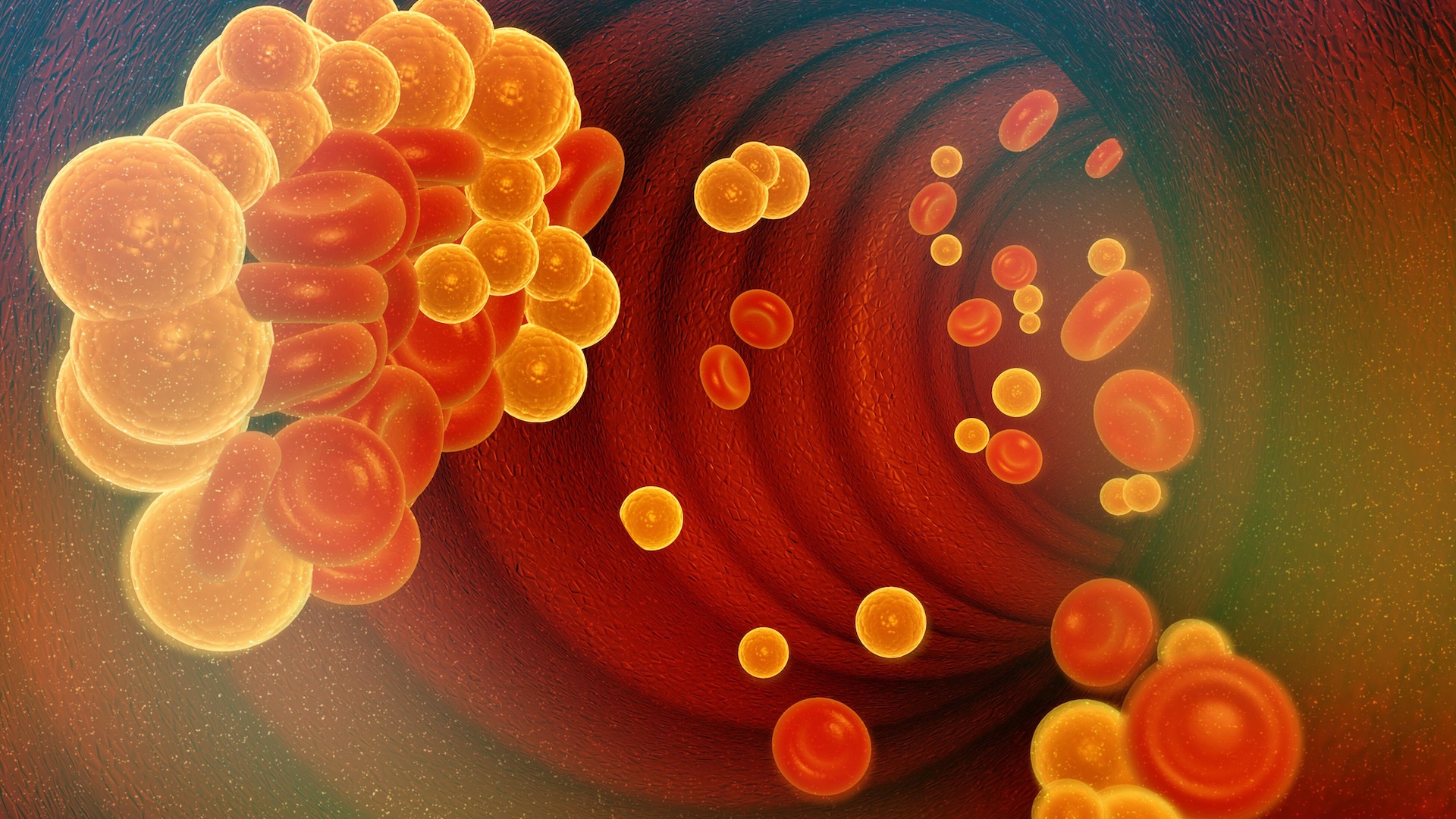
Experimental gene therapy for high cholesterol is promising in clinical trials and is close to approval.
The treatment, called verve-102, is tested in people with Family hypercholesterolemia (FH), a hereditary state that increases cholesterol levels of low density lipoproteins (LDL) – the “bad” gender – in the blood. It is also tested in people with prematurely coronary artery (CAD), in which the arteries shrink and cannot deliver enough oxygenated blood to the heart muscle. The age at which the CAD is considered to be “premature” varies, but it occurs before the age of 65 in women and 55 years in men.
The two groups “require deep and durable” blooddown in blood, verve Therapeutics, the manufacturer of treatment, noted in an April declaration. In a current clinical trial, the company tested treatment in 14 people with FH and / or premature CAD, and found that a single dose of therapy caused a 53% reduction in LDL on average.
These first data is taken from three groups of people who received different doses of treatment. The four participants received the highest dose saw the biggest advantage: a 69% reduction in LDL, at most.
In groups, “Verve-102 was well tolerated, without any serious adverse event (ESA) linked to treatment and no clinically significant laboratory abnormality observed,” noted the verve declaration.
Verve-102 uses a modified version of CrisprThe famous genetic publishing system. The CRISPR systems originally developed a “break” in the two strands of a DNA molecule, then, the integrated cell repair system moves to repair the rupture. However, this involves the risk of adding unwanted DNA mutations.
In relation: New CRISPR alternative can “install” whole genes, pave the way for the treatment of many genetic disorders
THE New hypocholesterol therapy Instead, uses “the basic edition”, which exchanges a single letter in the DNA code, thus avoiding the danger of a double -strand rupture. As a classic Crispr, the basic editor always includes a “guide” molecule to set its objective on the correct gene, and from there, an enzyme modifies a single letter of the DNA code.
Verve-102 targets a gene called Pcsk9which controls the number of LDL receptors on cell surfaces. The quantity of these receptors dictates how fast LDLs are eliminated from the blood. When PCSK9 is too active – as in the FH genetic disease – it breaks down the LDL receptors before being able to go to the cell surface, thus causing an accumulation of LDL in the blood circulation.
The new therapy, given in a single intravenous infusion over two to four hours, is designed to deactivate PCSK9, especially in the liver, where LDL receptors are abundant. In the three dosage groups, there was a decrease in PCSK9 activity and LDL levels within 28 days of treatment, with higher doses linked to greater reductions.
Now, the company is scoring a fourth group of patients who will receive an even higher dose and who are recruited in the United Kingdom, Canada, Israel, Australia and New Zealand. In April, two people in the group were treated.
Verve plans to publish data from this part of the trial later this year, as well as starting its next clinical trial, which will include more participants. The next trial will probably write to the American participants because the Food and Drug Administration has granted therapy “Accelerated designation“To help accelerate its development and approval.
In particular, in June, Verve was acquired by the pharmaceutical company Lilly, which aims to continue the development of treatment.
“Verve-102 has the potential to be the first In vivo [in the body] Therapy for modification of genes for large populations of patients and could move the paradigm of treatment of cardiovascular diseases of chronic care to one and due, ” Ruth GimenoLilly Group vice-president of diabetes and metabolic research and development, said in a press release.
Stronger and longer clinical trials will be necessary before Verve-102 can gain approval and reach more patients.
This article is for information only and is not supposed to offer medical advice.


