Rare White Bison Calf Born At Iowa Wildlife Refuge


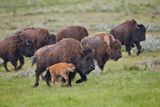
The Neal Smith National Wildlife Refuge welcomes the arrival of a rare white bison. First observed by staff on April 30, the calf now roams the meadow alongside the shelter’s other spring hatchlings.
Unlike most newborn bison, which are born with reddish-brown fur, this calf featured a pale whitish coat rarely seen in the species. According to updates shared by the refuge, the white calf is one of nine bison currently roaming the prairie this season. The birth comes as the refuge continues its large-scale efforts to restore Iowa’s tallgrass prairie ecosystem and support the conservation of plains bison, a species that was brought to the brink of extinction in the 1800s after widespread killing and habitat loss.
“Nature never ceases to amaze! Earlier today, a newborn whitish bison was observed in the refuge’s meadow,” the refuge wrote in a Facebook post. “A rare and beautiful sight! Bison calves are typically born with reddish-brown fur, which turns dark brown as they grow. It will be fascinating to see what color this calf develops as it grows.”
How bison were driven to the brink of extinction and brought back through conservation
Young bison are often nicknamed “red dogs” because of their rusty orange coats. According to the shelter, calves can nurse within 10 to 30 minutes of birth and are able to walk and run in just a few hours.
Plains bison, also called buffalo, once numbered in the tens of millions and roamed North America in massive nomadic herds. Many indigenous cultures, particularly in the Great Plains, developed close cultural ties to bison over thousands of years.
However, in the 1800s, bison populations collapsed as westward expansion accelerated across the United States. According to the U.S. Fish and Wildlife Service (USFWS), the species was systematically culled during the 19th century, pushing it to the brink of extinction. By 1889, only a few hundred wild plains bison remained in parts of the western United States.
Conservation herds established in the early 20th century helped rebuild populations. Today, according to the USFWS, there are approximately 20,500 plains bison in conservation herds and another 420,000 in commercial herds.
Learn more: Humans abandoned a bison hunting site about 1,100 years ago – turns out climate change was the cause
Restoring Iowa’s Prairie Ecosystem
The white calf was born as part of one of the largest prairie restoration projects in the Midwest. Since 1992, the USFWS has restored former croplands in the Neal Smith National Wildlife Refuge to native tallgrass prairie and oak savannah habitats.
Today, refuge staff manage approximately 5,600 acres of restored prairies and savannas using methods such as planting native prairie seeds, prescribed burning, removal of invasive species, and reintroduction of grazing animals like bison and elk.
For thousands of years, tallgrass prairie covered much of the Midwest before European settlement transformed the landscape through agriculture and wetland drainage. Grassland restoration efforts at the refuge aim to rebuild wildlife habitat, improve biodiversity, support pollinators and grassland birds, and increase carbon storage through native plant systems.
Bison remain a major part of this restoration effort. The refuge manages a herd in an 800-acre enclosure, where the animals help shape the grassland ecosystem through grazing, seed dispersal, rubbing and wallowing. Grazing also helps prevent grasses from overtaking wildflowers, allowing a greater variety of prairie plants to thrive.
The refuge notes that bison are particularly attracted to recently burned grasslands, where fresh green shoots provide a nutrient-rich food source.
Today, among the refuge’s newest calves, an unusually pale newborn stands out in a landscape built to restore a part of North America’s ecological history.
Learn more: What the loss of pure bison means for conservation
Article sources
Our Discovermagazine.com editors use peer-reviewed research and high-quality sources for our articles, and our editors review the articles for scientific accuracy and editorial standards. See the sources used below for this article: