‘Extremely rare’ Roman tomb discovered in Germany


In 15 BCE, the Romans invaded parts of Austria, Switzerland and Germany. The region would eventually become the province of Rhaetia, but it was not valued for its economic resources. Instead, Rhaetia provided Rome with a strategic defensive position against potential invaders. More than 2,000 years later, the historic presence of the powerful ancient empire in the region still resurfaces from time to time.
Construction work and associated archaeological efforts in the German Upper Bavarian district of Eichstätt have revealed the foundations of a Roman burial mound, or barrow. Such structures are rare in the ancient province of Rhaetia, and excavations have also revealed traces of prehistoric settlements and ceramic remains.
“We did not expect to discover a funerary monument of this age and size here,” Mathias Pfeil, general curator of the Bavarian State Office for the Preservation of Historical Monuments, said in a translated statement. “The mound was located directly on an important Roman transportation route, allowing the family to commemorate a deceased person in a way visible from afar. The tomb was both a place of memory and an expression of social status.”
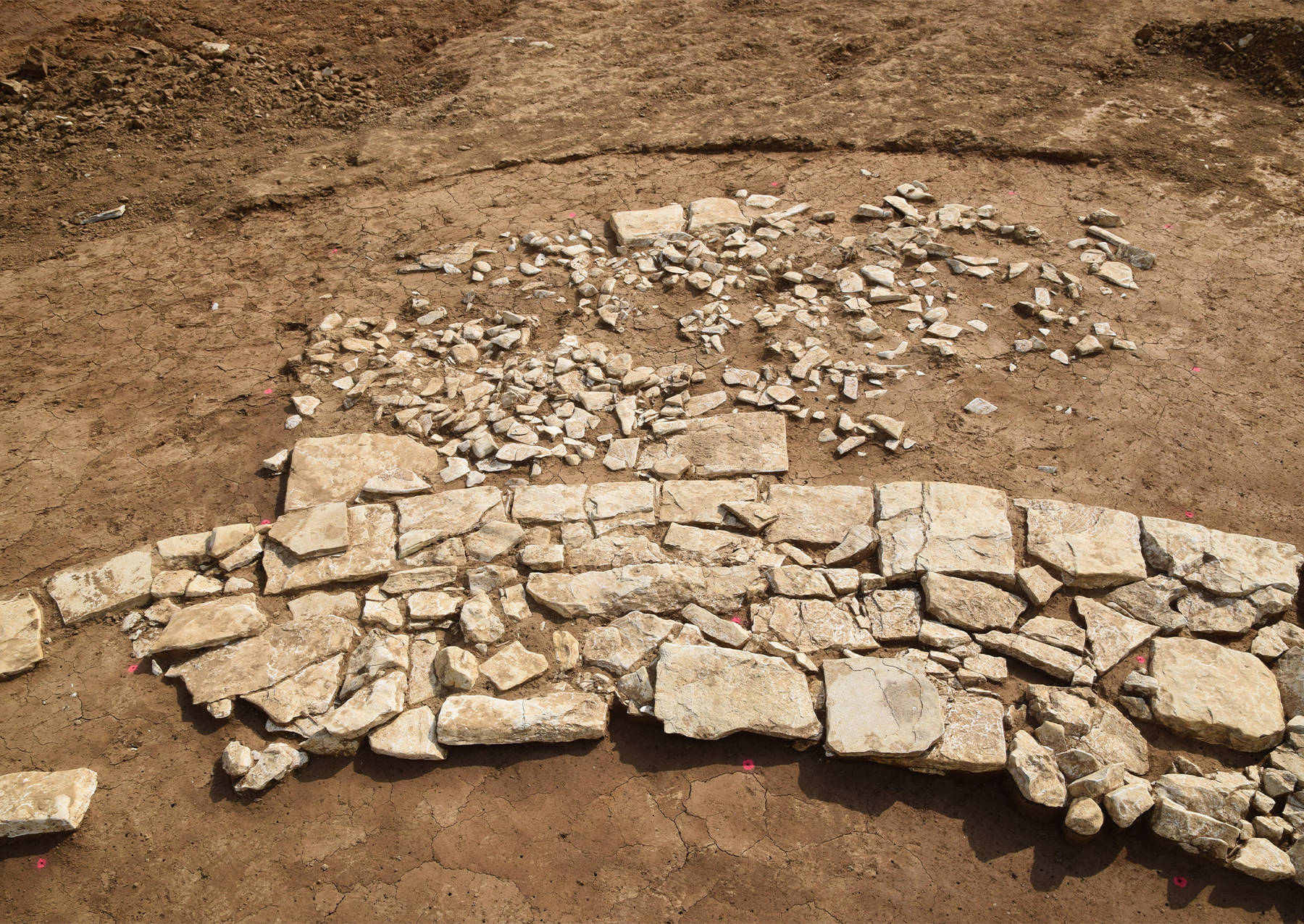
The find consists of a carefully arranged 39-foot-wide stone ring with a square extension that likely contained a statue or stele (a stone slab engraved with text and/or images). The stone circle is all that remains of the wall that once surrounded the mound, and a mound with such large stone walls is “extremely rare” in Raetia.
Most of the burial mounds in the region date back to the Bronze and Iron Ages. In fact, researchers are now trying to determine whether the mound represents an intentional revival of pre-Roman sepulchral traditions. Nevertheless, Roman Central Europe and Italy had a long tradition of burial mounds beginning in the first century CE. The Romans sometimes even reused Bronze and Iron Age structures to build their burial mounds.
It is interesting to note that the mound in question is empty of any skeleton and any funerary object. This doesn’t necessarily mean the grave robbers got there first. Since the mound is located along a major Roman road and near an ancient Roman estate, researchers hypothesize that the mound is a cenotaph, a memorial – sometimes an empty tomb – to someone buried elsewhere.

House of the Future Prize 2025


