Can animals give birth to twins?

Curious Kids is a series aimed at children of all ages. If you have a question you’d like an expert to answer, send it to curiouskidsus@theconversation.com.
Can animals give birth to twins? – Mia C., 10 years old
Ask any parent: welcoming a new baby into the family is exciting, but it takes a lot of work. And when the new arrival is a pair of babies – twins – the parents really have their work cut out for them.
For many animal species, it is normal to have several babies at a time. A litter of piglets can number up to 11 or more!

We are faculty members at the Mississippi State University College of Veterinary Medicine. We have been present at the births of many puppies and kittens over the years – and pet mothers almost always give birth to multiples.
But are all these animal siblings who share the same birthday twins?
Twins are two peas in a pod
Twins are defined as two children born from the same pregnancy.
They can be identical, meaning that a single sperm fertilized a single egg which divided into two separate cells which then developed into two identical babies. They share the same DNA, and that’s why the two twins are essentially indistinguishable from each other.
Twins can also be fraternal. This is the result when two separate eggs are fertilized individually at the same time. Each twin has its own set of genes from the mother and father. One can be a man and the other a woman. Fraternal twins are basically as similar as any set of siblings.

In the United States, about 3% of human pregnancies result in twins. Most of them are fraternal – about one in three pairs of twins are identical.
Several babies from the same animal mother
Each species of animal has its own standard number of young per birth. People tend to know the most about domesticated species that are kept as pets or farm animals.
A study of the size of more than 10,000 litters among purebred dogs found that the average number of puppies varied depending on the size of the dog breed. Miniature breed dogs – such as chihuahuas and toy poodles, typically weighing less than 10 pounds (4.5 kilograms) – averaged 3.5 puppies per litter. Giant breed dogs — like mastiffs and Great Danes, typically weighing more than 100 pounds (45 kilograms) — averaged more than seven puppies per litter.
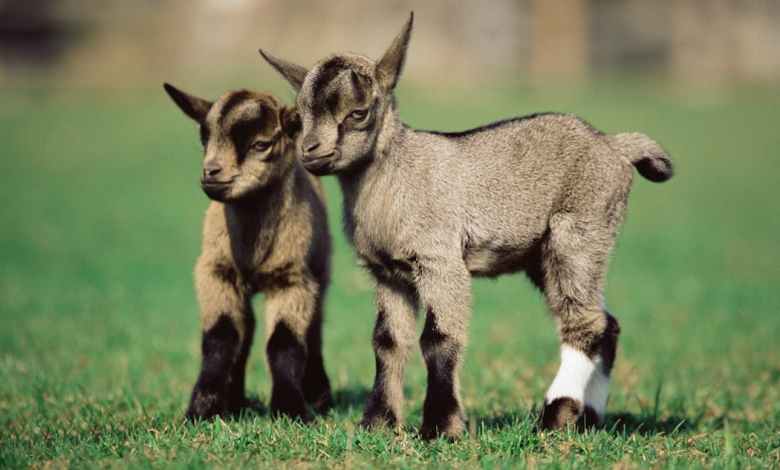
When a litter of dogs, for example, only includes two offspring, people tend to refer to the two puppies as twins. Twins are the most common pregnancy outcome in goats, although mother goats can also give birth to a single kid or larger litters. Sheep often have twins, but lambs born alone are more common.
Horses, which are 11 to 12 months pregnant, and cows, which are nine to 10 months pregnant, tend to have only one foal or calf at a time – but twins can occur. Veterinarians and breeders have long believed that it would be financially beneficial to encourage the conception of twins in dairy and beef cattle. Basically, the farmer would get two calves for the price of one pregnancy.
But twins in cattle can cause birth complications for the cow and small calves, with reduced survival rates. Similar risks arise with twin pregnancies in horses, which tend to result in both pregnancy complications that can harm the mare and the birth of weak foals.
DNA holds the answer to what kind of twins
Many animals can therefore give birth to twins. A more complicated question is whether two baby animals born together are identical or fraternal twins.
Female dogs and cats ovulate several eggs at a time. Fertilization of individual eggs by separate sperm from a male produces multiple embryos. This process results in fraternal, non-identical puppies or kittens, even if they look very similar.

Biologists believe that identical twins in most animals are very rare. The problem is that many sibling animals look very similar, and researchers must perform a DNA test to confirm whether two animals actually share all their genes. Only one documented report of identical twin dogs has been confirmed by DNA testing. But no one knows for sure how often fertilized animal eggs divide and develop into identical twin baby animals.
And reproduction is different depending on the animal. For example, nine-banded armadillos normally give birth to identical quadruplets. Once a mother armadillo releases an egg and it is fertilized, it divides into four separate identical cells which develop into identical young. Its relative, the seven-banded armadillo, can give birth to seven to nine identical young at a time.
There are still a lot of things scientists aren’t sure about when it comes to twins of other species. Since DNA testing is not commonly done on animals, no one really knows how often identical twins are born. It is possible – perhaps even probable – that identical twins are born in some species without anyone knowing.
Hello curious children! Do you have a question you would like an expert to answer? Ask an adult to send your question to CuriousKidsUS@theconversation.com. Please tell us your name, age and the city where you live.
And since curiosity has no age limit – adults, let us know what you’re wondering too. We won’t be able to answer every question, but we will do our best.
This article is republished from The Conversation, an independent, nonprofit news organization that brings you trusted facts and analysis to help you make sense of our complex world. It was written by: Michael Jaffe, Mississippi State University and Tracy Jaffe, Mississippi State University
Learn more:
The authors do not work for, consult, own shares in, or receive funding from any company or organization that would benefit from this article, and have disclosed no relevant affiliations beyond their academic appointment.


