Gibraltar’s monkeys find a clever way to avoid a junk food bellyache

By Marta Serafinko
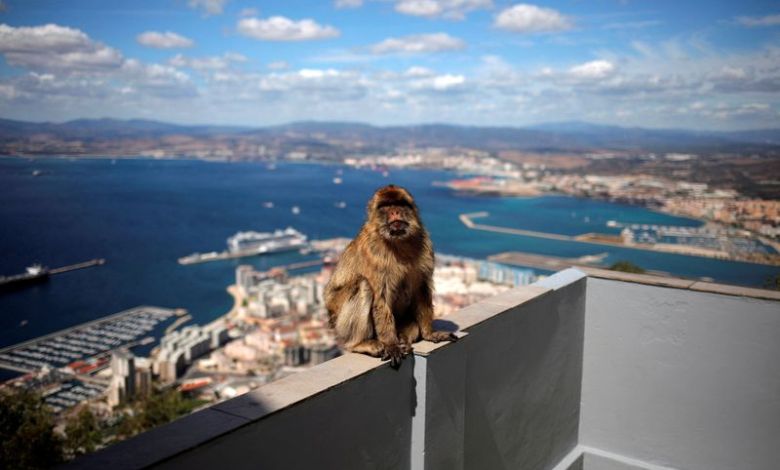
April 22 (Reuters) – On the tourist-heavy Rock of Gibraltar, one of the most common sights is monkeys begging for food – and sometimes stealing sweet and savory snacks from unsuspecting visitors. Scientists have now documented unusual behavior in these macaques that “could help them avoid the stomach aches caused by all that junk food.”
The researchers said the monkeys were observed eating dirt more frequently, a behavior they believe could help the macaques avoid stomach upset from eating human snacks. They found that dirt consumption was more common among groups of monkeys who ate more food from tourists, including chocolate, chips and ice cream, products high in sugar, fat and dairy, and low in fiber.
“We propose the idea that human diet, not adapted to its natural diet, triggers stomach upset and potentially disruption of the microbiome, the negative effects of which are buffered by soil components,” said Sylvain Lemoine, a biological anthropologist at the University of Cambridge in England and lead author of the study published Wednesday in the journal Scientific Reports.
Compared to something in humans, eating soil “probably acts like antacids,” Lemoine said, adding that more research is needed to understand its effects on gut bacteria.
Researchers tracked Barbary macaques living in Gibraltar, a British territory at the southern tip of Spain, between August 2022 and April 2024. The macaques – around 230 animals in eight groups – make up the only free-ranging population of monkeys in Europe.
The monkeys live in close contact with the hordes of tourists who visit the site. Tourists often feed the monkeys – or have their snacks stolen – while the animals also receive fruits, vegetables and seeds at designated feeding platforms run by local authorities.
Barbary macaques, native to North Africa, are believed to have arrived in Gibraltar during medieval Moorish rule. They later became a symbol of British control after legend has it that they helped alert troops to a surprise attack in the 18th century.
Their population then declined during World War II, prompting British leader Winston Churchill to order simian reinforcements from Morocco and Algeria – animals from which most of today’s macaques are thought to be descended.
The deliberate consumption of soil, chalk or clay is called geophagy. It is observed in many animal species, including primates such as chimpanzees, lemurs and other macaques.
“We don’t know the exact action of soil in the gut, but soils, especially those rich in clay, are known to dampen the pH (acidity) of the gut, adsorb toxins, plaster the stomach and change the composition of the microbiome,” Lemoine told Reuters. “I wouldn’t say the soil helps them digest junk food, but it probably helps them feel better during difficult digestion,” Lemoine added.
Researchers documented 46 cases of geophagy in the Gibraltar monkey population. This behavior was particularly common in areas with high tourist traffic and peaked in summer, when visitor numbers are highest, while a group of monkeys without access to human food showed no land consumption, they said.
The study suggests that behavior can be “socially learned.” Different groups of monkeys prefer specific soil types, and most soil eating occurs in the presence of other macaques, giving younger individuals a chance to observe and copy.
The results show how primates can adapt to changing environments in the same way as humans and learn these behaviors from each other, Lemoine added.
Lemoine noted that the findings could influence tourist behavior, potentially helping to discourage illegal eating. However, some fear it could have “the opposite effect if visitors expect to be able to trigger unusual behavior.”
“There is no systematic link between immediate consumption of junk food and subsequent consumption of soil. It does happen in some cases, but in general they do not immediately eat soil after eating human food,” Lemoine said.
(Reporting by Marta Serafinko in Gdansk, Poland; editing by Will Dunham)


