Scientists want to treat complex bone fractures with a bone-healing gun


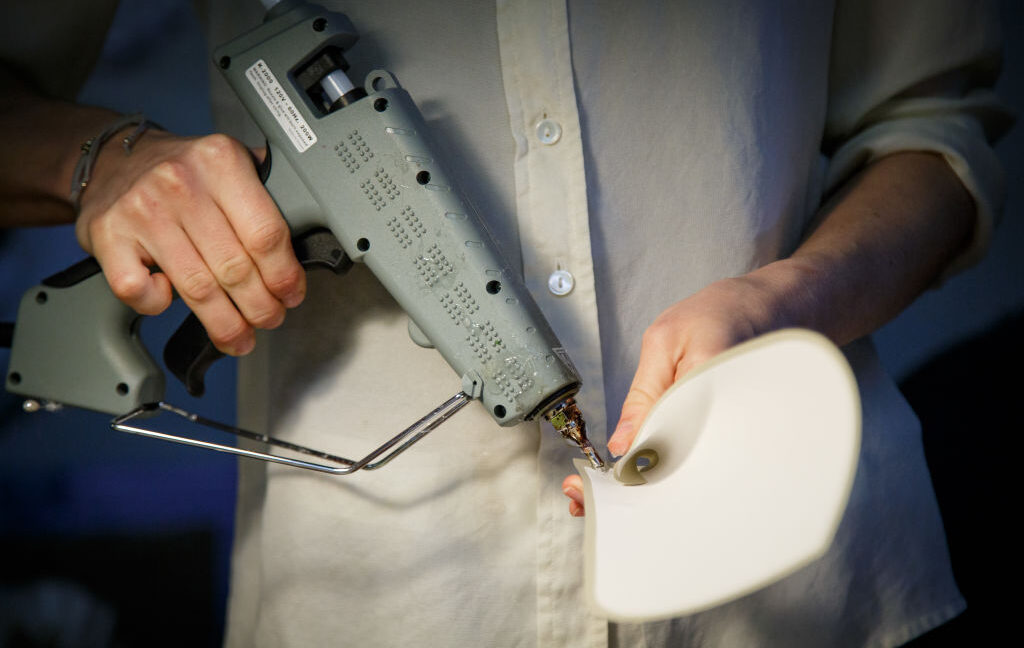
After examining a few candidates, the team found the right equipment. “We used a biocompatible thermoplastic called polycaprolactone and hydroxyapatitis as basic materials,” said Lee. Polycaprolactone was chosen because it is a material approved by the FDA which degrades in the body a few months after the implantation. Hydroxyapatitis, on the other hand, supports the regeneration of bone tissue. The Lee team experienced various proportions of these two ingredients and finally nailed the formulation which checked all the boxes: it extruded a relatively harmless 60 ° Celsius, the mixture was mechanically healthy, it adhered to the bone and it deteriorated over time.
Once the bone healing balls were ready, the team tested them on rabbits. Rabbits with broken femurs treated with the Lee healing gun recovered faster than those treated with bone cement, which is the closer alternative to trade. But there is still a lot to do before the healing gun can be tested on humans.
Competence problems
While the experience on rabbits has revealed new bone fabrics forming around the implants created with the healing pistol, their slow degradation of the implanted material prevented the complete restoration of bone tissue. Another improvement in Lee’s plans is to add antibiotics to the formulation. The implant, he said, will release medication over time to prevent infections.
Then there is the problem of the load load. Rabbits are well as test subjects, but they are rather light. “To assess the potential to use this technology on humans, we need to examine its long -term safety in large animal models,” said Lee.
Beyond the questions on the equipment, the level of competence necessary to operate this healing pistol seems rather high.
3D printers based on extrusion, those that more or less work like very advanced hot glue pistols, generally use stems or rails for precise positioning of the print head. If these stems or rails are deformed, even slightly, the accuracy of your impressions will most likely suffer from it. Reaching precision comparable to a portable device could be a bit difficult, even for a qualified surgeon. “It is true that the system requires practice,” said Lee. “We may need to integrate it into a guide mechanism that would precisely position the head of the device. This could be our new generation bone printing device. ”
Aircraft, 2025. Doi: 10.1016 / J.DEVICE.2025.100873


