Ancient Dental Plaque Is Changing What We Know About Medieval Diets


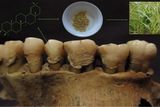
For decades, archaeologists have relied on chemical signatures locked in ancient bones to piece together what people once ate. But these techniques have a blind spot: foods eaten occasionally or in small quantities often disappear from the records completely.
Today, a new biomolecular approach makes these missing meals visible using something we usually want to get rid of: dental plaque.
In a study published in Scientific reportsResearchers analyzed dental calculus from medieval human remains in Ukraine and discovered the first direct molecular evidence of trace consumption of millet. The findings not only add a new ingredient to the medieval menu, they also signal a major shift in how scientists can study ancient diets.
Analyzing the hidden secrets of dental calculus
Dental calculus, the mineralized plaque that accumulates on teeth over time, is increasingly recognized as a powerful archaeological record. Unlike bones, they trap tiny food scraps, microbes, and environmental particles over the course of a person’s life.
In this study, researchers applied thermal desorption ionization-gas chromatography mass spectrometry (TD-GC/MS) to dental calculus samples weighing just a few micrograms, which is much smaller than other analytical techniques require.
Using this method, the team identified miliacin, a molecular compound particularly abundant in corn millet, in eight individuals buried at the medieval site of Ostriv in Ukraine. The ability to detect this specific biomarker at such small scales marks substantial methodological progress.
“Our results demonstrate that even the smallest traces of millet leave molecular imprints in dental calculus. This opens up a whole new way to detect subtle dietary practices in the past,” co-lead author Shinya Shoda said in a press release.
The new approach is fast, minimally destructive and adaptable to a wide range of archaeological contexts, making it particularly interesting for the analysis of rare or fragile remains.
Learn more: Ancient teeth hold clues to farming villages that welcomed outsiders with open arms
What did dental calculus show about medieval diets?
By combining molecular data with traditional isotope analysis, researchers discovered surprisingly varied dietary histories among individuals.
“Dental calculus is a biological material often found on human teeth. The discovery of species-specific plants in the computational matrix in combination with other biomolecular archaeological techniques opens a new possibility to understand the nutrition of past populations,” explained Aleksandra Kozak.
Several individuals showed clear molecular evidence of millet consumption, even though their isotopic values suggested otherwise. In some cases, isotope signatures reflected low exposure to millet during childhood, implying that these individuals may have adopted millet later in life, likely due to migration, changing cultural practices, or changes in food availability.
How this method will change archeology
Traditional stable isotope analysis typically detects millet only when it makes up more than 20 percent of a person’s dietary protein. This threshold means that lower levels of seasonal or socially specific consumption often go unnoticed.
By revealing the presence of unidentified foods, dental calculus analysis could reshape how researchers understand dietary diversity throughout history.
“This technique allows us to access underrepresented plant foods that rarely appear in the archaeological record,” said co-lead author Giedrė Motuzaitė Matuzevičiūtė. “This gives us a clearer picture of daily diets and how people adapted to local environments and cultural changes.”
Beyond millet, the method also holds promise for identifying other economically or medicinally important plants, offering a much more nuanced view of how ancient societies ate food, one tooth at a time.
Learn more: Ancient dirty dishes can mislead archaeologists and rewrite history
Article sources
Our Discovermagazine.com editors use peer-reviewed research and high-quality sources for our articles, and our editors review the articles for scientific accuracy and editorial standards. See the sources used below for this article:


