Ancient Egyptians likely used opiates regularly


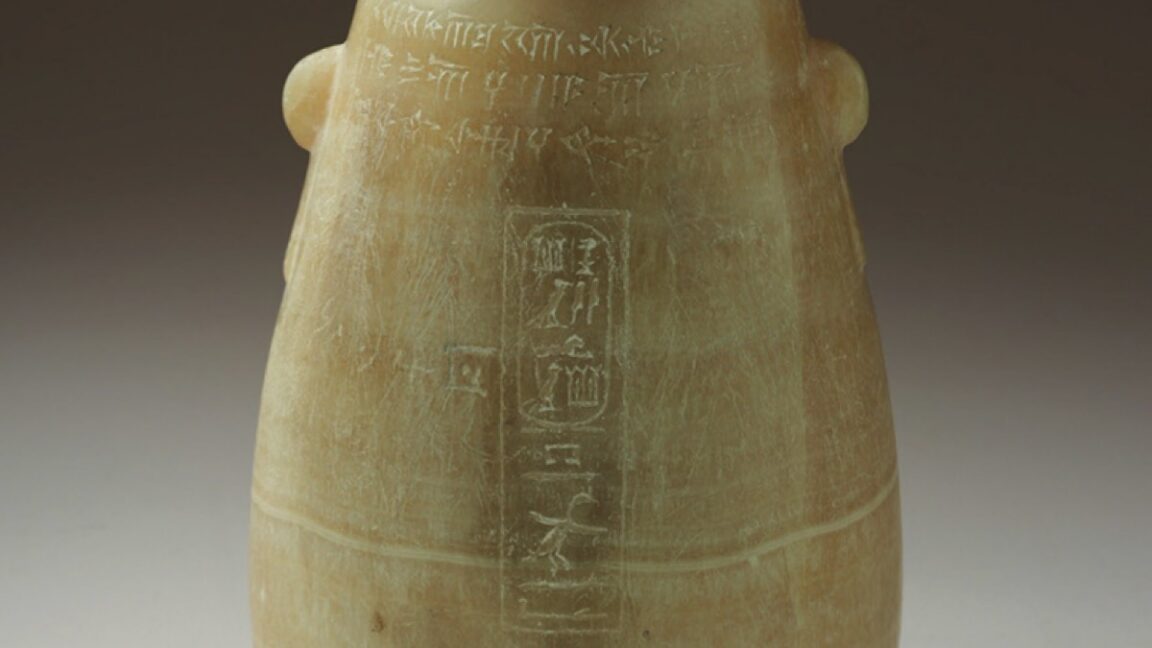
Scientists have found traces of ancient opiates in the residue covering an Egyptian alabaster vase, indicating that opiate use was embedded in the cultural fabric. And the Egyptians didn’t just indulge in it occasionally: according to an article published in the Journal of Eastern Mediterranean Archeology, opiate consumption may have been part of daily life.
In recent years, archaeologists have applied the tools of pharmacology to objects unearthed in collections around the world. As noted previously, there is ample evidence that humans in many cultures throughout history have used various hallucinogenic substances in religious ceremonies or shamanic rituals. This includes not only ancient Egypt, but also Greek, Vedic, Mayan, Inca and Aztec cultures. The Urarina people who live in the Peruvian Amazon basin still use a psychoactive drink called ayahuasca in their rituals, and Westerners seeking their own form of enlightenment are also known to participate.
For example, in 2023, David Tanasi of the University of South Florida published a preprint on his preliminary analysis of a ceremonial cup decorated with the head of Bes, a popular deity believed to confer protection to households, particularly mothers and children. After collecting sample residue from the ship, Tanasi applied various techniques, including proteomic and genetic analyzes and Fourier transform infrared microspectroscopy based on synchrotron radiation, to characterize the residue.
Tanasi found traces of Syrian rue, whose seeds are known to have hallucinogenic properties that can induce dreamlike visions, according to the authors, thanks to its production of the alkaloids harmine and harmaline. There were also traces of blue water lily, which contains a psychoactive alkaloid that acts as a sedative, as well as a fermented alcoholic concoction containing yeast, wheat, sesame seeds, fruit (possibly grapes), honey, and, uh, “human fluids”: possibly breast milk, oral or vaginal mucus, and blood. A follow-up study carried out in 2024 confirmed these results and also found traces of pine nuts or Mediterranean pine oil; licorice; salts of tartaric acid which were probably part of the aforementioned alcoholic concoction; and traces of spider flowers known for their medicinal properties.


