Ancient mummified cheetahs discovered in Saudi Arabia contain preserved DNA from the long-lost population


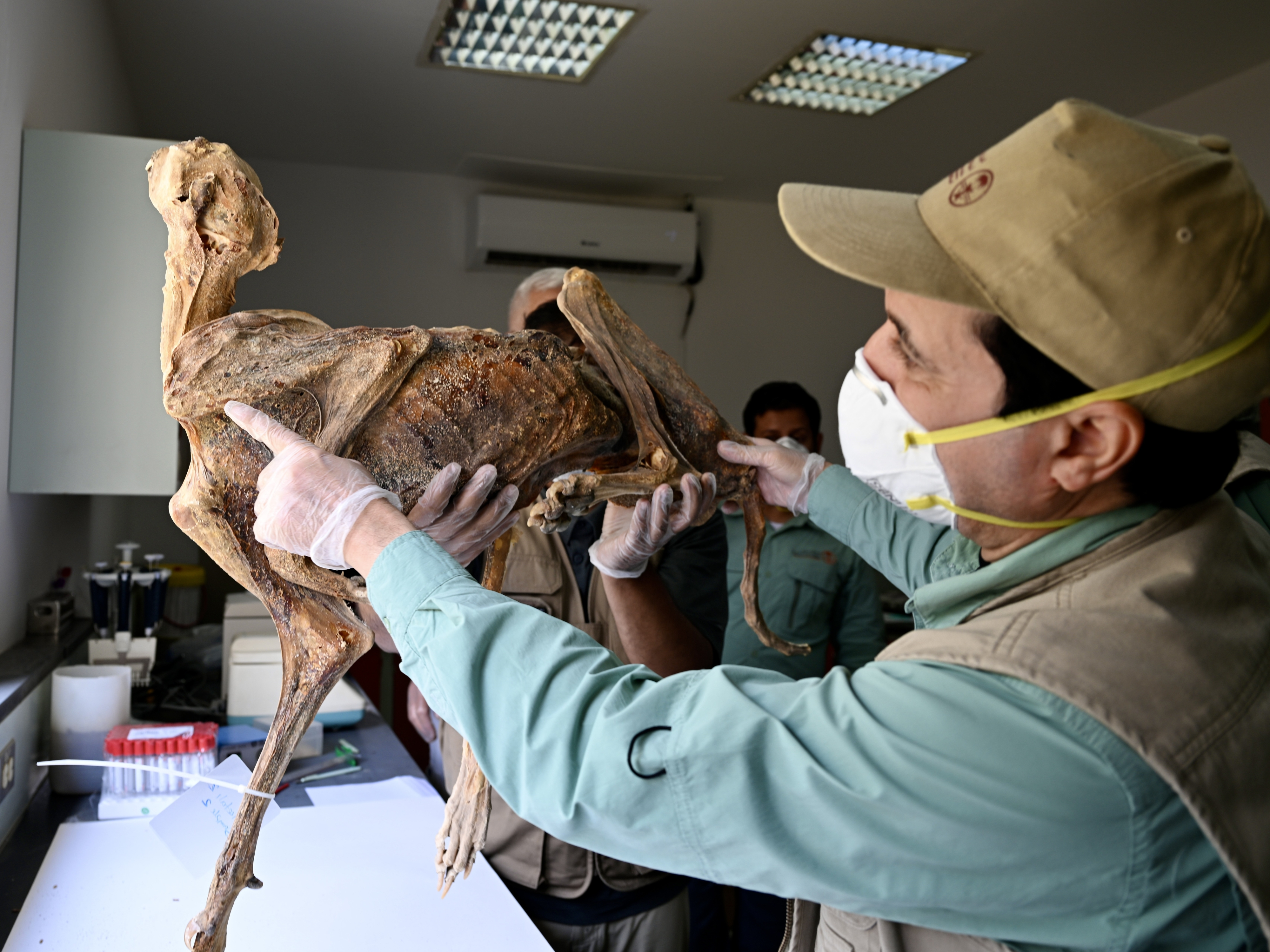
Scientists have successfully extracted DNA from ancient mummified cheetahs discovered in a cave in Saudi Arabia. This is the first time scientists have managed to extract genetic information from naturally mummified ancient big cats, researchers say, and could lead to the reintroduction of these animals to the region.

Cheetahs (Acinonyx jubatus) are threatened on a global scale. Populations have plummeted, and there are now there are only 7,100 cheetahs left. The big cat, which is the world’s fastest land mammal, once roamed most of Africa and Asia, from the Arabian Peninsula to India, but now lives in about 9 percent of its historic range.
Today, there are five recognized subspecies of cheetah, four of which are in Africa and one (Aj Venaticus) in Asia. This Asian population is restricted to a small group of cheetahs in Iran.
No one knows exactly how many cheetahs once lived on the Arabian Peninsula, or what their distribution was. Likewise, there is little evidence as to why or when they disappeared. Researchers believe it was a mixture of habitat loss and fragmentation, hunting and human-wildlife conflict.
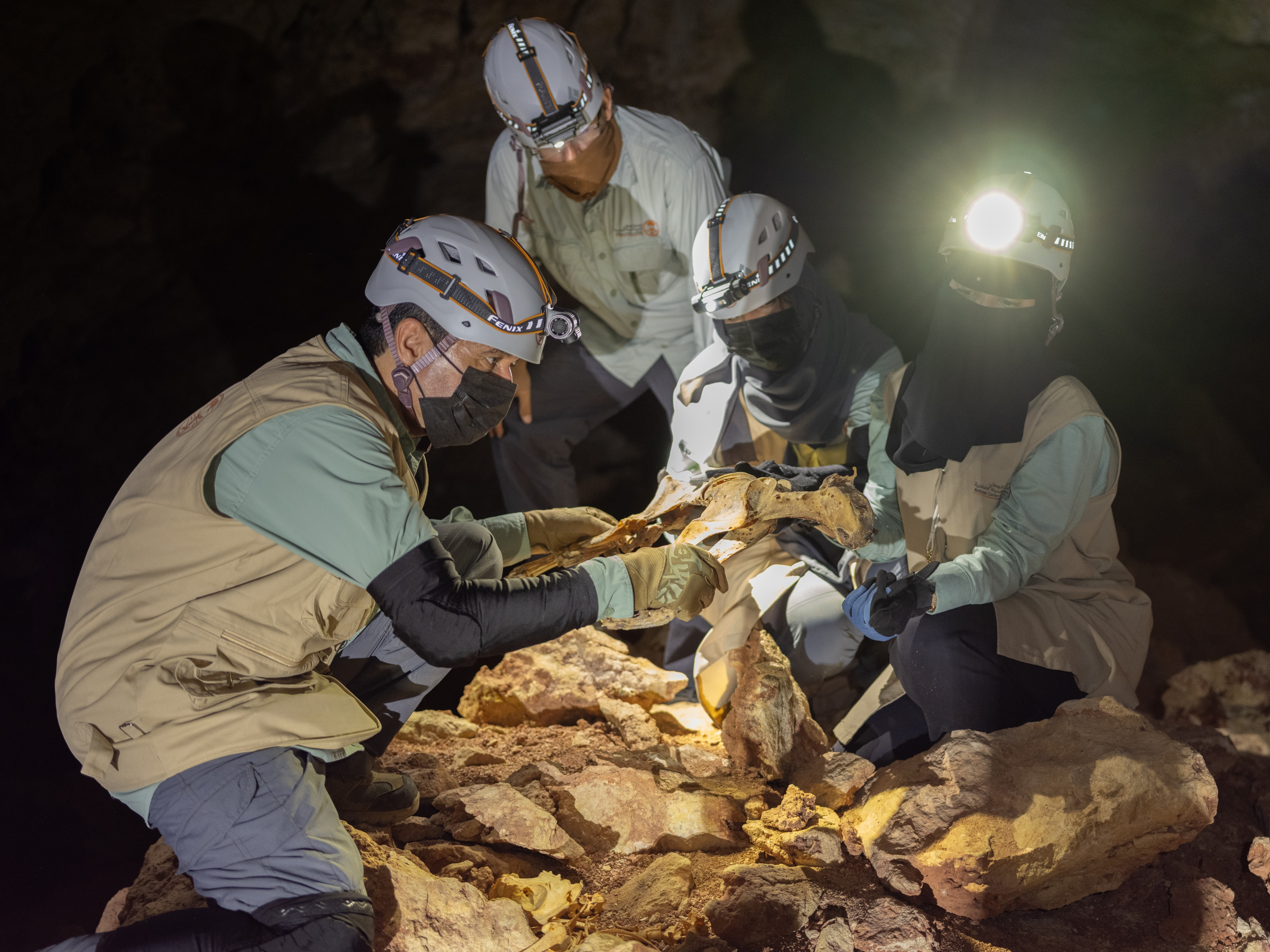
However, the discovery of a trove of ancient cheetah remains – which includes cubs and adults – proves they once roamed the area – and could offer a blueprint for their return.

“The research provides strong evidence of the historical presence of cheetahs in Saudi Arabia and supports the potential for rewilding in this region to help expand their current range and restore some of their former distribution,” Desire Daltona forensic scientist at Teesside University in the United Kingdom, who studies the use of genomic tools to inform conservation and was not involved in the study, told Live Science.
In the study, researchers dated samples from two of the mummified cheetahs and five of the skeletons. The oldest skeletal remains belong to a cheetah that died around 4,000 years ago, while the two desiccated cheetahs are 130 and 1,870 years old, respectively.
The team found evidence that prehistoric cheetahs from Saudi Arabia are genomically closest to those from West Africa. Aj devil subspecies. Only the youngest specimen analyzed had closer ties to the Asian subspecies. Aj Venaticus.
“Using advanced archaeological, radiological and genomic techniques, the authors established that mummified cheetahs have two lineages,” Kumarasamy Thangaraja forensic geneticist at the CSIR Center for Cellular and Molecular Biology in Hyderabad, India, who was not involved in the study, told Live Science.
Picture 1 of 2
Dalton said the identification of these unique lineages suggests that the loss of diversity in cheetahs may have been greater than scientists previously thought.
But the research gives conservationists a starting point to potentially reintroduce cheetahs to Saudi Arabia. The authors argue that cheetahs destined for rewilding in the Arabian Peninsula may come from the closest subspecies of the cheetahs discovered – Aj Hecki — which is much more abundant than the Asian subspecies.
The discovery of DNA could prove useful for ongoing rewilding efforts. In 2023, Saudi Arabia launched a program aimed at reintroduce the Arabian cheetah. A year later, its National Wildlife Center reported the birth of four cheetah cubs and the launch of its National Cheetah Conservation Strategy, which includes the creation of specialized breeding establishmentsand the establishment of a wild breeding population.
The idea of using ancient DNA to reintroduce animals is not far-fetched, Dalton said. “Genetic studies have guided several successful rewilding projects.” For example, genetic data for European bison (Bison Bonus) to have informed selection and translocation strategies for these animals. This reduces the risk that the animals will have difficulty adapting to their new environment, she said. A project is also underway to carry out ancient DNA analysis of European wolves (Canis lupus lupus) to develop targeted management strategies to preserve the biodiversity of European wolves, she said.
The study authors believe caves around the world could reveal more secrets about ancient species. Caves located in arid environments, such as Saudi Arabia, can generate hot, dry microclimates ideal for drying animal remains, which can lead to mummification.
“The arid cave environments of Saudi Arabia and elsewhere may yet contain other important information that could illuminate ecological histories, evolutionary knowledge, and actionable intelligence for rewilding and conservation,” the authors wrote.


