Ancient rival of Rome uncovered as 2,000-year-old basin is found in Gabii, Italy


NEWYou can now listen to Fox News articles!
Archaeologists recently discovered a huge stone basin in Italy dating back more than 2,000 years – remains of a once-powerful rival to Rome.
The discovery was made at the ancient ruins of Gabii, about 18 kilometers east of Rome. University of Missouri archaeologists discovered the remains, according to an Oct. 16 university news release.
Marcello Mogetta, director of the Department of Classics, Archeology and Religion, estimated that the pool was built around 250 BC.
ARCHAEOLOGISTS FIND 1,600-YEAR-OLD CHURCHES AND JESUS MURAL IN EGYPTIAN DESERT COLLECTION
The structure is perhaps one of the earliest examples of large-scale Roman public architecture outside of temples and city walls. It could also demonstrate how Roman architects were influenced by the Greeks.
Mogetta told Fox News Digital that Gabii and Rome “both traced their descent from common ancestors.”
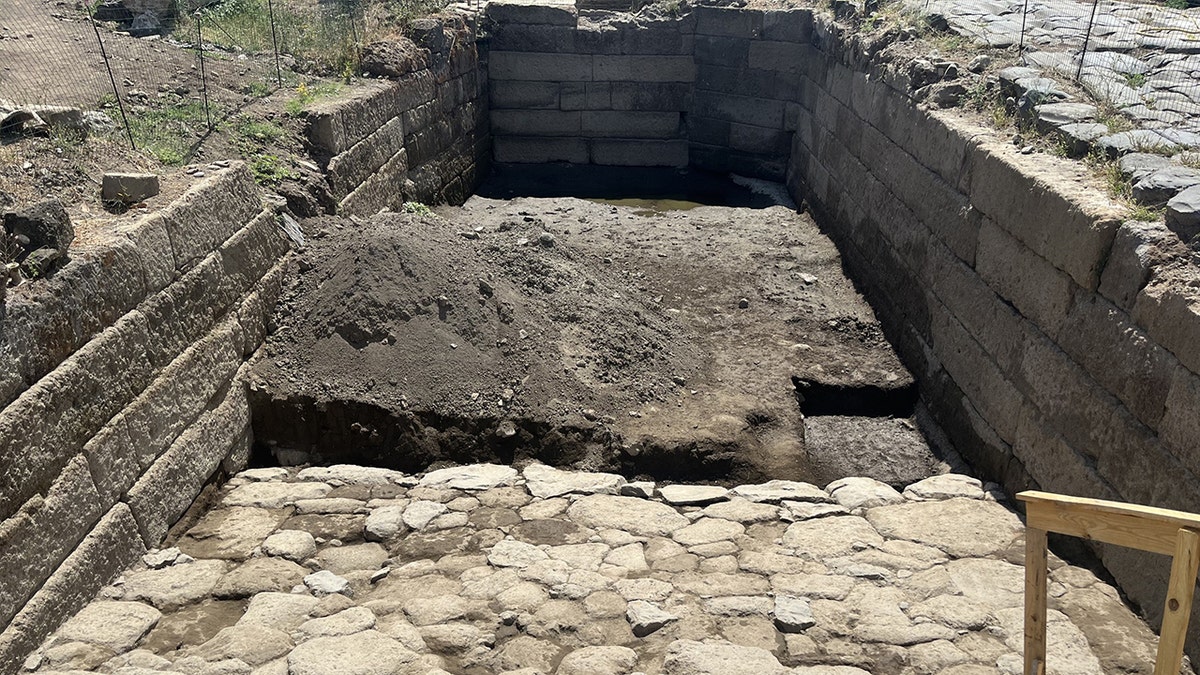
Archaeologists in Gabii, Italy, have discovered a huge stone pool dating back more than 2,000 years. (Marcello Mogetta)
“According to some stories that circulated in Roman times, Gabii was where Romulus and Remus went to learn the liberal arts,” Mogetta explained.
“This highlights the close cultural ties, but the actual relationship was more complicated than that.”
“In the long run…Rome’s growth as a metropolis and superpower on the international stage worked against Gabii.”
The two cities had a long-standing rivalry, fueled by aristocratic clans and warlords. Mogetta said this likely happened in the form of small-scale raids.
“The last recorded conflict between Rome and the Gabians was in the early 5th century BC, during the Latin War, in which the Gabines sided with the Latin states who reorganized their alliances against Roman hegemony,” he explained.
CLICK HERE TO SUBSCRIBE TO OUR LIFESTYLE NEWSLETTER
“The decisive victory of the Romans occurred at the battle of Lake Regillus, located on the border of the territory of Gabii.”
The town of Gabii was once home to aristocratic residences, city walls, cabins, houses, farmland and pastures as well as a temple called the Santuario Orientale.
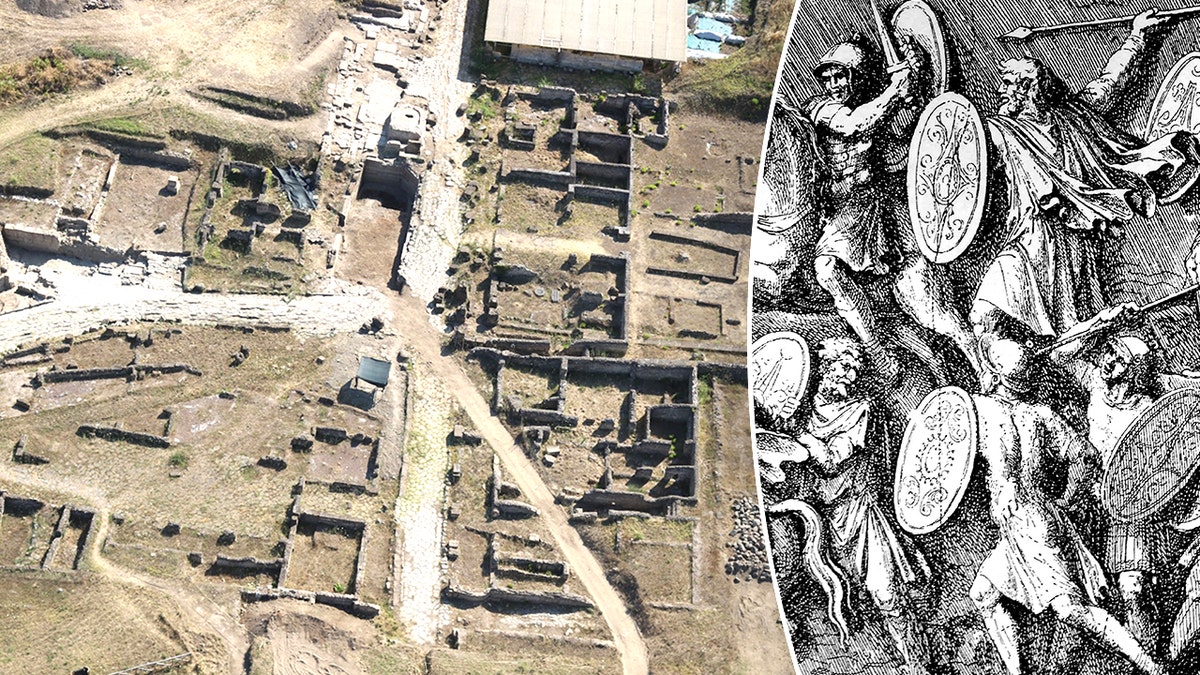
The discovery revealed the architecture of Gabii, a city that faced Rome in the Latin War. A generic Roman battle scene is seen at top right. (Marcello Mogetta; Photo 12/Universal Images Group via Getty Images)
The area was occupied for 2,000 years before declining in the first century BC. The old houses were demolished and transformed into quarries, cemeteries and workshops.
“The absence of a strong municipal elite meant that Gabii was mainly dependent on investments from emperors, which faded over time,” Mogetta explained. “Initially, geographical proximity to Rome may have been an advantage, making Gabii particularly relevant on the map of central Italian city-states.”
CLICK HERE FOR MORE LIFESTYLE STORIES
He added: “In the long run, however, Rome’s growth as a metropolis and superpower on the international stage worked against Gabii. »
The land outside Gabii eventually turned into swamp, Mogetta said, making it uninhabitable.
“There is evidence that elite Gabine families settled in Rome very early. …It made more sense for other middle-class Gabii residents who did not have ancestral ties to Gabii to leave for better opportunities in the burgeoning imperial capital,” he said.
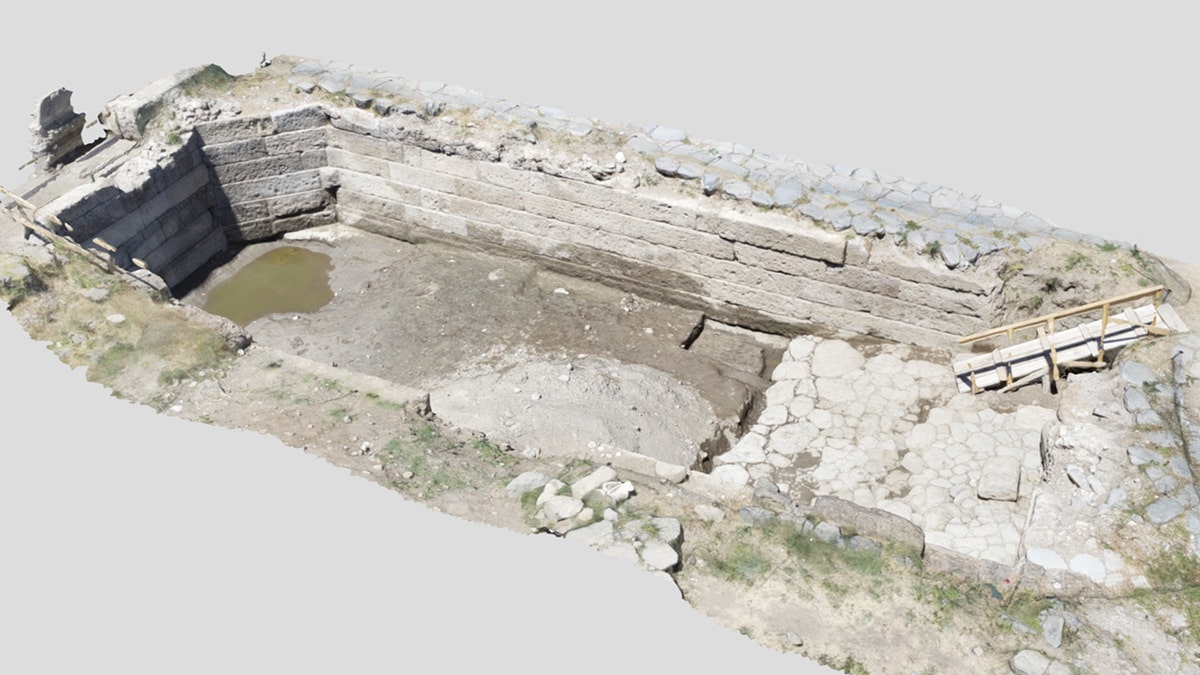
Archaeologists detected an additional “anomaly” near the pool, possibly covering another man-made structure. (Marcello Mogetta; Photo 12/Universal Images Group via Getty Images)
At the site, the excavation team also detected an “anomaly” – possibly an artificial mound – just behind the pool, which could cover an artificial structure.
TEST YOURSELF WITH OUR LATEST LIFESTYLE QUIZ
Mogetta said field work in 2026 and 2027 will reveal more ruins. The expert told Fox News Digital that the basin was built at a “critical moment” in the 3rd century BC, when the citizens and planners of Gabii had the means and motivation to create an urban center.
By this time, Rome had become more successful in its conquests and was generating new wealth and ideas that spread to neighboring communities like Gabii.
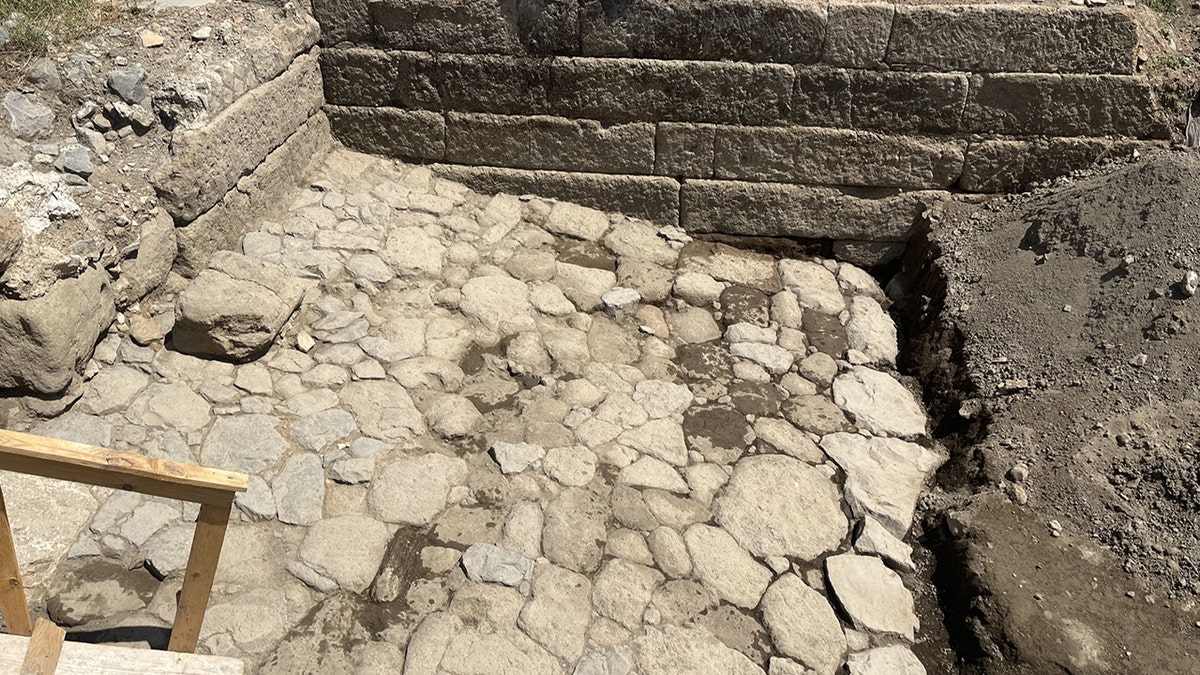
Gabii, once a prosperous city-state located 18 km from Rome, was one of the capital’s early rivals. (Marcello Mogetta)
The result was a “comprehensive public building project that transformed the natural geomorphology of the landscape with a blend of local traditions and experimentation with Hellenistic culture,” he said.
CLICK HERE TO GET THE FOX NEWS APP
“The monumental pool that we have just discovered seems to have determined the spatial and monumental orientation of a much larger ensemble that we do not yet see in its entirety,” Mogetta said.


