Ancient rock art depicting hunters and geometric shapes discovered in Egypt’s Sinai Desert — and it spans a period of 10,000 years


A rock shelter discovered in the southern Sinai Desert contains drawings and inscriptions spanning a period of 10,000 years, Egypt’s Ministry of Tourism and Antiquities announced. two declarations.
Located on the Umm Arak plateau, the rock shelter was discovered during an archaeological survey carried out by a team of Egyptologists. They were assisted by a local resident named Sheikh Rabie Barakat, who helped them reach the site, the statement said.
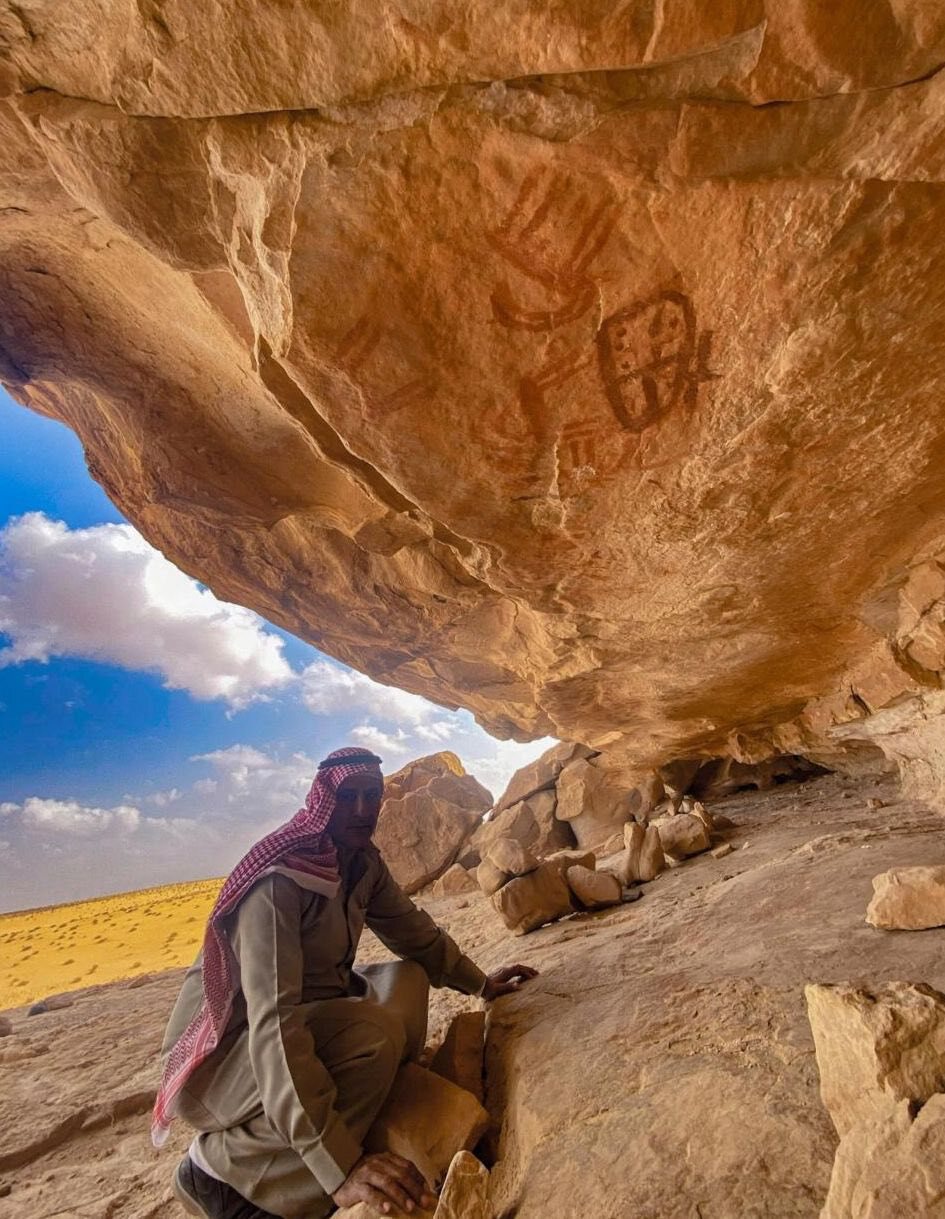
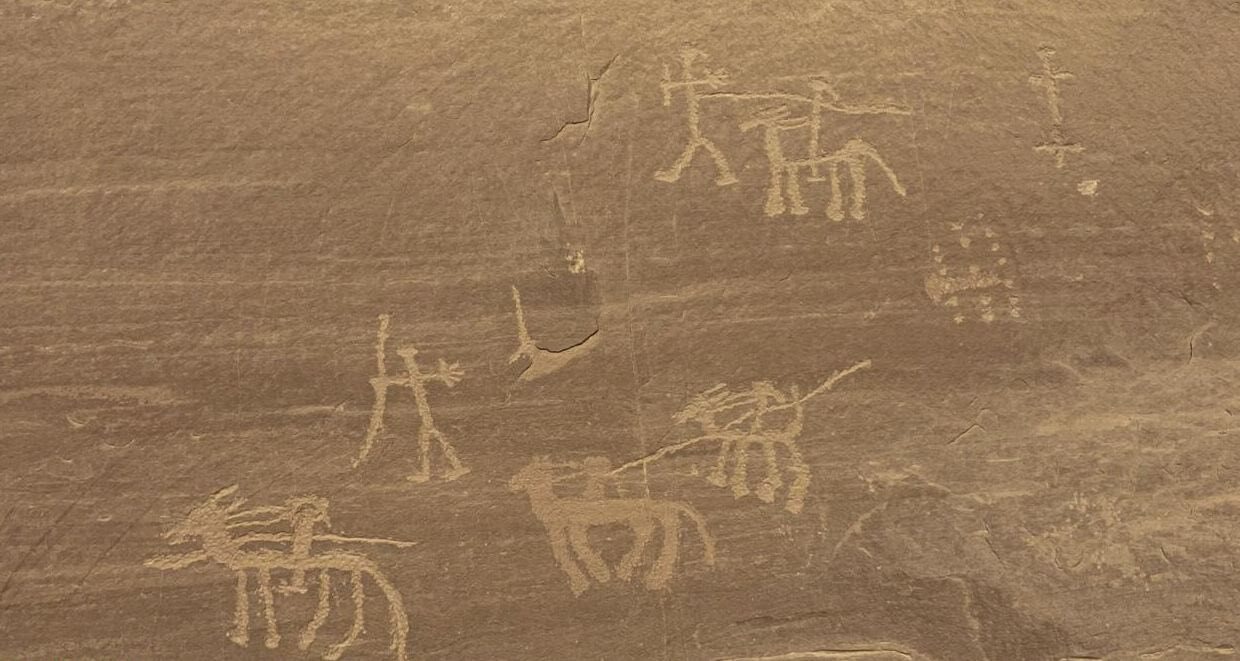
The shelter is approximately 330 feet (100 meters) long and 10 feet (3 m) deep, with a ceiling up to 5 feet (1.5 m) high. The oldest rock art, dated based on its style, was discovered near the entrance and dates to around 10,000 to 5,500 BC, according to the releases. It depicts various scenes, including a hunter holding a bow and accompanied by at least two hunting dogs.
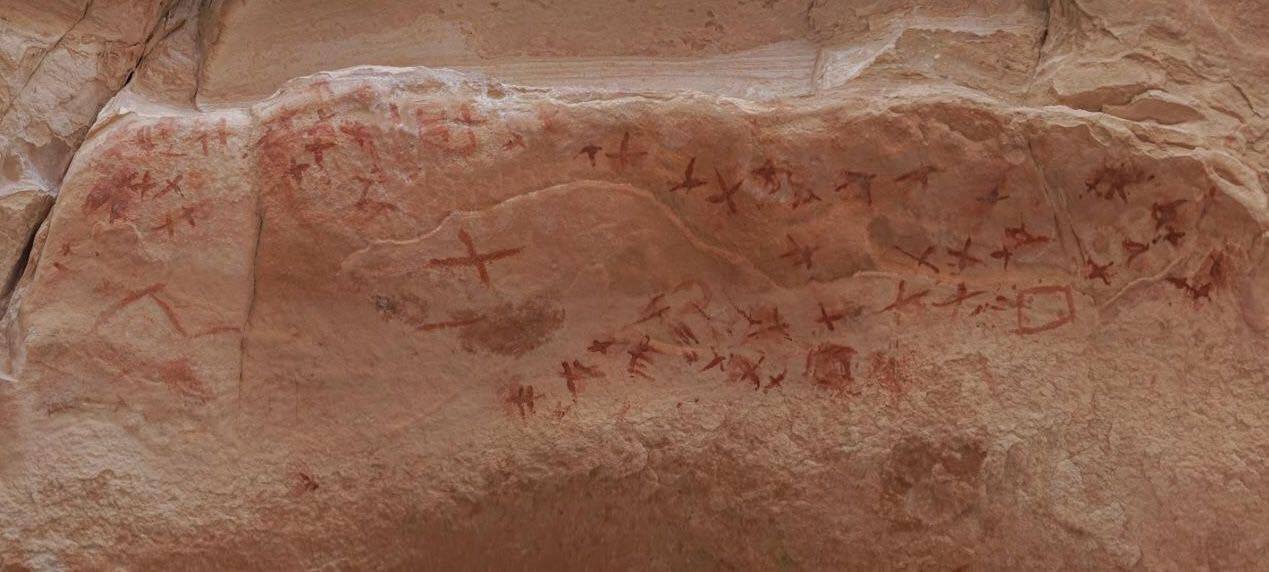
Scenes from later periods include people riding horses and carrying weapons, and there are inscriptions dating from ancient times and the Middle Ages. Rock art also includes geometric images consisting of X’s, squares, ovals, crescents and more complex shapes. The archaeological team is analyzing the drawings.
The shelter is near ancient copper and turquoise mines and was likely “used throughout the ages as an observation point and a place for gathering and resting,” one of the releases said.
Picture 1 of 3
Ancient Egyptian people may have left their mark on the rock shelter during Sinai mining, noted John Darnelprofessor of Egyptology at Yale University who has conducted extensive research in Sinai but was not involved in the new discovery.
“Sinai was an important region for ancient Egypt, a source of mineral wealth and a symbolically important region, the home of the goddess Hathor, ‘Mistress of Turquoise,'” Darnell said. This discovery “will certainly help us to better understand the interactions of the ancients [Egyptians] with the desert environment and with the people who live and move through the region.
The images released so far “appear to show material from late antiquity to a possibly medieval date,” or about A.D. 500 to 1500, Darnell said, noting that the rock art includes camels, humans and Nabataean inscriptions.
The Nabataeans were a people who flourished in the region between around 400 BC and 200 AD, and are most famous for building the city of Petra in Jordan. Darnell noted that he looks forward to seeing images of the earlier rock art discovered at the site.
Live Science contacted the archaeological team but did not receive a response at the time of publication.
Ancient Egypt Quiz: Test Your Intelligence About Pyramids, Hieroglyphics, and King Tut