Amazon’s Fire TV piracy crackdown hurts everyone, not just pirates


The dirty secret of Amazon’s Fire TV Sticks is that they’re great for hacking, but maybe not for long.
Amazon confirmed this week that it would block Fire TV apps that provide access to pirated content, including apps that users sideload on their devices from outside of Amazon’s Appstore. Amazon is working with the Alliance for Creativity and Entertainment (ACE), an anti-piracy coalition for the entertainment industry, to identify incriminated apps. The news was first reported by The Sun and confirmed by AFTVNews.
If you are not using a Fire TV device for illicit purposes, you may not see the problem. But the move is also part of a broader push by Amazon to lock down what people can do with their devices, for legitimate purposes or not. Those who bought a Fire TV expecting an open platform might soon find themselves with a completely different type of device.
By the way, what is a hacking app?
Neither Amazon nor ACE have revealed which specific apps they plan to block or how they will define a hacking app. One concern is that apps with legitimate uses could become collateral damage.
In 2015, for example, Amazon removed the popular media player app Kodi from its Appstore, believing it could be “used to facilitate piracy or illegal downloading of content.” Although the Kodi app itself does not distribute pirated content, its third-party add-on system allows users to connect to piracy sources.
Nevertheless, Kodi also has a wide range of legal uses, such as playing media files, tuning to Internet radio stations, and recording live channels. In this regard, it is functionally similar to other media player and server applications that Amazon hosts in its Appstore, including Plex, Emby, and VLC.
For now, Kodi is still available on Fire TV devices via sideloading, that is, installing the app outside of Amazon’s official app store, but it is unclear whether this will continue under Amazon’s new policy. Amazon and ACE did not respond to questions about whether they would target Kodi specifically or media player apps in general.
So far, the only examples of hacking apps blocked on Fire TV are Flix Vision and LiveNet TV, which Amazon temporarily disabled in June due to malware-like behavior. Amazon unblocked both apps a month later, although these are likely the type of apps the company will target for removal in the future.
Repression
No matter which apps Amazon decides to block, Fire TV becomes less welcoming to sideloading overall.
While most Fire TV devices still support sideloading for non-piracy-related uses, an Amazon spokesperson said the feature is intended for developers to test their apps. Those who sideload apps for other purposes are abusing this feature, the spokesperson added.
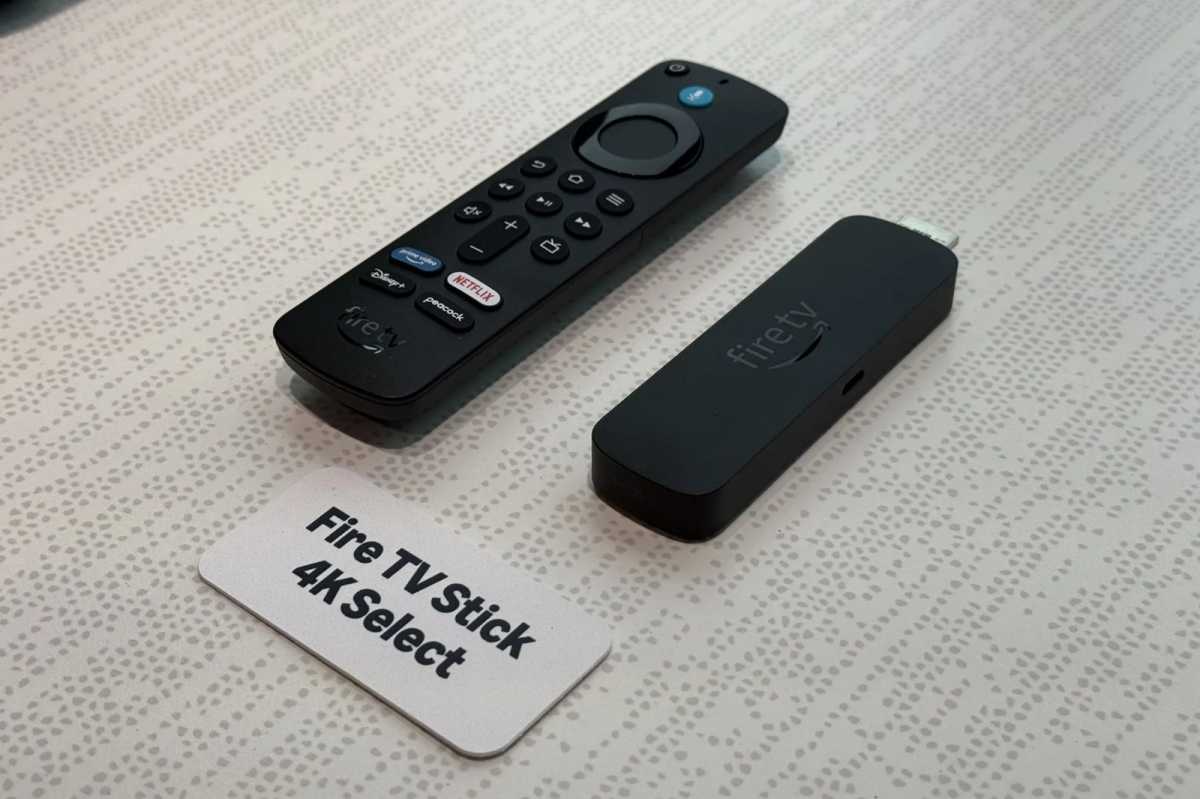
Meanwhile, Amazon’s new Fire TV 4K Select streaming dongle has more explicit sideloading restrictions. The device, which runs on a new Linux-based operating system called Vega, only offers this functionality to registered developers.
Ben Patterson / Foundry
In the past, sideloading allowed users to make Amazon devices more useful by filling gaps in the company’s app catalog. During Amazon and NBCUniversal’s eight-month battle over Peacock’s distribution terms in 2020, for example, subscribers were able to download the Android TV version of the app. HBO Max required the same workaround for nearly two months after its own launch that same year.
Users of Amazon’s Fire tablets also downloaded Google’s Play Store to access a much wider selection of apps, and retro gaming enthusiasts downloaded popular emulator apps such as RetroArch.
It’s no surprise that Amazon wants to crack down on this behavior. The company likely earns little from the actual sale of its Fire TV devices and instead relies on ad-supported content, subscription sales, on-demand content purchases, and aggressive home screen advertising to make money. The company already blocks apps that modify its home screen or remap its remote buttons, so removing apps that exist outside its monetization scope would be the next logical step.
What this means for you
Amazon’s crackdown on pirated apps isn’t bad news. Over the years, I’ve heard of unsuspecting readers paying hundreds of dollars for “fully charged” Fire TV devices, only to stop working with no recourse. I also get serious questions from people who see ads for inexplicably cheap streaming services, without realizing that they are too good to be true. These services should be more difficult to access for people who don’t know better.
But for those who want access to more open streaming platforms – anti-piracy or not – the options are increasingly limited. Devices that run on Google’s Android TV platform, such as Walmart’s cheap Onn boxes, aren’t subject to the same sideloading restrictions, although Google’s plan to require developers to verify their identity could change that calculus. Roku players and Apple TV devices do not support sideloading at all.
Ultimately, if you really want to have complete control over your streaming experience and all the software running on it, you may just have to use a real computer.
Sign up for Jared’s Cord Cutter’s weekly newsletter for more streaming TV tips.


