Archaeologists may have found the grave of the legendary “fourth musketeer”


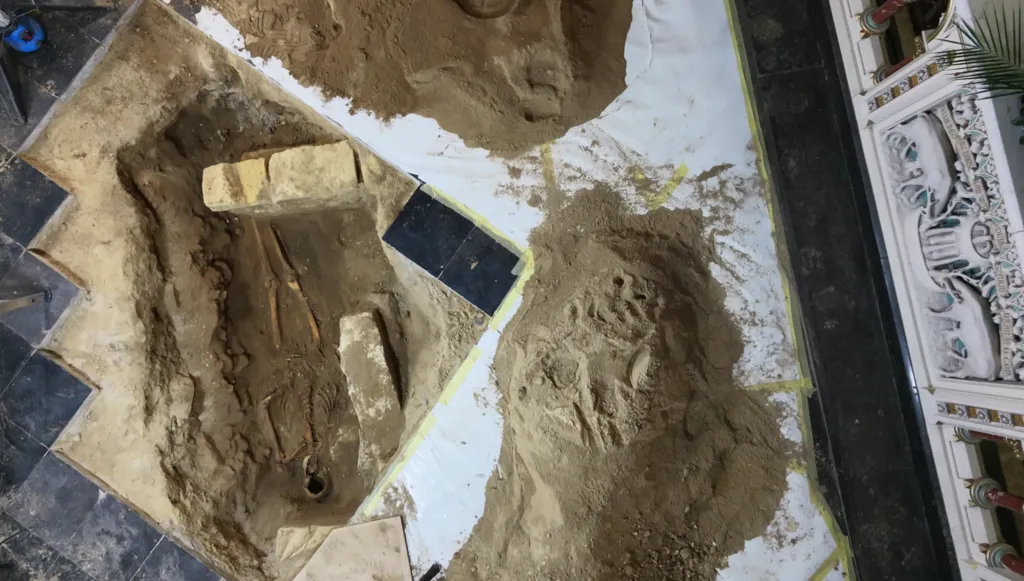
“I’m a scientist, but my expectations are high,” Wim Dijkman, an archaeologist and curator from the city of Maastricht, who excavated the skeleton, told the BBC. “I’ve been researching d’Artagnan’s tomb for 28 years now. This could be the highlight of my career.”
“After all, it’s our business to risk our lives. »
The King’s Musketeers are today better known to most of us thanks to the novel by Alexandre Dumas. The Three Musketeers. They were the premier unit of the 17th-century French army, two companies of light cavalry under the personal command of the king, composed entirely of nobles armed with muskets and fast horses. They served as the king’s personal guard whenever he left the palace (he had a whole other guard unit at home, where they probably didn’t need fast horses). D’Artagnan became their captain-lieutenant in 1667, and his command very briefly included a young Marquis de Lafayette, who later did other things.
And in 1673, the Musketeers were part of the French forces besieging the Dutch city of Maastricht because Louis XIV had decided to invade what was then called the Dutch Republic. This ends rather badly for d’Artagnan, among many others, as battles tend to do.
D’Artagnan probably attended mass at Saints-Pierre-et-Paul on the morning of June 25, 1673, as he did most days during the siege. The French army had established its headquarters nearby, in what was then the village of Wolder, just outside the city walls of Maastrich (today Wolder is a district of the city). And by nightfall, as French historian Odile Bordaz suggested in 2008, d’Artagnan’s body was buried under the altar where he had taken communion that morning.
According to parish records from other churches in the area, high-ranking officers who died during the siege were buried in the nearest church. And according to maps of the area around Maastricht dating from the time of the siege, which Bordaz and his colleagues studied, the closest church to the Musketeers camp would have been that of Saint-Pierre-et-Paul in Wolder.


