Arq 7 Backup review: Uniquely versatile online, network, and local backup


At a glance
Expert rating
Benefits
- Ultra-clean interface and configuration
- Affordable online storage
- Local and online backup
- Supports a wide variety of third-party online storage services
- Perfect in our tests
Disadvantages
- No simple file backup
- Solo client software is a bit expensive
Our Verdict
An ultra-clean interface, impeccable performance, and an affordable 1TB annual plan make Arq 7 Backup one of our favorites for online (and local) backup. It also supports local and third-party online storage, and there is a perpetual license standalone software for use only with these.
Price when reviewed
This value will display geotagged pricing text for the undefined product
Best price today
$49.99
See the offer
Best prices today: Arq 7 backup
$49.99
See the offer
There are many good options for local and online backup, but Arq 7 Backup (both an online service and client) stands out thanks to its ability to backup to a myriad of third-party online storage services as well as its own. Direct attached and network storage are also supported.
Arq even sells a perpetually licensed version of the client if you don’t want to operate its own service.
Read on to learn more, then check out our roundup of the best cloud backup services and the best Windows backup software for comparison.
What are the price and features of the Arq 7?
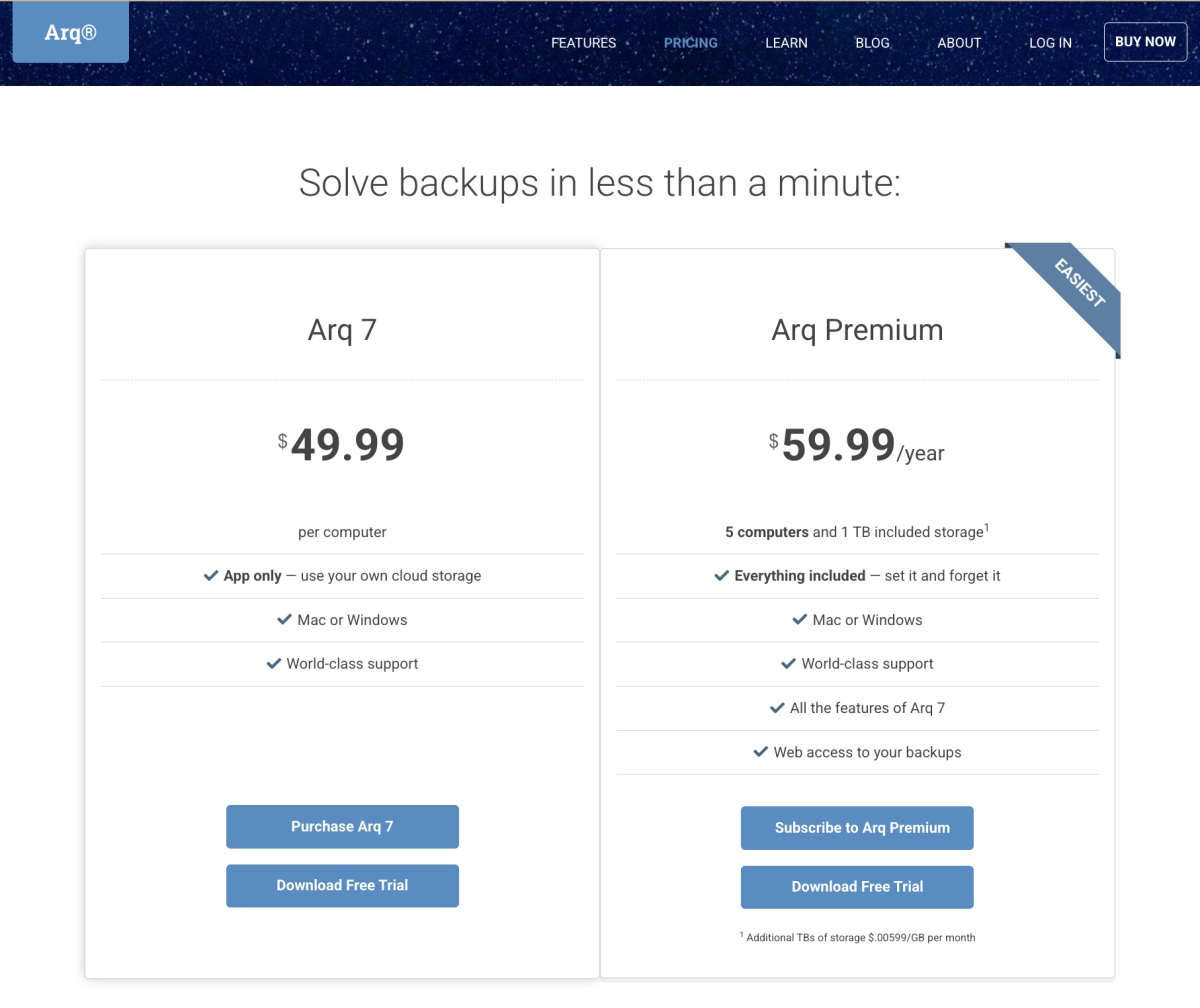
The Arq 7 backup program alone (single-user, perpetual license, no Arq 7 storage) is a bit pricey at $49.99. But the alternative Arq 7 Premium subscription plan covers five seats, plus 1TB of storage, for $59.99 per year.
That’s significantly less than Microsoft’s OneDrive, which now costs $120 (formerly $70) for 1TB per year, although that includes the entirety of Office 365. Microsoft’s apps are essential for some, but I’ve broken the chains and moved to alternatives.
Compared to other comparable storage services, Arq 7 is well within the price target.
Note that the client software provided with the online storage plan only becomes restored if you cancel the service – the industry standard. The one-time purchase is yours and you can continue to use it. Additional online storage is available at $6 per TB per month.
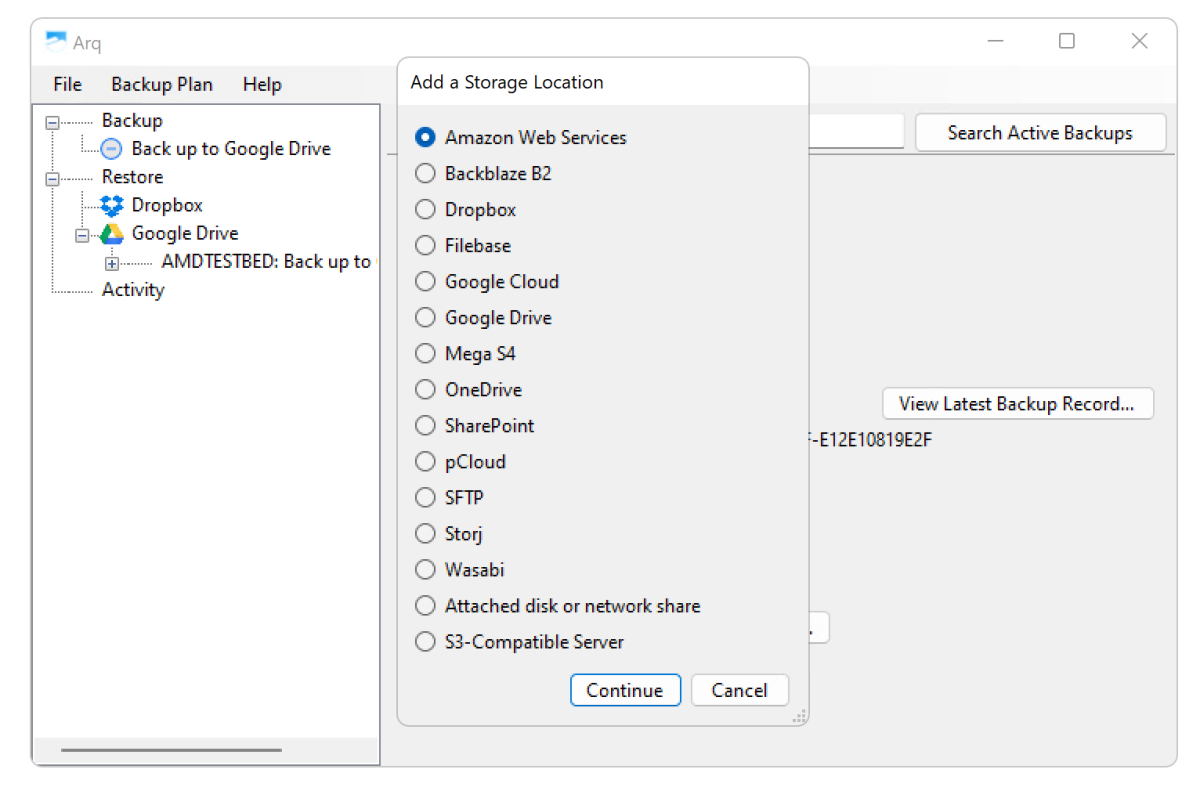
The long list of storage destinations and protocols supported by Arq 7 includes: Amazon Drive AWS S3, S3-compatible services, Glacier, Google Cloud Storage, Backblaze B2, Dropbox, Google Drive, Minio, OneDrive, SharePoint, Storj, Wasabi, SFTP, network volume (SMB or AFP), and direct attached storage. New since our last review are pCloud and Mega. Phew!
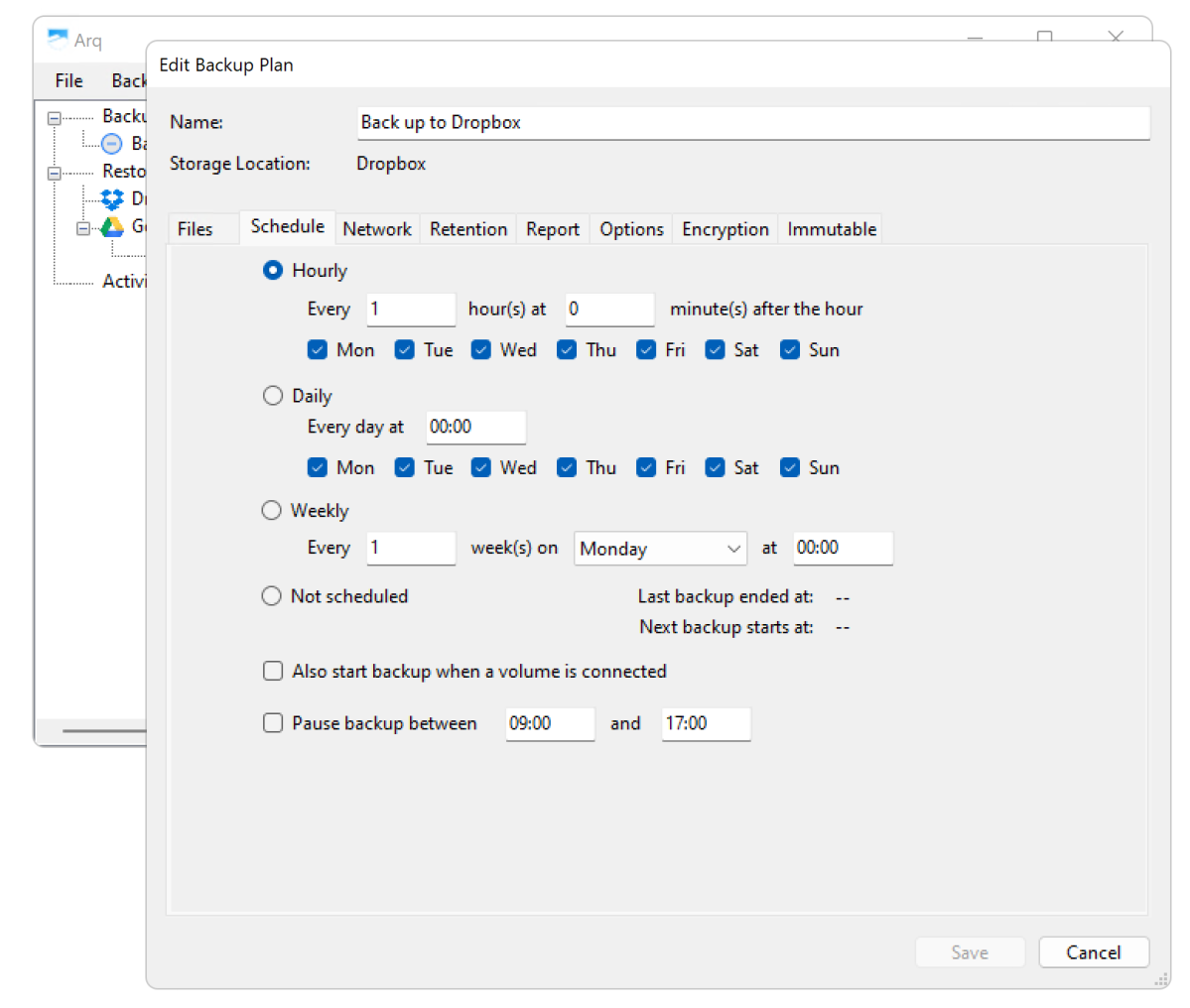
Arq 7 supports multiple tasks (backup plans in Arq language) that you can tailor to each particular service or device. For example, you can back up your vital documents to a free cloud service and all your files to a larger account, local hard drive, NAS box, etc.
The list of options supported by Arq 7 Backup is long: granular scheduling, network transfer throttling and interface selection, extensive retention rules, email reporting, encryption settings, immutable files (object locking), and a host of power/alert/performance options.
One minor problem I have with Arq 7 (as with almost every other backup program…) is that you cannot assign multiple storage locations to a single backup job/plan. Most users have a single set of data that they want to back up to multiple locations. However, there is a convenient alternative: exporting your data selections as .json (Java Script Object Notation) data files that you can import into later defined tasks/plans.
Another minor issue regarding Arq 7 Backup is that there is no simple file backup option, i.e. simply copy files to another location. You need Arq 7 to restore your files from their proprietary containers (which makes many tasks easier and faster); you can’t just browse to the destination using your operating system and extract them as you wish.
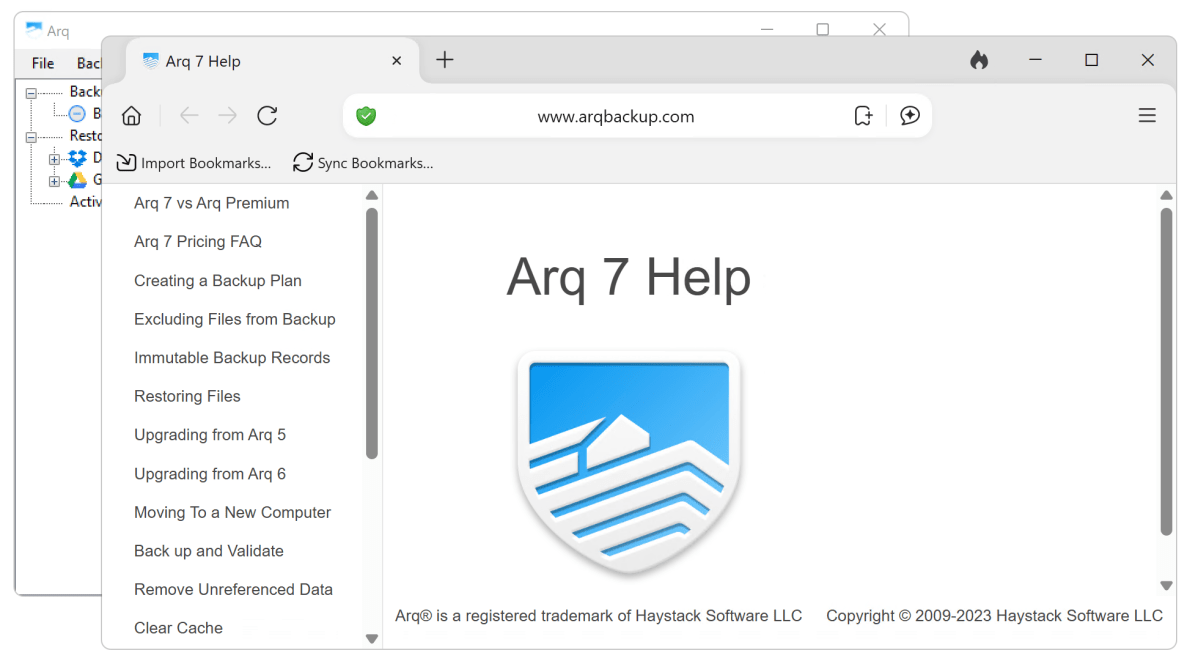
Arq 7 is a bit of a one-trick pony (direct save), but it does this handy trick extremely well. Yet, there are no features like partition or drive image backups, cloning, disaster recovery via bootable media, synchronization, etc. This isn’t a dig, just information – although that’s why I consider the standalone client price just a little high.
If you want something more versatile for local backup tasks, try the top-rated Easeus ToDo Backup Home.
How user-friendly is Arq 7 Backup’s interface?
One of Arq 7’s best attributes is its clear and concise interface. The backup task can be intimidating for new users, so a logical and intuitive interface is an important consideration. That said, it’s simple-Jane with a vengeance. Personally, I like pragmatism, but if you are a fan of colorful icons, you may not like it. Yet… How often will you use it? Being bored in save is a good thing!
Arq 7 guides you through destination and data selection, then leaves you alone for advanced settings, offering a series of tabs with associated options. Tip: You’re probably fine without adjusting the advanced settings. Otherwise…
Just imagine that you are the assistant, click on each logically arranged tab in turn, and everything will be fine. I promise. If you’re new to backup, you may want to familiarize yourself a little with concepts like file retention and immutable data, before playing around with them.
Various information is displayed in a tree view to the left of the main window (shown below). This includes defined tasks (plans), backup dates, etc. There is a separate restore section with entries for each storage destination, although you will need to navigate to the actual backup and date for the restore option to appear.
One of Arq 7’s best attributes is its clear and concise interface.
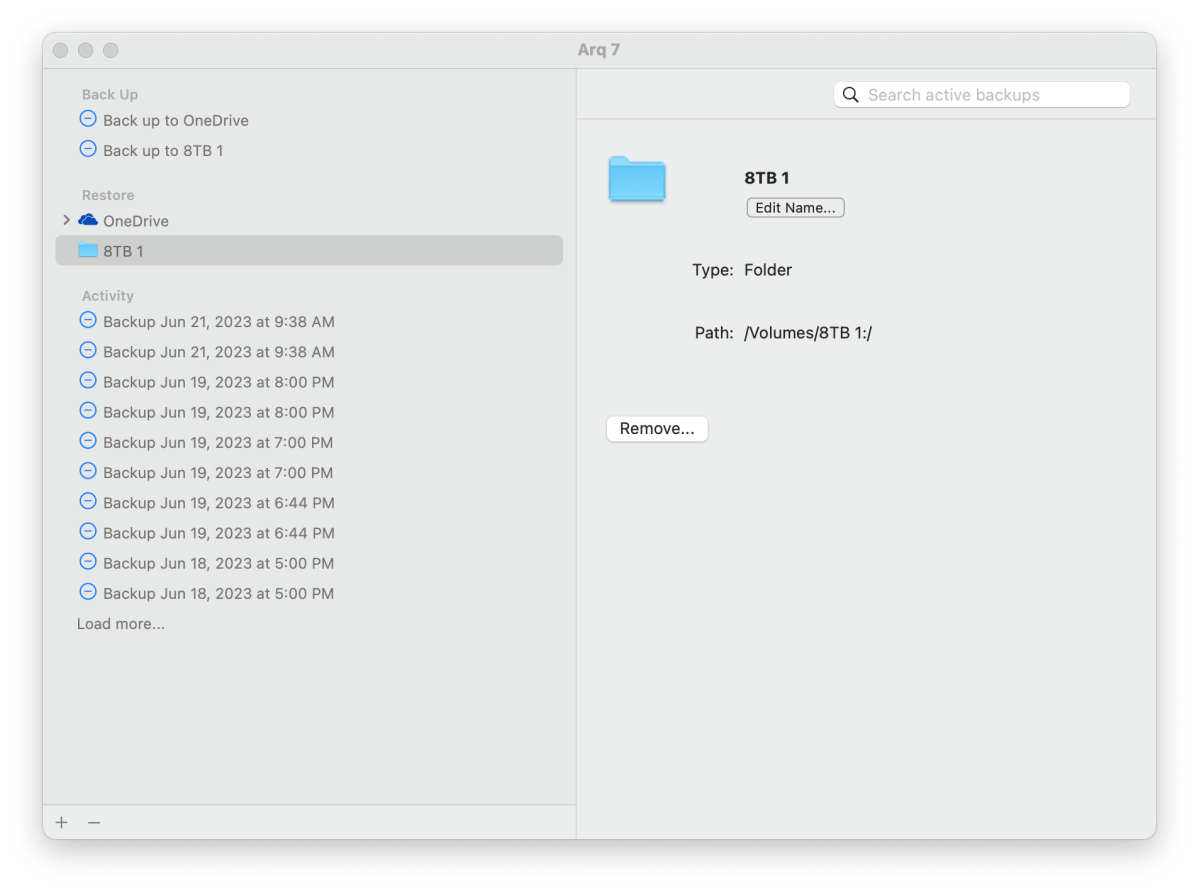
Although it may take you some time to get comfortable with the Arq 7 workflow, once you are, it is extremely efficient. I’ll take that any day over the kind of hand holding that slows you down in the long run.
How does Arq 7 work?
Arq 7 worked perfectly in my tests. Specifically, I used Arq 7 to back up datasets to OneDrive, Dropbox, and the company’s own storage service. I also backed up to a local SSD and my main NAS box, and again to OneDrive. Everything ran quickly, smoothly, and without unduly affecting the overall performance of my system, whether on Windows PC or Mac.
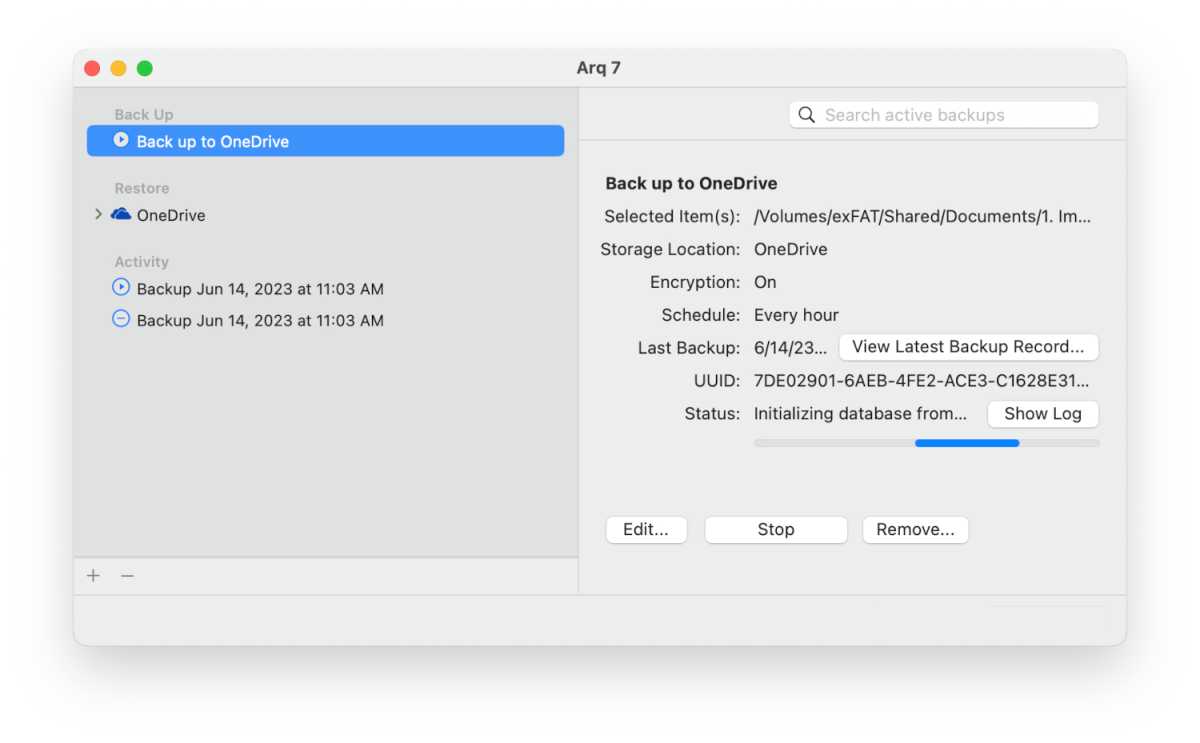
Arc 7
displays current performance on the right and defined tasks on the left. It’s still the macOS client
Jon L. Jacobi
Backing up is a fail-safe task and no Arq 7 issues of any type, minor or major, have shaken my confidence in the program.
Note that while I found Arq 7 to be particularly fast, online backup times still depend on the speed of your connection to the remote server.
Should you buy Arq 7 Backup?
I cannot stress enough the importance of flawless performance when choosing a backup solution. Data security is not something to play with, as anyone who has tried to restore a bad backup will tell you.
I rate Arq Premium first as a storage service and program, and the support for all other online storage services is a very, very useful feature.


