Pope Leo XIV’s Christmas address urges faithful to shed indifference toward suffering : NPR


Pope Leo
Gregorio Borgia/AP
hide caption
toggle caption
Gregorio Borgia/AP
VATICAN CITY — Pope Leo
The first American pontiff addressed some 26,000 people from the loggia overlooking St. Peter’s Square for the traditional papal address “Urbi et Orbi,” Latin for “To the city and to the world,” which serves as a summary of the woes facing the world.
As crowds gathered under a steady downpour during the papal mass inside St. Peter’s Basilica, the rain had subsided by the time Leo took a brief tour of the square in the popemobile and then addressed the crowd from the loggia.
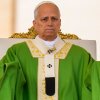
Leo revived the tradition of offering Christmas greetings in multiple languages abandoned by his predecessor, Pope Francis. He received particularly warm cheers when he delivered greetings in his native English and Spanish, the language of his adopted country of Peru, where he served first as a missionary and then as archbishop.
Someone in the crowd shouted “Viva il papa!” » or “Long live the Pope!” » before retiring into the basilica. Leo took off his glasses for a final wave.
Leo observes the distress of the world
During his traditional speech, the Pope stressed that everyone can contribute to peace by acting with humility and responsibility.
“If he truly agreed to be involved in the suffering of others and to show solidarity with the weak and the oppressed, then the world would change,” the pope said.
Leon called for “justice, peace and stability” in Lebanon, the Palestinian territories, Israel and Syria, prayers for “the tormented people of Ukraine” and “peace and consolation” for victims of wars, injustice, political instability, religious persecution and terrorism, citing Sudan, South Sudan, Mali, Burkina Faso and Congo.
The pope also called for dialogue to address the “many challenges” in Latin America, reconciliation in Myanmar, restoration of the “ancient friendship between Thailand and Cambodia” and relief for the suffering of those affected by natural disasters in South Asia and Oceania.

“In becoming a man, Jesus took upon himself our fragility, identifying with each of us: with those who have nothing left and have lost everything, like the inhabitants of Gaza; with those who are prey to hunger and poverty, like the Yemeni people; with those who flee their homeland to seek a future elsewhere, like the many refugees and migrants who cross the Mediterranean or cross the American continent,” the pontiff declared.
He also thought of those who have lost their jobs or are looking for work, especially young people, underpaid workers and those in prison.
Peace through dialogue
Earlier, Leon led the Christmas Day mass from the central altar under the balustrade of St. Peter’s Basilica, decorated with floral garlands and clusters of red poinsettias. White flowers were placed at the feet of a statue of Mary, mother of Jesus, whose birth is celebrated on Christmas Day.
In his homily, Léon stressed that peace can only emerge through dialogue.
“There will be peace when our monologues are interrupted and, enriched by listening, we fall on our knees before the humanity of the other,” he said.
He recalled the population of Gaza, “exposed for weeks to rain, wind and cold” and the fragility of “defenseless populations, tested by so many wars”, and of “young people forced to take up arms, who, on the front lines, feel the absurdity of what is asked of them, and the lies which fill the pompous speeches of those who send them to their death”.
Thousands of people filled the basilica for the pope’s first mass on Christmas Day, holding up their smartphones to capture images of the opening procession.
This Christmas period marks the end of the Holy Year celebrations, which will end on January 6, the Catholic feast of Epiphany marking the visit of the three wise men to the child Jesus in Bethlehem.


