Asteroid 2024 YR4’s Possible 2032 Moon Impact — What the Aftermath Could Look Like


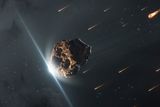
Asteroid 2024 YR4 no longer threatens Earth. Instead, the updated calculations show there is about a 4.3 percent chance that the 60-meter-wide rock could hit the Moon on December 22, 2032, at a speed of about 14 kilometers per second. The impact would release energy equivalent to about 6.5 million tons of TNT and create a crater about a kilometer in diameter. This would make it the most energetic lunar impact recorded in the era of modern observation.
Rather than debating how to avoid the collision, the researchers focused on what would happen next. In a recent preprint published in Astrophysicsa team modeled the physical effects of a lunar impact and established an observational timeline detailing the first few seconds over the years that follow. Their work turns a low-probability event into an opportunity to watch a major lunar impact unfold in real time.
The first minutes of asteroid 2024 YR4
The impact would be announced with the light. Researchers estimate that the collision could produce a flash reaching a brightness between –2.5 and –3 magnitude (a flash as bright as Jupiter in the night sky) and lasting several minutes. This level of brightness would make the event detectable from Earth with small telescopes under favorable conditions.
Once the flash fades, heat would dominate the signal. The impact would melt lunar rock at temperatures around 2,000 Kelvin. As this molten material cools over hours or even days, it will emit infrared radiation that telescopes could track. By measuring how quickly the crater cools, researchers could estimate how much material melts and how the lunar surface absorbs and releases heat.
The preprint identifies when optical and infrared instruments would have the best chance of capturing these signals, aligning observation windows with the expected timing of flash and thermal afterglow.
Learn more: City-killing asteroid could hit the Moon in 2032 — What would happen if we blew it up with nuclear weapons first?
Shake the Moon
The collision would also send energy into the Moon’s interior. According to their calculations, the impact could generate an earthquake of around magnitude 5, or a strength relative to a moderate earthquake on Earth. Seismometers (instruments that measure ground vibrations) on the lunar surface could detect tremors over great distances.
These vibrations would provide insight into how the lunar crust transmits motion and how seismic waves pass through its interior. Because researchers can estimate the energy of the impact in advance, they would know the strength of the earthquake source, making the event particularly useful for interpreting seismic data.
Debris that could reach Earth
Not all impact material would remain on the Moon. Simulations show that tens to hundreds of millions of kilograms of rocks could escape the Moon’s gravity, depending on the angle of impact. Some of this debris would remain in the Earth-Moon system, and a small fraction could eventually reach Earth.
In some scenarios, fragments could start arriving within a few days, increasing meteor activity for a short period of time. Over months and years, some larger pieces could survive passage through Earth’s atmosphere and land as lunar meteorites. The researchers also note that some meter-sized fragments could remain near Earth for decades, where sky surveys could track them long after the initial event.
Researchers do not treat these effects as isolated events. They align each phase with specific instruments, from high-speed optical cameras aimed at the Moon at the time of impact to infrared telescopes tracking the cooling crater, lunar seismometers recording the shock, and meteor arrays monitoring debris days or months later.
Combining predictions about lightning, heat, shaking and debris movement, the preprint describes a coordinated timeline that extends from seconds after impact to years later. If 2024 YR4 hit the Moon, scientists would have no trouble responding. They would already know when to look and what signals to expect.
Learn more: Samples from asteroid Bennu contain mysterious space gums, sugars and a ton of stardust
Article sources
Our Discovermagazine.com editors use peer-reviewed research and high-quality sources for our articles, and our editors review the articles for scientific accuracy and editorial standards. See the sources used below for this article:


