Asteroid Bennu’s Surface Contains Cracked Boulders Instead of Smooth Beaches, Making It Rapidly Lose Heat


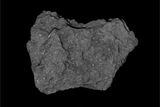
Recent inspections of the asteroid Bennu have revealed many surprises, all wrapped up in a robust mix of space rocks. Initially, most of Bennu’s surface was thought to be almost beach-like, with smooth areas of sand and gravel scattered about. But as NASA’s OSIRIS-REx mission discovered in 2018, the asteroid turned out to be much rockier than expected.
A new study published in Natural communications found that Bennu’s rock-laden surface loses heat in unexpected ways. Bennu is known to have low thermal inertia, meaning it heats up and cools down quickly as it rotates in and out of sunlight. Although the porous nature of Bennu’s rocks partly explains this result, an extensive network of cracks is the main reason the asteroid loses heat so quickly.
Learn more: First samples from the 4.5 billion year old asteroid Bennu could contain the seeds of life
Rocks, not beaches
Samples from the asteroid Bennu, collected by the OSIRIS-REx space probe in October 2020, arrived on Earth in 2023. Scientists have studied them closely since then, believing they could provide key insights into the theoretical delivery of life-sustaining compounds to Earth billions of years ago.
According to NASA, researchers discovered a rich assortment of the building blocks of life in samples from Bennu in 2025, including 14 of the 20 amino acids that life on Earth uses to make proteins and the five nucleic bases that life uses to store and transmit genetic information.
But in addition to Bennu’s compounds, the rocky texture of its surface has also attracted the interest of researchers.
“When OSIRIS-REx arrived at Bennu in 2018, we were surprised by what we saw,” Andrew Ryan, a scientist at the University of Arizona Lunar and Planetary Laboratory, said in a statement. “We expected a few rocks, but we anticipated at least a few large areas with smoother, finer regolith that would be easy to collect. Instead, it seemed like it was just rocks, and we scratched our heads for a while.”
Bennu’s crack networks
Bennu’s thermal inertia was found to be exceptionally low based on observations made in 2007 by NASA’s now-deactivated Spitzer Space Telescope. But the researchers thought Bennu’s rocks should promote gradual heat loss, not the rapid heat loss that Bennu was actually experiencing.
Data collected during the OSIRIS-REx mission suggests that the rocks might be porous, and even if that turned out to be true, it doesn’t tell the whole story. In the new study, researchers examined rock particles from samples and found that cracks in the rocks caused most of the heat loss.
The researchers confirmed this by subjecting the sample to locked-in thermography, which involves shining a small spot on the surface of the sample with a laser to measure how heat diffuses through it.
They also determined that particle type plays a role in heat loss; rough “bumpy” particles have lower thermal inertia and larger crack networks, while smoother “angular” particles have higher thermal inertia and fewer but longer cracks. According to the researchers, the cracks could have been caused by impacts from smaller micrometeoroids or by previous geological processes within Bennu’s parent body.
A space suit for samples
To augment the sample measurements and predict the potential behavior of Bennu’s large boulders, the researchers used a glove box to seal the particles in airtight containers under a protective nitrogen atmosphere before scanning them with an X-ray CT scan.
“The sample enters its own ‘spacesuit,’ passes a scanner, then returns to its pristine environment, all without any exposure to the Earth’s environment,” said co-author Nicole Lunning, sample curator at NASA’s Johnson Space Center. “We can visualize through these airtight containers the shape and internal structure of the rock inside.”
The researchers modeled heat flow and thermal inertia using data from these analyzes and the results are aligned with measurements taken by the OSIRIS-REx mission in space. Similar work could help interpret the thermal properties of other asteroids in the future.
Learn more: Is asteroid mining the next gold rush or just science fiction? —Here’s what we know
Article sources
Our Discovermagazine.com editors use peer-reviewed research and high-quality sources for our articles, and our editors review the articles for scientific accuracy and editorial standards. See the sources used below for this article:


